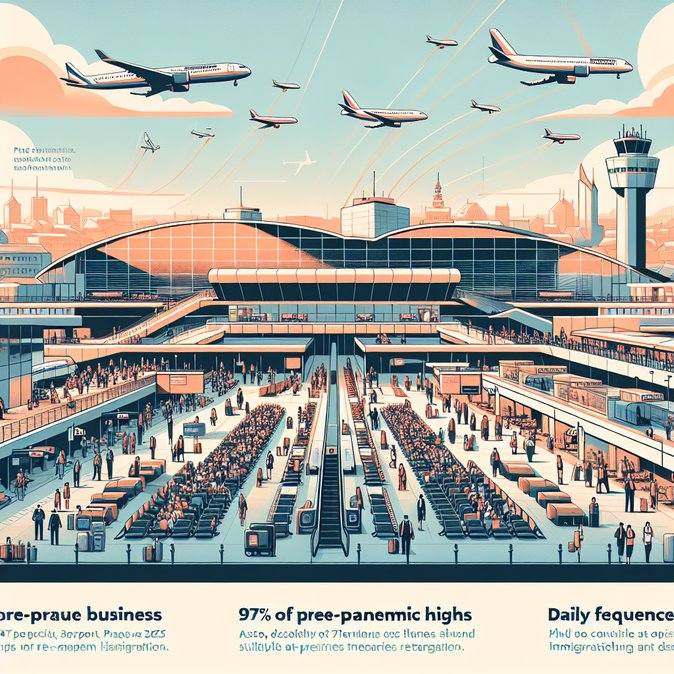
Prague Václav Havel Airport ended 2025 just three percentage points shy of its all-time passenger record, handling 17,750,528 travellers over the calendar year – an 8.5 % jump on 2024. Management credited the gains to the full post-pandemic recovery of key European business routes and an aggressive expansion by low-cost carriers on leisure sectors such as Málaga, Faro and Bari. The United Kingdom, Italy and Spain were again the three most-frequented country markets, while Newark re-established itself as the busiest long-haul destination.
The figures matter for corporate mobility planners because Prague is the principal gateway for international assignees and commuting specialists working for the country’s growing life-sciences and tech sectors. Capacity is now back to 97 % of 2019 levels, meaning employers can once again rely on daily frequencies to London, Frankfurt and Amsterdam for same-day business travel. In response, airport operator Letiště Praha confirmed that construction on Terminal 2’s €320 million extension will start in March to prevent bottlenecks in peak morning and evening banks.
To keep mobility plans running smoothly, many companies are also outsourcing visa formalities to specialists. VisaHQ, for example, provides an online portal (https://www.visahq.com/czech-republic/) that guides employees through Czech and Schengen application requirements, books consulate appointments, and tracks approvals in real time—minimising the risk of last-minute travel disruptions at Václav Havel Airport.
![Prague Airport nears record with 17.8 million passengers in 2025]()
Airlines are already betting on further growth: Lufthansa will up-gauge one of its four daily Frankfurt rotations to an Airbus A321 from the summer timetable, while LOT Polish Airlines announced a sixth daily Warsaw flight aimed at feeding its trans-Atlantic hub. Cargo volumes, meanwhile, rose 5 % year-on-year, reinforcing Prague’s role in Central Europe’s semiconductor supply chain.
For mobility managers the takeaway is two-fold: seat availability on intra-European routes is unlikely to be a constraint in 2026, but continued double-digit growth could pressure airport-based immigration offices. Companies should keep buffer time in assignment schedules until the new terminal comes online in 2028.
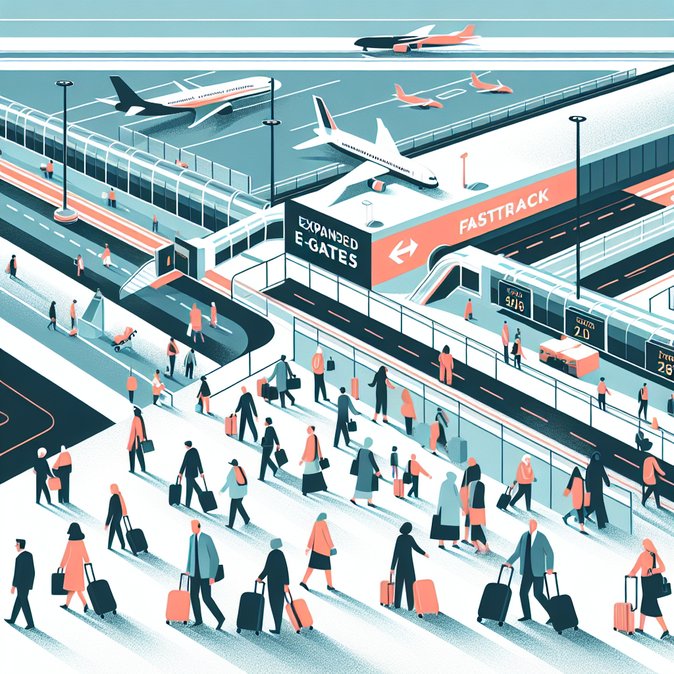
From a traveller-experience standpoint, the airport will finish installing next-generation EES/ETIAS kiosks in Schengen departure gates by June, months ahead of the EU-wide cut-over. The system is expected to reduce manual passport checks for third-country nationals to under 30 seconds, further smoothing high-volume commuting between Prague and other EU capitals.
The figures matter for corporate mobility planners because Prague is the principal gateway for international assignees and commuting specialists working for the country’s growing life-sciences and tech sectors. Capacity is now back to 97 % of 2019 levels, meaning employers can once again rely on daily frequencies to London, Frankfurt and Amsterdam for same-day business travel. In response, airport operator Letiště Praha confirmed that construction on Terminal 2’s €320 million extension will start in March to prevent bottlenecks in peak morning and evening banks.
To keep mobility plans running smoothly, many companies are also outsourcing visa formalities to specialists. VisaHQ, for example, provides an online portal (https://www.visahq.com/czech-republic/) that guides employees through Czech and Schengen application requirements, books consulate appointments, and tracks approvals in real time—minimising the risk of last-minute travel disruptions at Václav Havel Airport.

Airlines are already betting on further growth: Lufthansa will up-gauge one of its four daily Frankfurt rotations to an Airbus A321 from the summer timetable, while LOT Polish Airlines announced a sixth daily Warsaw flight aimed at feeding its trans-Atlantic hub. Cargo volumes, meanwhile, rose 5 % year-on-year, reinforcing Prague’s role in Central Europe’s semiconductor supply chain.
For mobility managers the takeaway is two-fold: seat availability on intra-European routes is unlikely to be a constraint in 2026, but continued double-digit growth could pressure airport-based immigration offices. Companies should keep buffer time in assignment schedules until the new terminal comes online in 2028.
From a traveller-experience standpoint, the airport will finish installing next-generation EES/ETIAS kiosks in Schengen departure gates by June, months ahead of the EU-wide cut-over. The system is expected to reduce manual passport checks for third-country nationals to under 30 seconds, further smoothing high-volume commuting between Prague and other EU capitals.