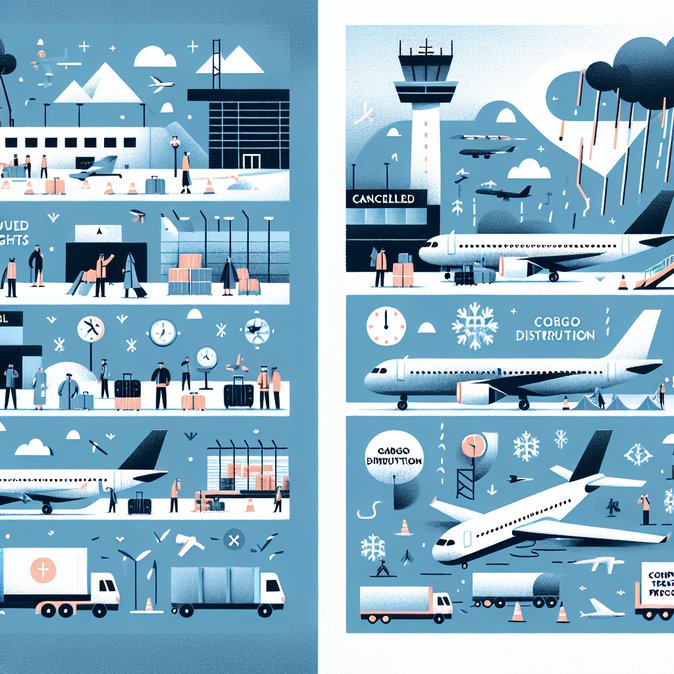
A continent-wide wave of operational snarls on 22 January 2026 left 1,028 flights delayed and 35 cancelled, according to compensation-specialist AirHelp. Paris-Charles de Gaulle featured in the top-three most disrupted airports, alongside Frankfurt and London-Heathrow, while Orly and Lyon also reported above-average delays. Airlines affected included Air France, Lufthansa, British Airways, KLM and Iberia.
The absence of a clearly identified trigger suggests systemic fragility: winter weather, rolling air-traffic-control staff shortages and aircraft maintenance backlogs are interacting in ways that magnify local glitches into network-wide gridlock. Eurocontrol’s network manager noted that French and German air-navigation service providers together now account for more than half of all European ATC delay minutes.
For mobility teams the immediate concern is employee safety and schedule certainty. Travellers already airborne faced diversions or unplanned overnights; those yet to depart scrambled to secure scarce re-routing options, often at premium fares. HR departments with posted or short-term assignees in France are advising staff to download airline apps and enable push notifications, while some firms have authorised the use of high-speed rail as an alternative for intra-European hops of under four hours.
![More than 1,000 flights disrupted across Europe – French hubs among the hardest hit]()
Travellers can also pre-empt some stress by ensuring their paperwork is flawless: VisaHQ’s France portal (https://www.visahq.com/france/) streamlines visa and passport applications, provides real-time tracking and issues alerts on embassy closures or processing delays—an extra layer of predictability when flight schedules are anything but.
Longer term, the spike strengthens calls from IATA and business-travel associations for the EU to accelerate Single European Sky reforms, which promise more efficient routings and better staffing coordination. Until that happens, corporates may need to build larger ‘buffer windows’ into itineraries touching France and neighbouring airspace.
AirHelp reminds passengers that under EU261 rules they may be entitled to meals, accommodation and—in some cases—financial compensation when delays exceed three hours or flights are cancelled within 14 days of departure for reasons within the airline’s control.
The absence of a clearly identified trigger suggests systemic fragility: winter weather, rolling air-traffic-control staff shortages and aircraft maintenance backlogs are interacting in ways that magnify local glitches into network-wide gridlock. Eurocontrol’s network manager noted that French and German air-navigation service providers together now account for more than half of all European ATC delay minutes.
For mobility teams the immediate concern is employee safety and schedule certainty. Travellers already airborne faced diversions or unplanned overnights; those yet to depart scrambled to secure scarce re-routing options, often at premium fares. HR departments with posted or short-term assignees in France are advising staff to download airline apps and enable push notifications, while some firms have authorised the use of high-speed rail as an alternative for intra-European hops of under four hours.

Travellers can also pre-empt some stress by ensuring their paperwork is flawless: VisaHQ’s France portal (https://www.visahq.com/france/) streamlines visa and passport applications, provides real-time tracking and issues alerts on embassy closures or processing delays—an extra layer of predictability when flight schedules are anything but.
Longer term, the spike strengthens calls from IATA and business-travel associations for the EU to accelerate Single European Sky reforms, which promise more efficient routings and better staffing coordination. Until that happens, corporates may need to build larger ‘buffer windows’ into itineraries touching France and neighbouring airspace.
AirHelp reminds passengers that under EU261 rules they may be entitled to meals, accommodation and—in some cases—financial compensation when delays exceed three hours or flights are cancelled within 14 days of departure for reasons within the airline’s control.
More From France
View all
Metro, RER and tram shutdowns announced for Paris network as January works intensify

easyJet adds Lyon-Olbia and Bordeaux-Cagliari routes, boosting France-Sardinia connectivity for summer 2026