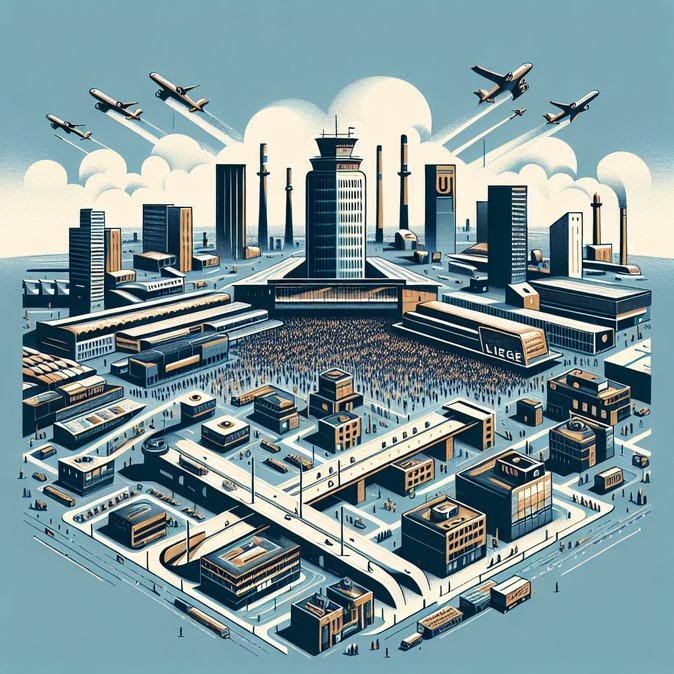
Tensions are rising at Liège Airport, Europe’s eighth-largest cargo hub, after the FGTB union condemned the dismissal of three employees—among them a protected union representative—in early January. Management cites declining demand in the events-services division, but FGTB argues the layoffs are unjustified given the airport’s “staggering” 2025 financial results and its ongoing recruitment in other departments.
The dispute highlights a broader labour-relations challenge in Belgium’s aviation sector. Liège Airport has expanded rapidly as an overnight freight gateway for DHL, Alibaba and a growing list of e-commerce players. Cargo volumes exceeded one million tonnes in 2025, but unions say productivity gains have not translated into better job security or working conditions.
Corporate travel planners scrambling to reroute staff or send crisis-management teams to Belgium can simplify the paperwork side by using VisaHQ’s online visa and passport services. The platform (https://www.visahq.com/belgium/) provides step-by-step guidance, fast turnaround options and real-time status updates, helping ensure that employees arrive with the correct documentation even amid last-minute flight changes.
![Union plans 10 February protest after redundancies at Liège Airport]()
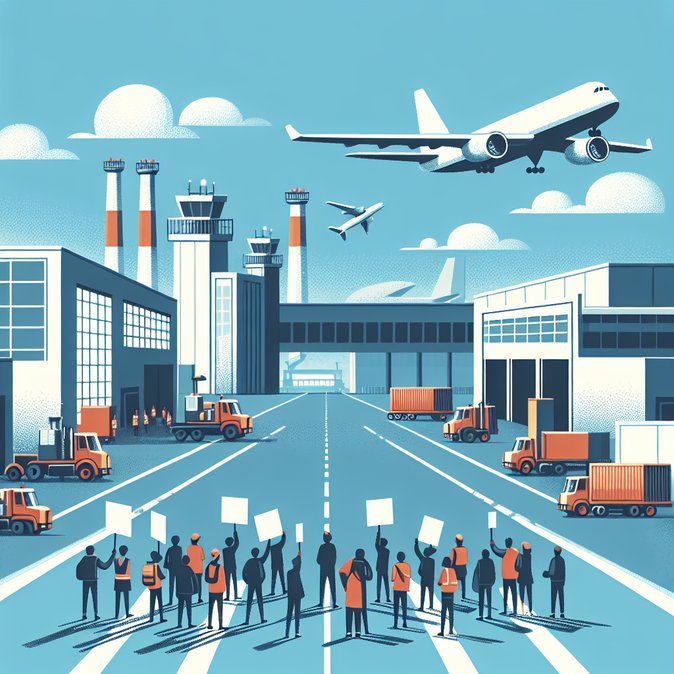
FGTB will stage a protest outside the passenger terminal at 13:00 on 10 February, coinciding with a province-wide strike day against federal austerity measures. Although the demonstration is not expected to shut down operations, airport authorities have warned airlines and handling agents to anticipate local traffic diversions and possible picketing at staff entrances. Business travellers with tight connections to onward road or rail transport should allow extra time.
For mobility managers the key risk is downstream: any escalation—such as work-to-rule or secondary action by ground handlers—could delay late-evening freighter departures and disrupt just-in-time supply chains for high-value goods. Companies relying on Liège for critical parts or temperature-controlled pharmaceuticals should review alternative routings via Brussels or Luxembourg.
Belgian airports have faced intermittent labour unrest over the past 18 months as inflation-linked wage indexation, automation and stricter shift patterns collide. The Liège case will be watched closely because the airport’s unique cargo-heavy profile often sets pay-bargaining precedents for the sector.
The dispute highlights a broader labour-relations challenge in Belgium’s aviation sector. Liège Airport has expanded rapidly as an overnight freight gateway for DHL, Alibaba and a growing list of e-commerce players. Cargo volumes exceeded one million tonnes in 2025, but unions say productivity gains have not translated into better job security or working conditions.
Corporate travel planners scrambling to reroute staff or send crisis-management teams to Belgium can simplify the paperwork side by using VisaHQ’s online visa and passport services. The platform (https://www.visahq.com/belgium/) provides step-by-step guidance, fast turnaround options and real-time status updates, helping ensure that employees arrive with the correct documentation even amid last-minute flight changes.
FGTB will stage a protest outside the passenger terminal at 13:00 on 10 February, coinciding with a province-wide strike day against federal austerity measures. Although the demonstration is not expected to shut down operations, airport authorities have warned airlines and handling agents to anticipate local traffic diversions and possible picketing at staff entrances. Business travellers with tight connections to onward road or rail transport should allow extra time.
For mobility managers the key risk is downstream: any escalation—such as work-to-rule or secondary action by ground handlers—could delay late-evening freighter departures and disrupt just-in-time supply chains for high-value goods. Companies relying on Liège for critical parts or temperature-controlled pharmaceuticals should review alternative routings via Brussels or Luxembourg.
Belgian airports have faced intermittent labour unrest over the past 18 months as inflation-linked wage indexation, automation and stricter shift patterns collide. The Liège case will be watched closely because the airport’s unique cargo-heavy profile often sets pay-bargaining precedents for the sector.