Belgium’s three main railway unions (ACOD-Spoor/CGSP-Cheminots, CSC-Transcom and SLFP-Cheminots) have confirmed a coordinated national strike that will halt large parts of the country’s passenger network for five days, from 22:00 on Sunday 25 January until the last scheduled train on Friday 30 January.
The walk-out is a response to a draft bill sponsored by Federal Mobility Minister Jean-Luc Crucke that would abolish the traditional system of permanent civil-service appointments at SNCB/NMBS and infrastructure manager Infrabel from mid-2026. Unions argue the reform will erode job security and weaken collective bargaining, while the government insists it is necessary to prepare the rail sector for EU-mandated market liberalisation by 2032.
Rail operator SNCB says only a skeleton timetable will operate throughout the week. Finalised schedules will appear in the journey planner and mobile app 24 hours before each strike day. International services—Eurostar, TGV INOUÏ, ICE, Thalys/Ouigo and other cross-border trains—are expected to run a reduced service or be re-routed, and travellers have been advised to check with carriers before departure. Refund and exchange rules remain unchanged, but capacity constraints mean last-minute seat availability will be very limited.
![Belgium braced for five-day national rail strike from 25 January]()
Travellers coming from abroad who may need to adjust their schedules should double-check their documentation, especially if rerouting through neighbouring countries. VisaHQ (https://www.visahq.com/belgium/) can quickly verify Schengen entry requirements, arrange last-minute visa processing and provide courier delivery of passports, ensuring that the strike-related disruption does not turn into a paperwork headache.
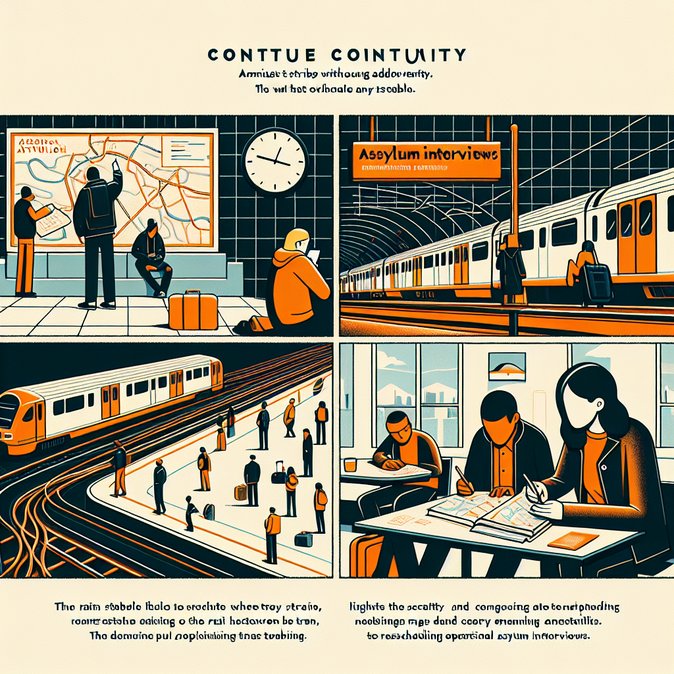
The disruption has knock-on effects beyond the rail network. The Office of the Commissioner General for Refugees and Stateless Persons (CGRS) has told asylum applicants that scheduled personal interviews will go ahead; those who cannot reach Brussels must notify the CGRS on the day so a new appointment can be arranged. Many corporates are also activating contingency plans, including car-pooling, chartered coaches and remote-work protocols for employees who commute by train.
For business-travel managers, the practical advice is to re-route teams through Brussels Airport (which remains fully operational) or to shift meetings online where possible. Employers should also anticipate longer road journeys: previous rail strikes have increased peak-hour traffic around Brussels and Antwerp by up to 35 %. Eurostar has promised to publish its adjusted timetables and refund policy by Friday 23 January.
If the draft bill passes unchanged, unions warn this strike may be the first in a rolling campaign. Mobility stakeholders therefore face a period of heightened industrial-action risk through the first half of 2026.
The walk-out is a response to a draft bill sponsored by Federal Mobility Minister Jean-Luc Crucke that would abolish the traditional system of permanent civil-service appointments at SNCB/NMBS and infrastructure manager Infrabel from mid-2026. Unions argue the reform will erode job security and weaken collective bargaining, while the government insists it is necessary to prepare the rail sector for EU-mandated market liberalisation by 2032.
Rail operator SNCB says only a skeleton timetable will operate throughout the week. Finalised schedules will appear in the journey planner and mobile app 24 hours before each strike day. International services—Eurostar, TGV INOUÏ, ICE, Thalys/Ouigo and other cross-border trains—are expected to run a reduced service or be re-routed, and travellers have been advised to check with carriers before departure. Refund and exchange rules remain unchanged, but capacity constraints mean last-minute seat availability will be very limited.

Travellers coming from abroad who may need to adjust their schedules should double-check their documentation, especially if rerouting through neighbouring countries. VisaHQ (https://www.visahq.com/belgium/) can quickly verify Schengen entry requirements, arrange last-minute visa processing and provide courier delivery of passports, ensuring that the strike-related disruption does not turn into a paperwork headache.
The disruption has knock-on effects beyond the rail network. The Office of the Commissioner General for Refugees and Stateless Persons (CGRS) has told asylum applicants that scheduled personal interviews will go ahead; those who cannot reach Brussels must notify the CGRS on the day so a new appointment can be arranged. Many corporates are also activating contingency plans, including car-pooling, chartered coaches and remote-work protocols for employees who commute by train.
For business-travel managers, the practical advice is to re-route teams through Brussels Airport (which remains fully operational) or to shift meetings online where possible. Employers should also anticipate longer road journeys: previous rail strikes have increased peak-hour traffic around Brussels and Antwerp by up to 35 %. Eurostar has promised to publish its adjusted timetables and refund policy by Friday 23 January.
If the draft bill passes unchanged, unions warn this strike may be the first in a rolling campaign. Mobility stakeholders therefore face a period of heightened industrial-action risk through the first half of 2026.