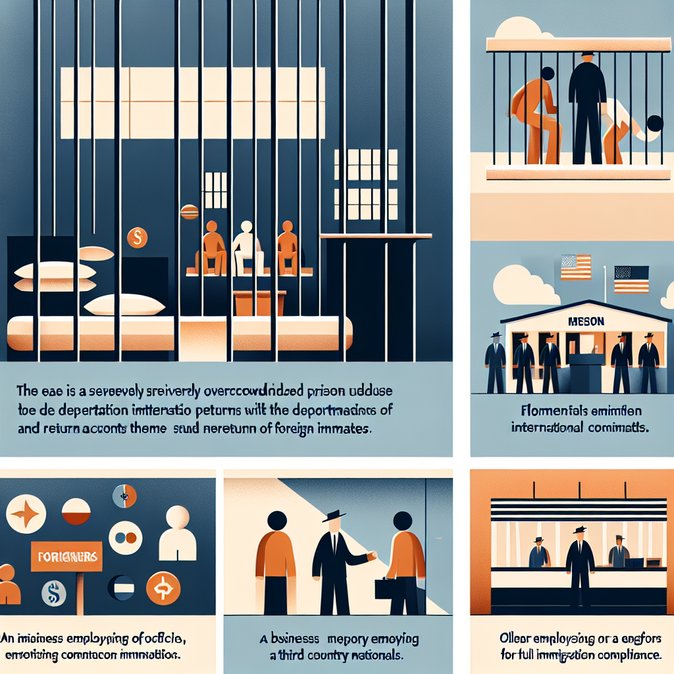
Cyprus’ Justice Ministry confirmed on 21 January that 164 foreign inmates were removed from the island between 10 December 2025 and 20 January 2026, as part of an accelerated deportation programme aimed at tackling chronic prison congestion. In total, 643 third-country nationals left Cyprus during the 45-day period, the majority through EU-funded voluntary-return schemes, while 29 people agreed to leave at their own expense.
The operation follows a presidential directive issued in December setting numerical targets for both voluntary and forced returns in 2026. Officials told the Cyprus Mail that foreign nationals account for more than half of the 1,120-strong prison population and occupy the bulk of cells in Nicosia Central Prison, where overcrowding has long breached Council of Europe thresholds. Some cells measuring barely six square metres were reportedly accommodating four prisoners.
Deportations were coordinated by the Aliens & Immigration Service working alongside the Deputy Ministry of Migration and International Protection. Priority was given to inmates convicted of non-violent or ‘administrative’ offences, such as immigration breaches and low-level property crimes. Police also intensified workplace raids to identify undocumented migrants living outside the prison estate, generating a steady pipeline of new cases for removal.
![Cyprus deported 164 foreign nationals to ease prison overcrowding]()
Organizations or individuals needing clarity on Cyprus entry rules can turn to VisaHQ, which offers up-to-date guidance on visas, residence permits and other travel documents through its easy-to-use platform (https://www.visahq.com/cyprus/). Leveraging such expertise helps businesses and travelers stay compliant and avoid the kinds of immigration pitfalls now leading to intensified enforcement.
Cypriot authorities argue that faster returns serve a dual purpose: they free up scarce prison beds and act as a deterrent to new arrivals along the Green Line. Human-rights groups, however, warn that rapid procedures risk undermining access to legal counsel and appeal rights. The ministry insists that every case is reviewed individually and that voluntary-return options are offered first.
For employers and relocation managers, the message is clear: Cyprus will maintain strict enforcement in 2026, and companies hosting third-country talent must double-check residence and work-permit compliance to avoid detention or deportation of staff.
The operation follows a presidential directive issued in December setting numerical targets for both voluntary and forced returns in 2026. Officials told the Cyprus Mail that foreign nationals account for more than half of the 1,120-strong prison population and occupy the bulk of cells in Nicosia Central Prison, where overcrowding has long breached Council of Europe thresholds. Some cells measuring barely six square metres were reportedly accommodating four prisoners.
Deportations were coordinated by the Aliens & Immigration Service working alongside the Deputy Ministry of Migration and International Protection. Priority was given to inmates convicted of non-violent or ‘administrative’ offences, such as immigration breaches and low-level property crimes. Police also intensified workplace raids to identify undocumented migrants living outside the prison estate, generating a steady pipeline of new cases for removal.

Organizations or individuals needing clarity on Cyprus entry rules can turn to VisaHQ, which offers up-to-date guidance on visas, residence permits and other travel documents through its easy-to-use platform (https://www.visahq.com/cyprus/). Leveraging such expertise helps businesses and travelers stay compliant and avoid the kinds of immigration pitfalls now leading to intensified enforcement.
Cypriot authorities argue that faster returns serve a dual purpose: they free up scarce prison beds and act as a deterrent to new arrivals along the Green Line. Human-rights groups, however, warn that rapid procedures risk undermining access to legal counsel and appeal rights. The ministry insists that every case is reviewed individually and that voluntary-return options are offered first.
For employers and relocation managers, the message is clear: Cyprus will maintain strict enforcement in 2026, and companies hosting third-country talent must double-check residence and work-permit compliance to avoid detention or deportation of staff.