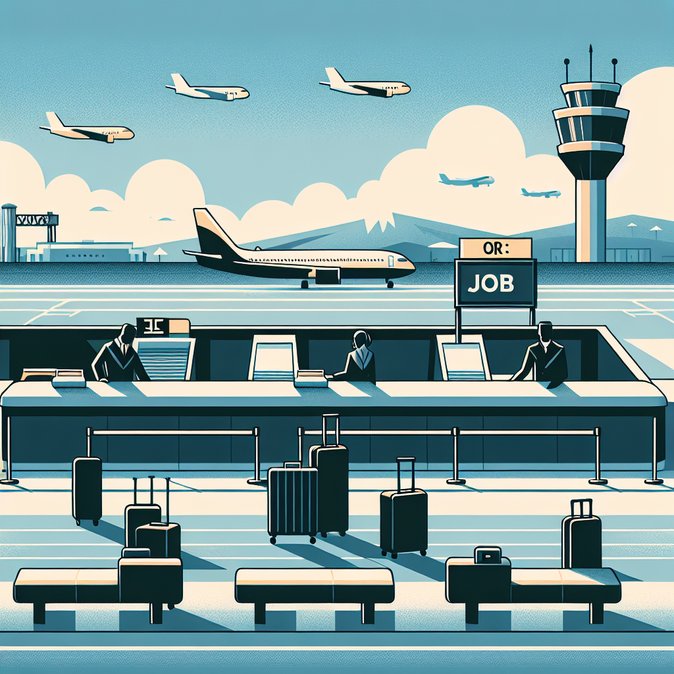
Vienna International Airport (VIE) confirmed on 21 January 2026 that it will cut roughly 200 positions this year after revising its 2026 traffic forecast down to 30 million passengers—more than 8 percent below last year’s record 32.6 million. Management blamed a cocktail of rising aviation taxes, high ground-handling costs and the decision by several low-cost airlines to shrink their Vienna operations. Hungarian ultra-low-cost carrier Wizz Air will close its Schwechat base entirely by 15 March 2026, removing five Airbus jets, while Ryanair/Lauda will redeploy capacity elsewhere in Central Europe. (exxpress.at)
Although flag-carrier Austrian Airlines is trimming its short-haul fleet—retiring 17 Embraer-195s in favor of six larger Airbus A320neos—it expects to carry slightly more passengers thanks to higher seat density. Airport chief executive Julian Jäger told reporters the layoffs form part of a “comprehensive cost-savings package” designed to protect the bottom line as revenue is projected to fall €30 million this year. Net profit is still expected to match the €210 million booked for 2025. (exxpress.at)
![Vienna Airport to Axe 200 Jobs as Wizz Air Quits and Ryanair Scales Back]()
For corporate mobility managers the retrenchment is a warning that Vienna’s days as a cut-price hub may be ending. A distance-based flight tax of up to €12 per ticket already weighs heavily on point-to-point routes; the loss of ultra-low-cost frequencies reduces itinerary flexibility for regional commuters who rely on Vienna for connections to Bratislava, Budapest and the Western Balkans. Companies may need to shift travellers to Bratislava or Budapest airports, lengthening door-to-door journey times and complicating Schengen-stay calculations.
VisaHQ’s online platform (https://www.visahq.com/austria/) can cushion some of that disruption by securing Austrian and wider Schengen visas quickly and in bulk, allowing corporate mobility teams to reroute staff through alternative airports without worrying about paperwork bottlenecks. The service tracks entry rules in real time, so last-minute shifts from Vienna to Bratislava or Budapest can be executed with minimal administrative friction.
Labour unions have demanded assurances that critical airport functions—security, immigration control and de-icing—will remain fully staffed after the cuts. Management says the redundancies will be spread across administration and commercial divisions, but has not ruled out further measures if demand weakens. Multinationals with Vienna-based assignees should monitor flight schedules closely during the March/April switch-over and build extra slack into travel plans until the capacity reshuffle stabilises.
Although flag-carrier Austrian Airlines is trimming its short-haul fleet—retiring 17 Embraer-195s in favor of six larger Airbus A320neos—it expects to carry slightly more passengers thanks to higher seat density. Airport chief executive Julian Jäger told reporters the layoffs form part of a “comprehensive cost-savings package” designed to protect the bottom line as revenue is projected to fall €30 million this year. Net profit is still expected to match the €210 million booked for 2025. (exxpress.at)

For corporate mobility managers the retrenchment is a warning that Vienna’s days as a cut-price hub may be ending. A distance-based flight tax of up to €12 per ticket already weighs heavily on point-to-point routes; the loss of ultra-low-cost frequencies reduces itinerary flexibility for regional commuters who rely on Vienna for connections to Bratislava, Budapest and the Western Balkans. Companies may need to shift travellers to Bratislava or Budapest airports, lengthening door-to-door journey times and complicating Schengen-stay calculations.
VisaHQ’s online platform (https://www.visahq.com/austria/) can cushion some of that disruption by securing Austrian and wider Schengen visas quickly and in bulk, allowing corporate mobility teams to reroute staff through alternative airports without worrying about paperwork bottlenecks. The service tracks entry rules in real time, so last-minute shifts from Vienna to Bratislava or Budapest can be executed with minimal administrative friction.
Labour unions have demanded assurances that critical airport functions—security, immigration control and de-icing—will remain fully staffed after the cuts. Management says the redundancies will be spread across administration and commercial divisions, but has not ruled out further measures if demand weakens. Multinationals with Vienna-based assignees should monitor flight schedules closely during the March/April switch-over and build extra slack into travel plans until the capacity reshuffle stabilises.