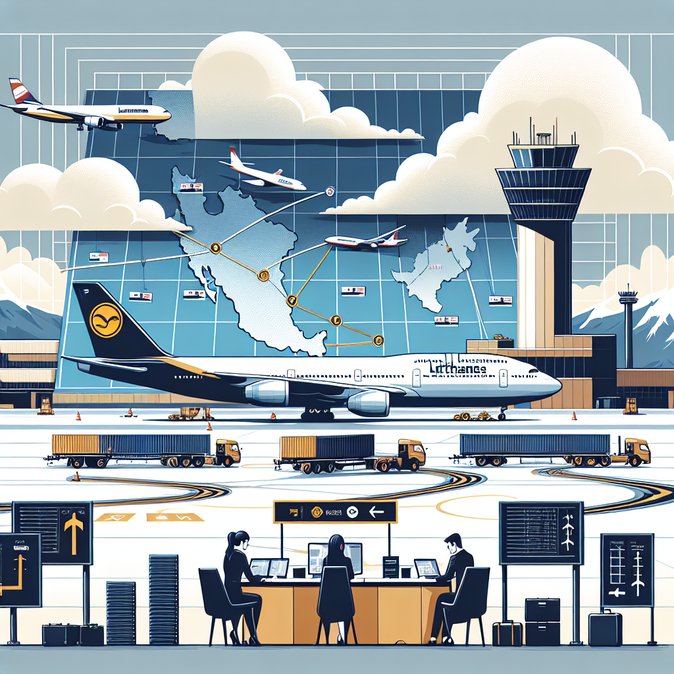
Germany’s flag-carrier has pulled the plug on its Tehran route for at least ten weeks. A Lufthansa spokeswoman confirmed on 20 January 2026 that all passenger and cargo flights “from and to Tehran up to and including 29 March” are cancelled. Austrian Airlines, the Vienna-based subsidiary, is also suspending its Tehran rotations until 16 February.
The decision follows renewed guidance from the EU Aviation Safety Agency (EASA) and a flurry of Western carrier warnings after Iran’s temporary closure of its airspace during nationwide protests earlier this month. Lufthansa said it will continue to avoid Iranian airspace and most Iraqi airspace, using a narrow southern corridor only for essential overflights. Overnight services to Tel Aviv and Amman are being rescheduled to daylight departures to mitigate drone-warfare risks.
Visa and transit paperwork can quickly become a headache when routings suddenly shift across multiple jurisdictions. VisaHQ’s Germany portal (https://www.visahq.com/germany/) helps travelers and mobility teams secure the additional transit visas that may now be required when re-routing via hubs such as Istanbul, Doha, or Muscat. The platform also expedites last-minute business-visa applications and provides real-time guidance on documentation changes, reducing administrative friction amid the ongoing schedule volatility.
![Lufthansa suspends Tehran service and reroutes Middle-East network amid security concerns]()
For corporate travel managers the move is disruptive. Frankfurt–Tehran was a pivotal link for German engineering firms with projects in Iran and an onward connection point into Central Asia. Passengers now face multi-stop itineraries via Istanbul or Doha, longer flight times and higher ticket costs. Air-cargo capacity for German exporters of pharmaceuticals and auto parts will tighten, potentially increasing reliance on road–rail intermodal routes through Turkey.
Insurance and immigration compliance teams should note that employees who need to reach Tehran will require itinerary approvals that exclude Lufthansa Group flights; many travel policies already exclude cover for carriers operating in high-risk airspace. Companies should also review force-majeure clauses in Iran-related contracts in case project delays arise.
Strategically, the suspension underscores how swiftly geopolitical flare-ups can upend carefully rebuilt post-pandemic networks. Airlines with strong German corporate accounts may seize market share on the Tehran corridor, but they too remain exposed to evolving security assessments. Mobility professionals should keep contingency routings active and communicate timetable changes to Middle-East assignees.
The decision follows renewed guidance from the EU Aviation Safety Agency (EASA) and a flurry of Western carrier warnings after Iran’s temporary closure of its airspace during nationwide protests earlier this month. Lufthansa said it will continue to avoid Iranian airspace and most Iraqi airspace, using a narrow southern corridor only for essential overflights. Overnight services to Tel Aviv and Amman are being rescheduled to daylight departures to mitigate drone-warfare risks.
Visa and transit paperwork can quickly become a headache when routings suddenly shift across multiple jurisdictions. VisaHQ’s Germany portal (https://www.visahq.com/germany/) helps travelers and mobility teams secure the additional transit visas that may now be required when re-routing via hubs such as Istanbul, Doha, or Muscat. The platform also expedites last-minute business-visa applications and provides real-time guidance on documentation changes, reducing administrative friction amid the ongoing schedule volatility.
For corporate travel managers the move is disruptive. Frankfurt–Tehran was a pivotal link for German engineering firms with projects in Iran and an onward connection point into Central Asia. Passengers now face multi-stop itineraries via Istanbul or Doha, longer flight times and higher ticket costs. Air-cargo capacity for German exporters of pharmaceuticals and auto parts will tighten, potentially increasing reliance on road–rail intermodal routes through Turkey.
Insurance and immigration compliance teams should note that employees who need to reach Tehran will require itinerary approvals that exclude Lufthansa Group flights; many travel policies already exclude cover for carriers operating in high-risk airspace. Companies should also review force-majeure clauses in Iran-related contracts in case project delays arise.
Strategically, the suspension underscores how swiftly geopolitical flare-ups can upend carefully rebuilt post-pandemic networks. Airlines with strong German corporate accounts may seize market share on the Tehran corridor, but they too remain exposed to evolving security assessments. Mobility professionals should keep contingency routings active and communicate timetable changes to Middle-East assignees.