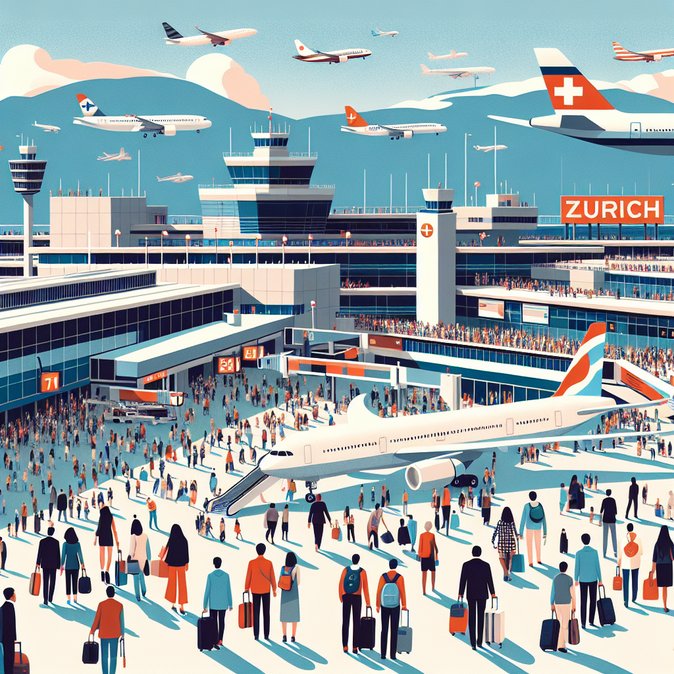
Zurich Airport has confirmed what many travel-managers already sensed on their expense reports: corporate and leisure traffic to Switzerland is not just back, it is expanding faster than the European average. Figures released on 17 January show that the hub handled 32.6 million passengers in 2025—4.5 % more than 2024 and 1.1 million above the previous all-time high set in 2019.
Three forces powered the rebound. First, trans-Atlantic corporate demand surged as life-science, private-banking and tech multinationals ramped up face-to-face meetings; SWISS, Delta and United responded by adding capacity rather than chasing yield. Second, Switzerland’s renewed cachet as a high-end leisure destination kept premium cabins full beyond the Monday-to-Thursday business window, smoothing load factors. Third, Gulf and Asian carriers reinstated double-daily services, restoring the east-west connectivity the airport lost during the pandemic.
For mobility managers, the numbers translate into better seat availability and slightly lower average fares on key long-haul routes. Travel-management companies report that Zurich-New York business-class inventory is now 14 % higher than a year ago, while advance fares are down 7 %. Capacity gains have also reduced the need for costly charter flights on specialist routes such as Zurich–Bangalore, where Lufthansa’s same-day connection via Munich returned in December.
![Zurich Airport Smashes Pre-Covid Record with 32.6 Million Passengers in 2025]()
When those seats are booked, executives of non-visa-exempt nationalities still need the right paperwork. VisaHQ’s dedicated Switzerland page (https://www.visahq.com/switzerland/) lets travel coordinators arrange visas entirely online, track status in real time and consolidate billing, taking the administrative sting out of surging trip volumes.
Infrastructure, however, is straining. Flughafen Zürich AG has accelerated its CHF 700 million Dock A rebuild and will add eight CT security scanners by July to keep checkpoint times under ten minutes. HR teams should warn staff to allow extra time until works finish in late 2026. A direct rail link from the Limmattal corridor—opening a year early in December 2026—should shave up to 12 minutes off airport commutes for western-Zurich commuters.
Beyond pure passenger numbers, Zurich’s out-performance cements its status as the Lufthansa Group’s most profitable base, a factor likely to channel future fleet investments to Switzerland. For assignment managers juggling complex project travel, that promises still more long-haul options and schedule flexibility over the next two years.
Three forces powered the rebound. First, trans-Atlantic corporate demand surged as life-science, private-banking and tech multinationals ramped up face-to-face meetings; SWISS, Delta and United responded by adding capacity rather than chasing yield. Second, Switzerland’s renewed cachet as a high-end leisure destination kept premium cabins full beyond the Monday-to-Thursday business window, smoothing load factors. Third, Gulf and Asian carriers reinstated double-daily services, restoring the east-west connectivity the airport lost during the pandemic.
For mobility managers, the numbers translate into better seat availability and slightly lower average fares on key long-haul routes. Travel-management companies report that Zurich-New York business-class inventory is now 14 % higher than a year ago, while advance fares are down 7 %. Capacity gains have also reduced the need for costly charter flights on specialist routes such as Zurich–Bangalore, where Lufthansa’s same-day connection via Munich returned in December.

When those seats are booked, executives of non-visa-exempt nationalities still need the right paperwork. VisaHQ’s dedicated Switzerland page (https://www.visahq.com/switzerland/) lets travel coordinators arrange visas entirely online, track status in real time and consolidate billing, taking the administrative sting out of surging trip volumes.
Infrastructure, however, is straining. Flughafen Zürich AG has accelerated its CHF 700 million Dock A rebuild and will add eight CT security scanners by July to keep checkpoint times under ten minutes. HR teams should warn staff to allow extra time until works finish in late 2026. A direct rail link from the Limmattal corridor—opening a year early in December 2026—should shave up to 12 minutes off airport commutes for western-Zurich commuters.
Beyond pure passenger numbers, Zurich’s out-performance cements its status as the Lufthansa Group’s most profitable base, a factor likely to channel future fleet investments to Switzerland. For assignment managers juggling complex project travel, that promises still more long-haul options and schedule flexibility over the next two years.