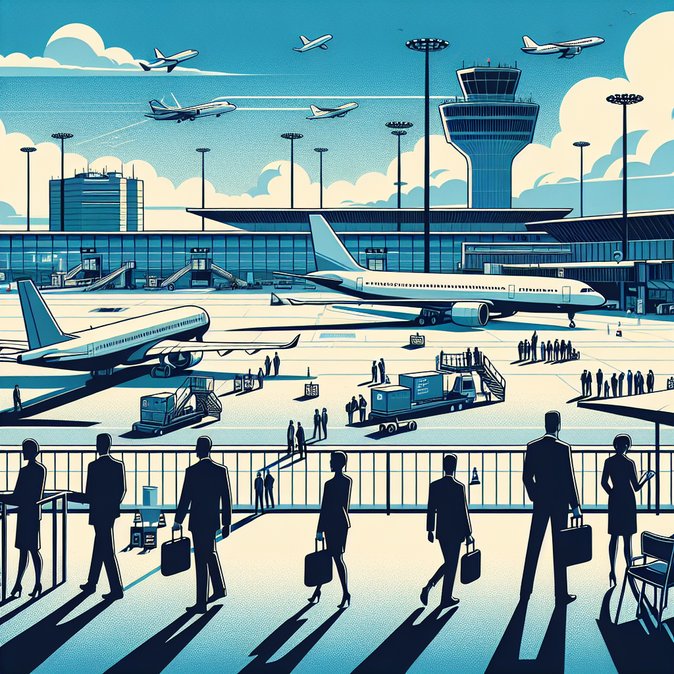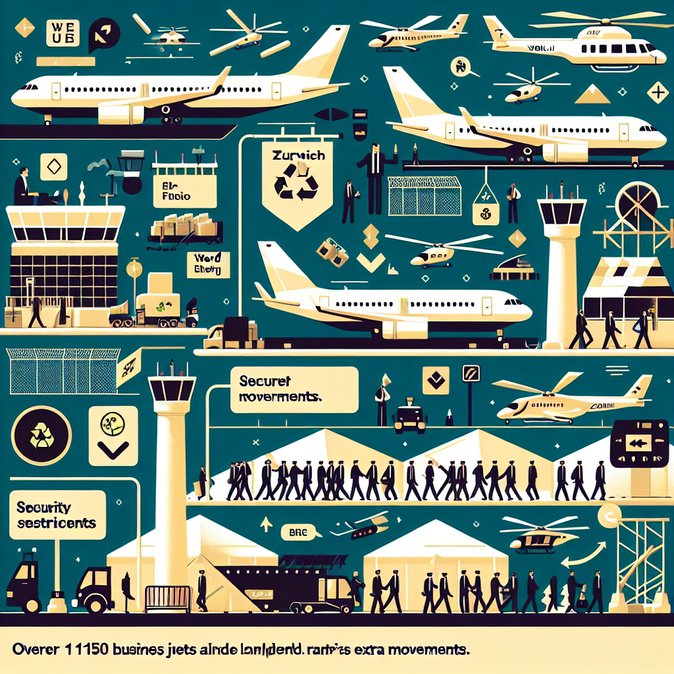
Sustainability may be on every panel agenda, but the World Economic Forum’s guests continue to arrive in carbon-intensive style. Flight-tracking data show that more than 150 private jets landed in Switzerland between 17 and 18 January, many owned or chartered by billionaires, tech CEOs and heads of state. Zurich Airport alone expects around 1,000 extra business-jet movements this week after securing temporary extensions to its night-curfew exemptions. Engadin Airport, the closest landing strip to Davos, has imposed weight and slot limits, forcing larger aircraft to divert to Zurich or to Friedrichshafen just across the German border.
Fleet composition underscores the ultra-long-haul reach of Davos’s clientele: the Gulfstream G650 and Bombardier Global 7500 dominate ramp space thanks to their non-stop range from Palm Beach, Dubai and Doha. Helicopter transfers from Zurich to Davos—priced at roughly CHF 9,500 for a six-seat twin-engine—sold out days ago, pushing late-bookers onto chauffeured limousines for the two-hour alpine drive up the A13 motorway.
For delegates who still need to arrange entry paperwork, VisaHQ can expedite Swiss visa processing, provide real-time status alerts and coordinate courier delivery of documents, helping both private-flight passengers and last-minute commercial travellers minimise disruption—details are at https://www.visahq.com/switzerland/
![Private-Jet Traffic Soars as Global Elite Fly in for Davos WEF 2026]()
The surge carries three practical implications for mobility teams. First, commercial seats on popular morning departures are disappearing faster than usual as some delegates opt for scheduled flights; flexible tickets and back-up routings via Basel or Geneva are advisable. Second, corporate flight departments must file any last-minute slot requests at least 48 hours ahead, as the Federal Office of Civil Aviation is manually vetting every general-aviation flight plan filed between 17 and 25 January. Third, sustainability officers face awkward optics: analysts estimate that WEF-related business-aviation will emit roughly 2,300 t of CO₂—equivalent to the annual footprint of 290 Swiss residents. Companies such as Nestlé and UBS are encouraging senior staff to fly commercial and offset unavoidable emissions through Swiss-based foundation Myclimate.
Security is equally tight. The Swiss Air Force has activated restricted zone LS-R13 over Davos and deployed surface-to-air assets, while 5,000 soldiers provide perimeter protection on the ground. Pilots straying into the zone without clearance risk interception and hefty fines.
Looking ahead, travel managers planning for Davos 2027 should apply for landing slots as soon as the International Air Transport Association opens the winter scheduling window in July, secure helicopter allotments by September and pre-clear multi-passport visa needs well before the Christmas break.
Fleet composition underscores the ultra-long-haul reach of Davos’s clientele: the Gulfstream G650 and Bombardier Global 7500 dominate ramp space thanks to their non-stop range from Palm Beach, Dubai and Doha. Helicopter transfers from Zurich to Davos—priced at roughly CHF 9,500 for a six-seat twin-engine—sold out days ago, pushing late-bookers onto chauffeured limousines for the two-hour alpine drive up the A13 motorway.
For delegates who still need to arrange entry paperwork, VisaHQ can expedite Swiss visa processing, provide real-time status alerts and coordinate courier delivery of documents, helping both private-flight passengers and last-minute commercial travellers minimise disruption—details are at https://www.visahq.com/switzerland/

The surge carries three practical implications for mobility teams. First, commercial seats on popular morning departures are disappearing faster than usual as some delegates opt for scheduled flights; flexible tickets and back-up routings via Basel or Geneva are advisable. Second, corporate flight departments must file any last-minute slot requests at least 48 hours ahead, as the Federal Office of Civil Aviation is manually vetting every general-aviation flight plan filed between 17 and 25 January. Third, sustainability officers face awkward optics: analysts estimate that WEF-related business-aviation will emit roughly 2,300 t of CO₂—equivalent to the annual footprint of 290 Swiss residents. Companies such as Nestlé and UBS are encouraging senior staff to fly commercial and offset unavoidable emissions through Swiss-based foundation Myclimate.
Security is equally tight. The Swiss Air Force has activated restricted zone LS-R13 over Davos and deployed surface-to-air assets, while 5,000 soldiers provide perimeter protection on the ground. Pilots straying into the zone without clearance risk interception and hefty fines.
Looking ahead, travel managers planning for Davos 2027 should apply for landing slots as soon as the International Air Transport Association opens the winter scheduling window in July, secure helicopter allotments by September and pre-clear multi-passport visa needs well before the Christmas break.