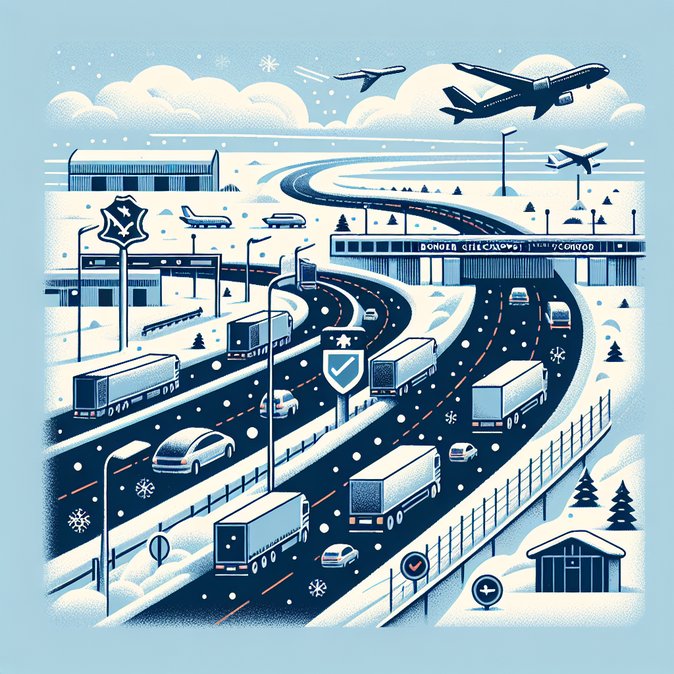
A combination of un-announced German passport inspections and persistent snowfall turned Austria’s A12 Inntalautobahn into a 100-kilometre car park over the weekend and into Monday, 19 January 2026. German police began random checks at the Kufstein–Kiefersfelden frontier just after midnight on Saturday as part of Berlin’s new migration-control package, catching motorists and freight hauliers off-guard. By mid-morning, queues stretched well past Kufstein Süd, mirroring holiday-change-over traffic on what is already one of Europe’s busiest winter corridors.
The weather piled on the misery. Fresh snow and patches of black ice forced snow-ploughs onto lanes already narrowed by resurfacing works between Hall West and Innsbruck Ost. Average speeds dropped below 20 km/h and live data from the portal Reisereporter showed delays of up to 90 minutes just to clear the Kufstein node. Innsbruck Airport reported charter-flight slot losses because transfer coaches were trapped on the motorway, while the Tyrol Chamber of Commerce warned of contractual penalties for late perishable-goods deliveries.
Whether you’re a ski tourist or a logistics planner, keeping travel documents in perfect order is now more critical than ever. VisaHQ can help by providing real-time visa and passport guidance for Austria and neighbouring Schengen states, plus courier renewal services and automated expiry alerts. Check the latest requirements at https://www.visahq.com/austria/ before heading toward the Kufstein checkpoint or any alternative route.
![Surprise Border Checks and Heavy Snow Create Gridlock on Austria’s A12 Inntalautobahn]()
For global-mobility managers the episode is a wake-up call. Germany’s ad-hoc controls are legal under Schengen safeguard clauses and can be imposed with minimal notice. Companies that rely on daily cross-border commuting or “milk-run” logistics should therefore build generous buffers into winter itineraries and keep alternative routings via the Brenner Pass (A13) on standby. Tyrolean “anti-rat-run” fines—designed to stop drivers diverting onto village roads—remain in force, limiting creative detours.
Best practice in the coming weeks includes equipping travellers with the physical passports that German border officers prefer over national ID cards, and ensuring they carry hotel or ski-pass confirmations should police invoke winter-contingency powers. Freight forwarders moving time-critical loads are already booking overnight slots, when both traffic and inspections tend to ease.
Politically, the clash has reignited an old dispute: Bavarian officials blame Austrian weekend lorry bans for the bottleneck, while Tyrolean leaders counter that Germany’s snap checks hurt the regional economy. Unless a coordinated timetable for inspections is agreed, mobility specialists can expect more stop-and-go weekends through February.
The weather piled on the misery. Fresh snow and patches of black ice forced snow-ploughs onto lanes already narrowed by resurfacing works between Hall West and Innsbruck Ost. Average speeds dropped below 20 km/h and live data from the portal Reisereporter showed delays of up to 90 minutes just to clear the Kufstein node. Innsbruck Airport reported charter-flight slot losses because transfer coaches were trapped on the motorway, while the Tyrol Chamber of Commerce warned of contractual penalties for late perishable-goods deliveries.
Whether you’re a ski tourist or a logistics planner, keeping travel documents in perfect order is now more critical than ever. VisaHQ can help by providing real-time visa and passport guidance for Austria and neighbouring Schengen states, plus courier renewal services and automated expiry alerts. Check the latest requirements at https://www.visahq.com/austria/ before heading toward the Kufstein checkpoint or any alternative route.

For global-mobility managers the episode is a wake-up call. Germany’s ad-hoc controls are legal under Schengen safeguard clauses and can be imposed with minimal notice. Companies that rely on daily cross-border commuting or “milk-run” logistics should therefore build generous buffers into winter itineraries and keep alternative routings via the Brenner Pass (A13) on standby. Tyrolean “anti-rat-run” fines—designed to stop drivers diverting onto village roads—remain in force, limiting creative detours.
Best practice in the coming weeks includes equipping travellers with the physical passports that German border officers prefer over national ID cards, and ensuring they carry hotel or ski-pass confirmations should police invoke winter-contingency powers. Freight forwarders moving time-critical loads are already booking overnight slots, when both traffic and inspections tend to ease.
Politically, the clash has reignited an old dispute: Bavarian officials blame Austrian weekend lorry bans for the bottleneck, while Tyrolean leaders counter that Germany’s snap checks hurt the regional economy. Unless a coordinated timetable for inspections is agreed, mobility specialists can expect more stop-and-go weekends through February.