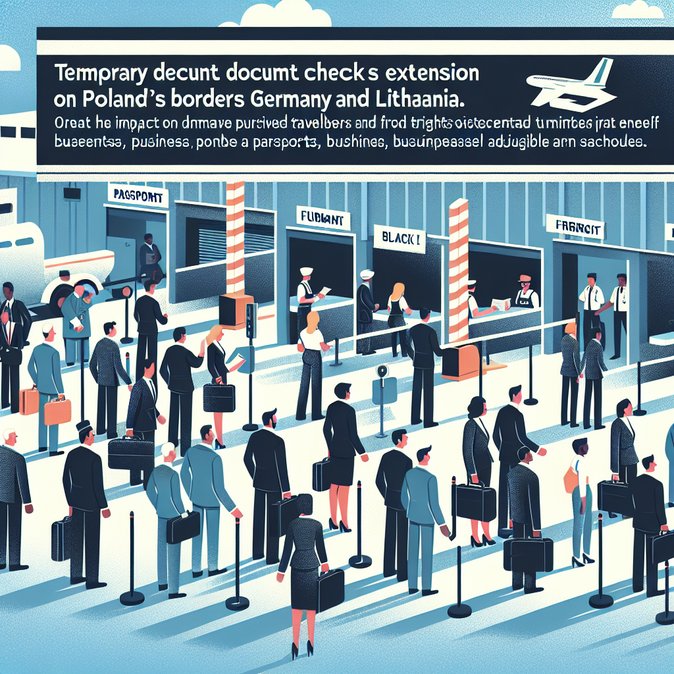
Poland’s Council of Ministers has formally prolonged temporary border controls on its western and north-eastern frontiers, keeping document checks in place at road and rail crossings with Germany and Lithuania until 4 April 2026.
The controls were first introduced in July 2025 as an emergency response to secondary movements of migrants who had entered the EU via Belarus and the Baltic states. According to the Interior Ministry, the number of irregular crossings detected on routes leading through Poland to Germany rose sharply in the final quarter of 2025, prompting Warsaw to roll the measure forward by another 90 days.
Travellers who want extra peace of mind about the latest entry requirements can turn to VisaHQ, which tracks real-time changes to Polish border policy and offers streamlined visa, passport and ID services through its dedicated portal (https://www.visahq.com/poland/). The platform’s step-by-step tools are particularly useful for cross-border commuters and logistics managers who cannot afford last-minute hold-ups.
![Poland Extends Border Checks with Germany and Lithuania to 4 April 2026]()
Practically, the extension means that travellers—including EU citizens—must carry passports or national ID cards and should expect spot checks by the Polish Border Guard, police and Territorial Defence units at the main crossing points such as Świecko (A2) and Budzisko on the S8 corridor. Commuters report delays of 5-15 minutes at peak hours, while logistics operators moving automotive and manufacturing components into Poland are budgeting up to 30 minutes of buffer time per truck.
From a policy perspective, officials describe the current phase as a “testing ground” for smart-border technology. Poland is piloting e-gates connected to the EU Entry/Exit System and experimenting with blockchain-sealed freight containers. While these innovations could eventually streamline movements, travellers should be prepared for teething problems during the trial period.
Companies that rely on daily cross-border staff mobility—especially in the Szczecin-Berlin and Suwałki-Kaunas economic corridors—are advised to update travel-risk assessments, remind employees of document requirements and monitor wait-time dashboards published by the Border Guard.
The controls were first introduced in July 2025 as an emergency response to secondary movements of migrants who had entered the EU via Belarus and the Baltic states. According to the Interior Ministry, the number of irregular crossings detected on routes leading through Poland to Germany rose sharply in the final quarter of 2025, prompting Warsaw to roll the measure forward by another 90 days.
Travellers who want extra peace of mind about the latest entry requirements can turn to VisaHQ, which tracks real-time changes to Polish border policy and offers streamlined visa, passport and ID services through its dedicated portal (https://www.visahq.com/poland/). The platform’s step-by-step tools are particularly useful for cross-border commuters and logistics managers who cannot afford last-minute hold-ups.
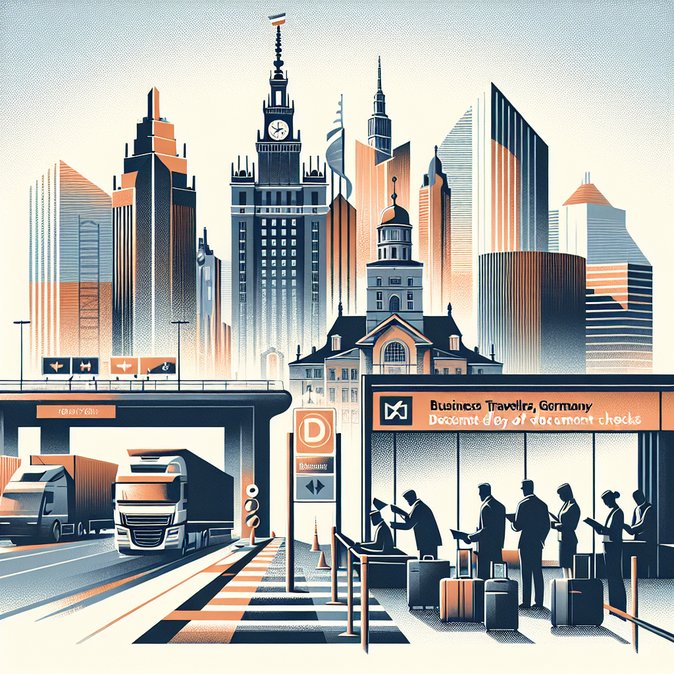
Practically, the extension means that travellers—including EU citizens—must carry passports or national ID cards and should expect spot checks by the Polish Border Guard, police and Territorial Defence units at the main crossing points such as Świecko (A2) and Budzisko on the S8 corridor. Commuters report delays of 5-15 minutes at peak hours, while logistics operators moving automotive and manufacturing components into Poland are budgeting up to 30 minutes of buffer time per truck.
From a policy perspective, officials describe the current phase as a “testing ground” for smart-border technology. Poland is piloting e-gates connected to the EU Entry/Exit System and experimenting with blockchain-sealed freight containers. While these innovations could eventually streamline movements, travellers should be prepared for teething problems during the trial period.
Companies that rely on daily cross-border staff mobility—especially in the Szczecin-Berlin and Suwałki-Kaunas economic corridors—are advised to update travel-risk assessments, remind employees of document requirements and monitor wait-time dashboards published by the Border Guard.