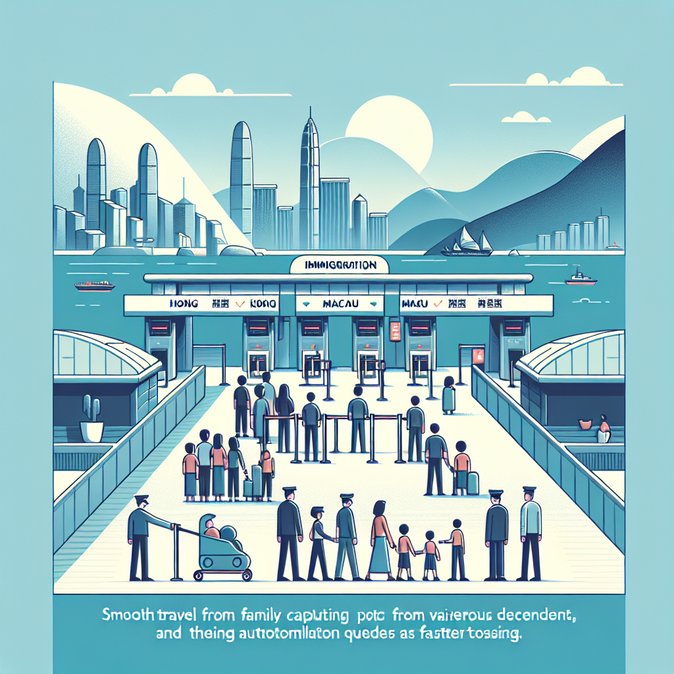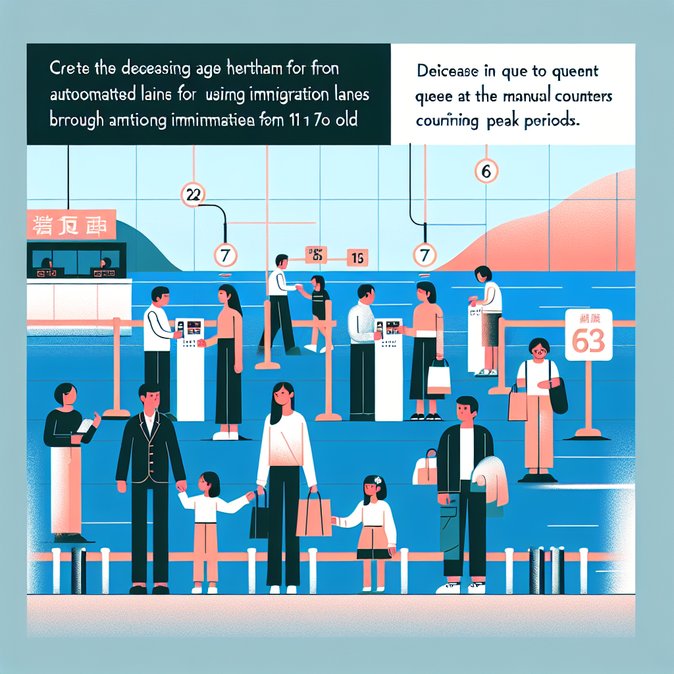
Families that commute regularly between Hong Kong and Macao will soon spend less time in immigration queues. In a joint communiqué released late on 16 January, the Hong Kong Immigration Department and Macao’s Public Security Police Force confirmed that, from Monday 19 January 2026, permanent residents as young as seven will be able to use each other’s automated immigration lanes. The minimum age is currently 11, so some 180 000 primary-school children who hold Hong Kong or Macao passports will gain access overnight. (visahq.com)
The move is the first upgrade to the reciprocal e-Channel scheme since the two Special Administrative Regions (SARs) fully reopened their land and sea borders in early 2023. Under the refresh, Macao will open its two-gate “joint-inspection” and iris-recognition channels to Hong Kong children aged seven to 10, while Hong Kong will lower the age limit for its fingerprint-based e-Channels at all control points. Eligible non-permanent residents aged 18 or above may also enrol on-site and begin using automated lanes within three hours, cutting red-tape for frequent business travellers. (en.people.cn)
Whether you’re one of those commuters or manage travel for an entire team, VisaHQ can help you sort out any lingering paperwork—from passport renewals to multi-entry permits—before you even reach the border. Its Hong Kong portal (https://www.visahq.com/hong-kong/) lets you check requirements, submit applications online and arrange courier pickup, ensuring a hassle-free journey through the expanded e-Channel lanes.
![Hong Kong and Macao cut automated-gate age to 7, promising faster family crossings from 19 January]()
For corporate-mobility managers the benefit is three-fold. First, door-to-door travel times for cross-border commuters will fall by an estimated 10–15 minutes, improving productivity for firms that shuttle staff between Hong Kong headquarters, Macao’s convention venues and Hengqin’s budding tech parks. Second, the wider age coverage reduces the need to split families into manual and automated lanes—an issue that has caused bottlenecks at weekends and during Golden-Week peaks. Third, the upgrade signals that both SARs are willing to keep harmonising border technology, a prerequisite for the long-mooted “single-checkpoint” model that business groups are lobbying for.
Immigration officials say hardware installation was completed in December; the remaining work involved synchronising biometric databases. Both sides will run dedicated help desks for the first month to guide parents through the faster lanes and troubleshoot fingerprint enrolment for younger users, whose prints are less defined. The Tourism Board expects the change to lift family-segment traffic by 5 % over the forthcoming Lunar New Year period.
Practically, employers should remind staff that all travellers—including children—must carry a physical identity card and ensure that passports are valid for at least 30 days beyond the travel date. Children aged under seven will still need to pass through manual counters with an accompanying adult. Corporations operating staff coaches should update their itineraries to reflect shorter processing times and stagger departures to maximise the benefit of the new lane mix.
The move is the first upgrade to the reciprocal e-Channel scheme since the two Special Administrative Regions (SARs) fully reopened their land and sea borders in early 2023. Under the refresh, Macao will open its two-gate “joint-inspection” and iris-recognition channels to Hong Kong children aged seven to 10, while Hong Kong will lower the age limit for its fingerprint-based e-Channels at all control points. Eligible non-permanent residents aged 18 or above may also enrol on-site and begin using automated lanes within three hours, cutting red-tape for frequent business travellers. (en.people.cn)
Whether you’re one of those commuters or manage travel for an entire team, VisaHQ can help you sort out any lingering paperwork—from passport renewals to multi-entry permits—before you even reach the border. Its Hong Kong portal (https://www.visahq.com/hong-kong/) lets you check requirements, submit applications online and arrange courier pickup, ensuring a hassle-free journey through the expanded e-Channel lanes.
For corporate-mobility managers the benefit is three-fold. First, door-to-door travel times for cross-border commuters will fall by an estimated 10–15 minutes, improving productivity for firms that shuttle staff between Hong Kong headquarters, Macao’s convention venues and Hengqin’s budding tech parks. Second, the wider age coverage reduces the need to split families into manual and automated lanes—an issue that has caused bottlenecks at weekends and during Golden-Week peaks. Third, the upgrade signals that both SARs are willing to keep harmonising border technology, a prerequisite for the long-mooted “single-checkpoint” model that business groups are lobbying for.
Immigration officials say hardware installation was completed in December; the remaining work involved synchronising biometric databases. Both sides will run dedicated help desks for the first month to guide parents through the faster lanes and troubleshoot fingerprint enrolment for younger users, whose prints are less defined. The Tourism Board expects the change to lift family-segment traffic by 5 % over the forthcoming Lunar New Year period.
Practically, employers should remind staff that all travellers—including children—must carry a physical identity card and ensure that passports are valid for at least 30 days beyond the travel date. Children aged under seven will still need to pass through manual counters with an accompanying adult. Corporations operating staff coaches should update their itineraries to reflect shorter processing times and stagger departures to maximise the benefit of the new lane mix.