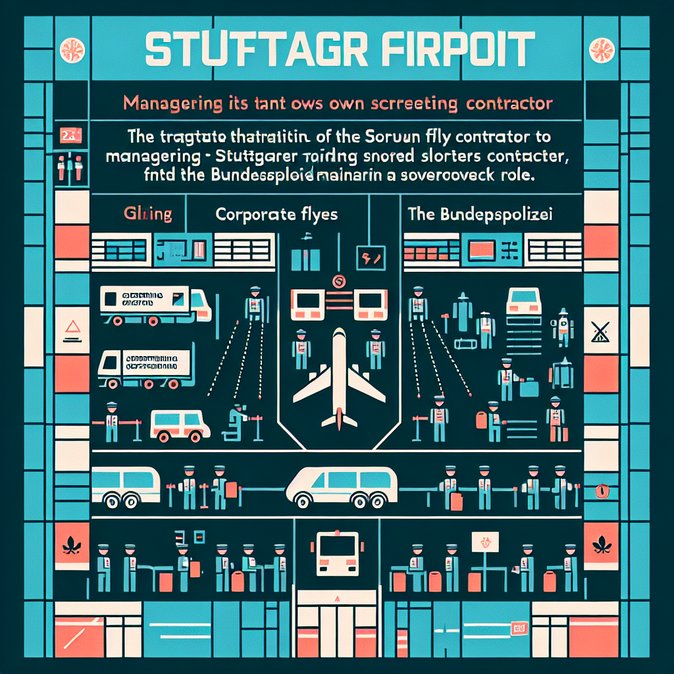
Stuttgart Airport will assume responsibility for security checkpoints later this year, ending decades of direct Bundespolizei management. Airport CEO Ulrich Heppe confirmed that a contract signed with the Federal Interior Ministry in December 2025 allows the airport to tender the operation to a private service provider; an international bidding process is under way, with hand-over slated for November 2026.
The move follows similar transitions at Frankfurt, Berlin and Cologne and is designed to shorten queues by giving the airport full oversight of staffing, lane opening times and technology upgrades. Heppe told dpa he aims to make screening “more efficient and passenger-friendly” without compromising safety—the Bundespolizei will still supervise overall aviation security and maintain a presence behind the lanes.
Whether you’re a frequent flyer or planning a first-time trip, streamlined security is only part of the journey—having the right travel documents matters just as much. VisaHQ’s online platform (https://www.visahq.com/germany/) can quickly tell you if you need a visa for Germany, guide you through the application process, and even arrange courier delivery of completed paperwork, saving valuable time during airport transitions like the one underway in Stuttgart.
![Stuttgart Airport to take control of passenger screening by November 2026]()
For business travellers, the change could translate into faster throughput at Germany’s sixth-busiest airport, which handles a high share of automotive and high-tech corporate traffic from Baden-Württemberg. Mobility managers should monitor November timetable changes and factor in possible teething issues as the new contractor beds in.
Airports that have already shifted to operator-run screening report mixed results: Frankfurt cut average wait times by 20 percent after installing CT scanners, while Berlin saw initial staffing bottlenecks. Stuttgart plans to replicate best practices, including real-time queue dashboards and reserved time slots for premium travellers.
The reform is part of a broader German strategy to modernise aviation security, freeing federal police resources for intelligence-led tasks and aligning Germany with common European models where airports own passenger experience end-to-end. (welt.de)
The move follows similar transitions at Frankfurt, Berlin and Cologne and is designed to shorten queues by giving the airport full oversight of staffing, lane opening times and technology upgrades. Heppe told dpa he aims to make screening “more efficient and passenger-friendly” without compromising safety—the Bundespolizei will still supervise overall aviation security and maintain a presence behind the lanes.
Whether you’re a frequent flyer or planning a first-time trip, streamlined security is only part of the journey—having the right travel documents matters just as much. VisaHQ’s online platform (https://www.visahq.com/germany/) can quickly tell you if you need a visa for Germany, guide you through the application process, and even arrange courier delivery of completed paperwork, saving valuable time during airport transitions like the one underway in Stuttgart.
For business travellers, the change could translate into faster throughput at Germany’s sixth-busiest airport, which handles a high share of automotive and high-tech corporate traffic from Baden-Württemberg. Mobility managers should monitor November timetable changes and factor in possible teething issues as the new contractor beds in.
Airports that have already shifted to operator-run screening report mixed results: Frankfurt cut average wait times by 20 percent after installing CT scanners, while Berlin saw initial staffing bottlenecks. Stuttgart plans to replicate best practices, including real-time queue dashboards and reserved time slots for premium travellers.
The reform is part of a broader German strategy to modernise aviation security, freeing federal police resources for intelligence-led tasks and aligning Germany with common European models where airports own passenger experience end-to-end. (welt.de)