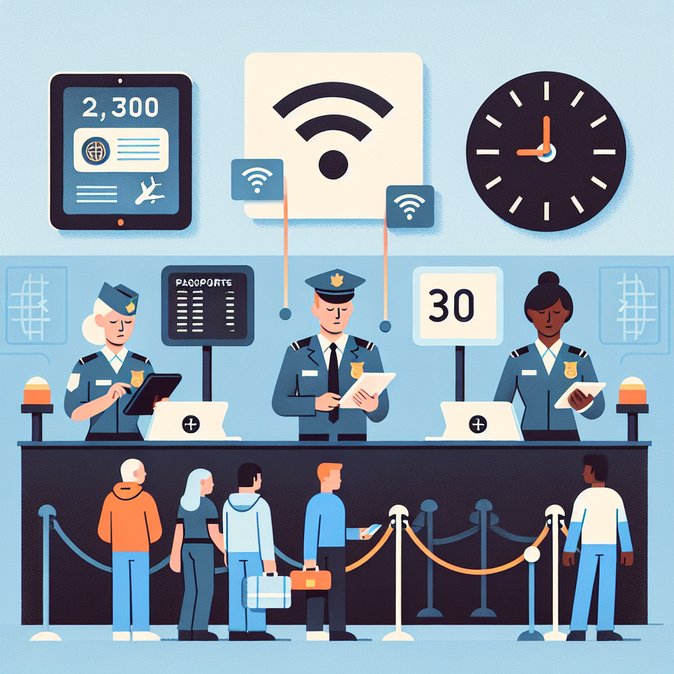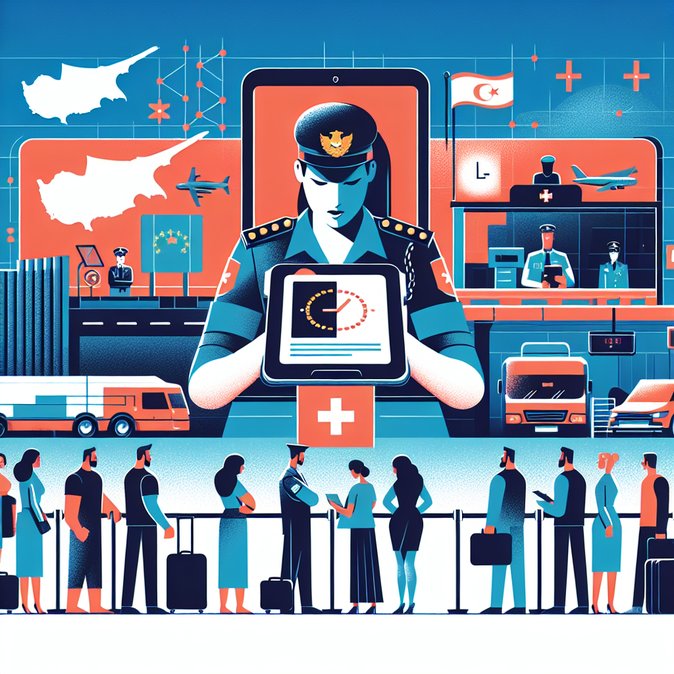
Police Chief Stelios Papatheodorou unveiled a fleet of 2,300 rugged Android tablets on 18 January, declaring them fully operational at Larnaca and Pafos airports, seaports, Green-Line crossings and coastal patrol units. The devices give frontline officers instant access to the Schengen Information System (SIS), Interpol notices and EU vehicle databases; a passport or licence-plate scan that once took five minutes via radio now returns a hit/no-hit result in half a minute.(visahq.com)
Funded by the EU Internal Security Fund, the €4 million “CY Patrol Check” project entered service after a three-month pilot, marking another milestone in Cyprus’ campaign to meet the technical benchmarks for Schengen accession. Phase Two, slated for Q3 2026, will bolt biometric fingerprint readers and facial-recognition cameras onto the tablets so that border guards can comply with the new EU Entry/Exit System (EES).
Travellers keen to take advantage of Cyprus’s streamlined border technology can simplify the paperwork side of the equation by using VisaHQ. The company’s Cyprus portal (https://www.visahq.com/cyprus/) offers real-time visa guidance, digital application tools and courier services, helping ensure that passports, residence permits and other documents are machine-readable and fully compliant—so the speed gains promised by the new tablets translate into a friction-free arrival.
![Cyprus deploys 2,300 Schengen-connected tablets to cut passport-control time to 30 seconds]()
For business travellers the immediate benefit is shorter queues at primary inspection booths, especially during Monday-morning bank holiday peaks when wait times can exceed 45 minutes. Airlines have already trimmed ground-turnaround buffers by an average of six minutes, and logistics firms say cargo vans now clear the port gate in under a minute—savings that cascade through supply chains.
Yet faster primary checks could simply move bottlenecks downstream to customs, secondary visa interviews or baggage reclaim. Mobility managers should therefore revisit their travel-policy assumptions: minimum connecting times at Larnaca may drop, but late baggage delivery or customs holds could offset the gain. Companies are urged to verify that contractors’ residence cards have a machine-readable zone; smudged MRZs force officers to fall back on manual entry, negating the speed boost.
Strategically, the rollout sends a political signal to EU partners that Cyprus is ready for full Schengen integration. Brussels officials, arriving next week for a technical evaluation, will test the tablets’ interoperability with EU-LISA systems—an assessment that could shape the timeline for Cyprus’ accession vote in the Council.
Funded by the EU Internal Security Fund, the €4 million “CY Patrol Check” project entered service after a three-month pilot, marking another milestone in Cyprus’ campaign to meet the technical benchmarks for Schengen accession. Phase Two, slated for Q3 2026, will bolt biometric fingerprint readers and facial-recognition cameras onto the tablets so that border guards can comply with the new EU Entry/Exit System (EES).
Travellers keen to take advantage of Cyprus’s streamlined border technology can simplify the paperwork side of the equation by using VisaHQ. The company’s Cyprus portal (https://www.visahq.com/cyprus/) offers real-time visa guidance, digital application tools and courier services, helping ensure that passports, residence permits and other documents are machine-readable and fully compliant—so the speed gains promised by the new tablets translate into a friction-free arrival.

For business travellers the immediate benefit is shorter queues at primary inspection booths, especially during Monday-morning bank holiday peaks when wait times can exceed 45 minutes. Airlines have already trimmed ground-turnaround buffers by an average of six minutes, and logistics firms say cargo vans now clear the port gate in under a minute—savings that cascade through supply chains.
Yet faster primary checks could simply move bottlenecks downstream to customs, secondary visa interviews or baggage reclaim. Mobility managers should therefore revisit their travel-policy assumptions: minimum connecting times at Larnaca may drop, but late baggage delivery or customs holds could offset the gain. Companies are urged to verify that contractors’ residence cards have a machine-readable zone; smudged MRZs force officers to fall back on manual entry, negating the speed boost.
Strategically, the rollout sends a political signal to EU partners that Cyprus is ready for full Schengen integration. Brussels officials, arriving next week for a technical evaluation, will test the tablets’ interoperability with EU-LISA systems—an assessment that could shape the timeline for Cyprus’ accession vote in the Council.