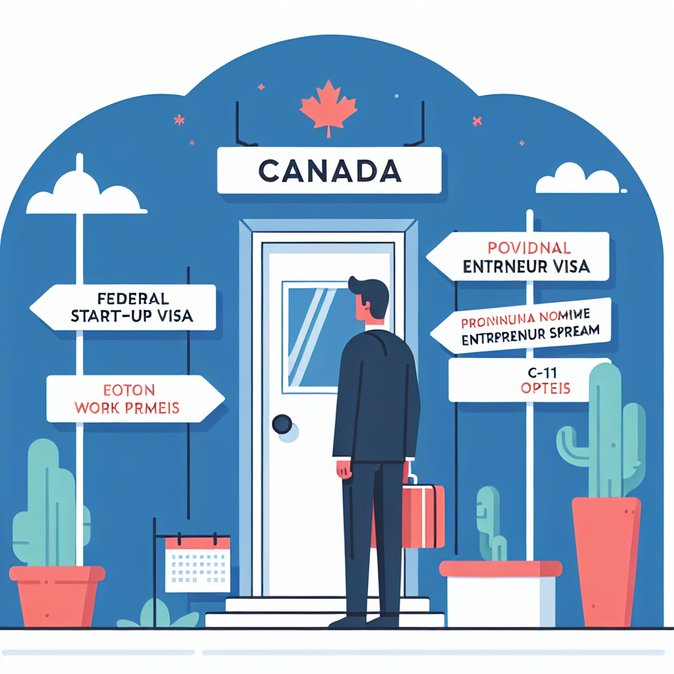
Entrepreneurial hopefuls looking to immigrate to Canada via the federal Start-Up Visa (SUV) pathway woke up to a closed door this week. Immigration, Refugees and Citizenship Canada officially stopped accepting new SUV applications at 11:59 p.m. ET on 31 December 2025. (m.economictimes.com)
The SUV, introduced in 2013, offered permanent residence to founders who secured support from designated venture capital funds, angel investors or business incubators. Ottawa says the shutdown is temporary while it designs a “targeted pilot” aimed at higher-growth firms and stronger job-creation metrics. Existing applicants with commitment certificates dated 2025 retain a six-month grace period—until 30 June 2026—to lodge their PR files.
With the Start-Up Visa door temporarily shut, VisaHQ can help founders map alternative routes. Its dedicated Canada portal (https://www.visahq.com/canada/) breaks down each provincial nominee entrepreneur stream and work-permit category, offers document checklists, and provides live support that keeps applications on track—useful triage while Ottawa reshapes its federal program.
![Federal Start-Up Visa program closed to new applications as of 1 January 2026]()
For global entrepreneurs, the landscape now fragments into provincial nominee entrepreneur streams and the C-11 work-permit pathway. Provinces such as British Columbia, Ontario and Nova Scotia run points-based business immigration programs, but these often require higher net-worth thresholds and lengthy performance agreements before nomination.
The abrupt pause has mixed implications for employers and investors. On one hand, critics argue it undercuts Canada’s brand as an innovation hub just as the United States expands its International Entrepreneur Parole program. On the other, supporters contend the SUV had become clogged with low-viability projects and lengthy processing times—42 months on average—diluting its economic impact.
IRCC says detailed parameters for the replacement pilot will be unveiled later in 2026. In the meantime, incubators and designated organizations will not be able to issue new commitment certificates, forcing would-be founders to look to provincial programs or set up operations on temporary work permits while awaiting clarity.
The SUV, introduced in 2013, offered permanent residence to founders who secured support from designated venture capital funds, angel investors or business incubators. Ottawa says the shutdown is temporary while it designs a “targeted pilot” aimed at higher-growth firms and stronger job-creation metrics. Existing applicants with commitment certificates dated 2025 retain a six-month grace period—until 30 June 2026—to lodge their PR files.
With the Start-Up Visa door temporarily shut, VisaHQ can help founders map alternative routes. Its dedicated Canada portal (https://www.visahq.com/canada/) breaks down each provincial nominee entrepreneur stream and work-permit category, offers document checklists, and provides live support that keeps applications on track—useful triage while Ottawa reshapes its federal program.

For global entrepreneurs, the landscape now fragments into provincial nominee entrepreneur streams and the C-11 work-permit pathway. Provinces such as British Columbia, Ontario and Nova Scotia run points-based business immigration programs, but these often require higher net-worth thresholds and lengthy performance agreements before nomination.
The abrupt pause has mixed implications for employers and investors. On one hand, critics argue it undercuts Canada’s brand as an innovation hub just as the United States expands its International Entrepreneur Parole program. On the other, supporters contend the SUV had become clogged with low-viability projects and lengthy processing times—42 months on average—diluting its economic impact.
IRCC says detailed parameters for the replacement pilot will be unveiled later in 2026. In the meantime, incubators and designated organizations will not be able to issue new commitment certificates, forcing would-be founders to look to provincial programs or set up operations on temporary work permits while awaiting clarity.