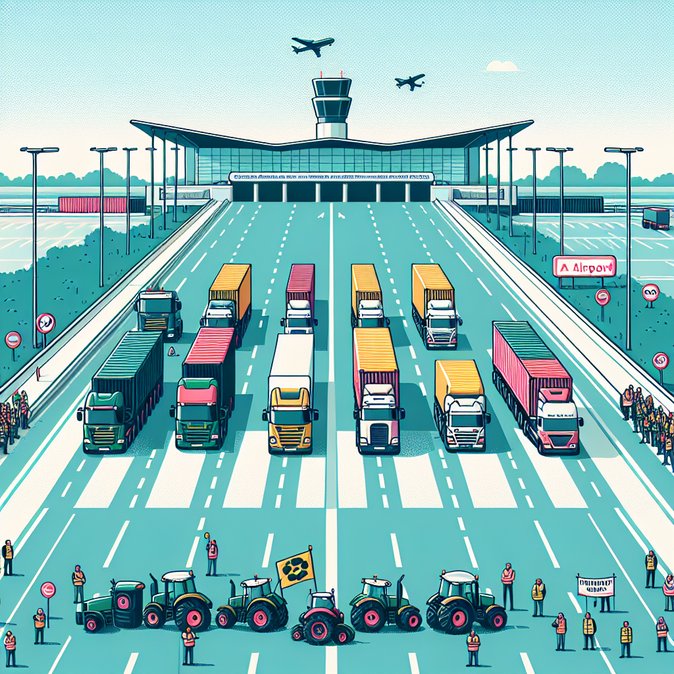
Road access to Brucargo—the freight backbone of Brussels Airport—returned to normal on 18 January after Flemish farmers dismantled filter blockades that had throttled truck traffic since Thursday night. The General Farmers Syndicate staged the protest to oppose the EU–Mercosur trade pact, which it claims will flood Belgium with lower-standard South-American meat. Demonstrators used tractors to allow lorries through only twice an hour, creating kilometre-long queues. (visahq.com)
Brussels Airport Company estimates that every 12 hours of disruption cost about €2 million, delaying pharmaceuticals, e-commerce parcels and automotive parts. Freight forwarders diverted shipments to Liège, Schiphol and Frankfurt, while life-science multinationals activated contingency plans to protect temperature-sensitive goods.
Although passenger flights continued, some crews and relocating employees missed connections when staff buses were caught in traffic. Mobility managers had to re-book tickets or arrange overnight accommodation at short notice, illustrating how industrial action can ripple into people-movement programmes as well as cargo.
![Farmers end three-day blockade at Brussels Airport, cargo flows resume]()
If last-minute rerouting forces drivers, air crews or troubleshooters to cross additional borders, VisaHQ can step in to secure the urgent transit or short-stay visas those staff may need. The platform’s Belgium portal (https://www.visahq.com/belgium/) lets employers manage multiple applications, track status in real time and receive quick alerts, shaving precious hours off disruption-related itinerary changes.
The blockade ended after organisers secured a meeting with federal ministers next week, but the union warned that further action remains possible during the trade-deal ratification process. Companies should therefore keep contingency routings on file and brief assignees arriving via Brussels on potential traffic snarls around the ring road.
Logistics experts recommend staggering cargo drop-offs, using real-time truck-navigation apps that show protest locations and maintaining updated visa documentation in case diverted flights require crew to enter neighbouring countries at short notice.
Brussels Airport Company estimates that every 12 hours of disruption cost about €2 million, delaying pharmaceuticals, e-commerce parcels and automotive parts. Freight forwarders diverted shipments to Liège, Schiphol and Frankfurt, while life-science multinationals activated contingency plans to protect temperature-sensitive goods.
Although passenger flights continued, some crews and relocating employees missed connections when staff buses were caught in traffic. Mobility managers had to re-book tickets or arrange overnight accommodation at short notice, illustrating how industrial action can ripple into people-movement programmes as well as cargo.

If last-minute rerouting forces drivers, air crews or troubleshooters to cross additional borders, VisaHQ can step in to secure the urgent transit or short-stay visas those staff may need. The platform’s Belgium portal (https://www.visahq.com/belgium/) lets employers manage multiple applications, track status in real time and receive quick alerts, shaving precious hours off disruption-related itinerary changes.
The blockade ended after organisers secured a meeting with federal ministers next week, but the union warned that further action remains possible during the trade-deal ratification process. Companies should therefore keep contingency routings on file and brief assignees arriving via Brussels on potential traffic snarls around the ring road.
Logistics experts recommend staggering cargo drop-offs, using real-time truck-navigation apps that show protest locations and maintaining updated visa documentation in case diverted flights require crew to enter neighbouring countries at short notice.