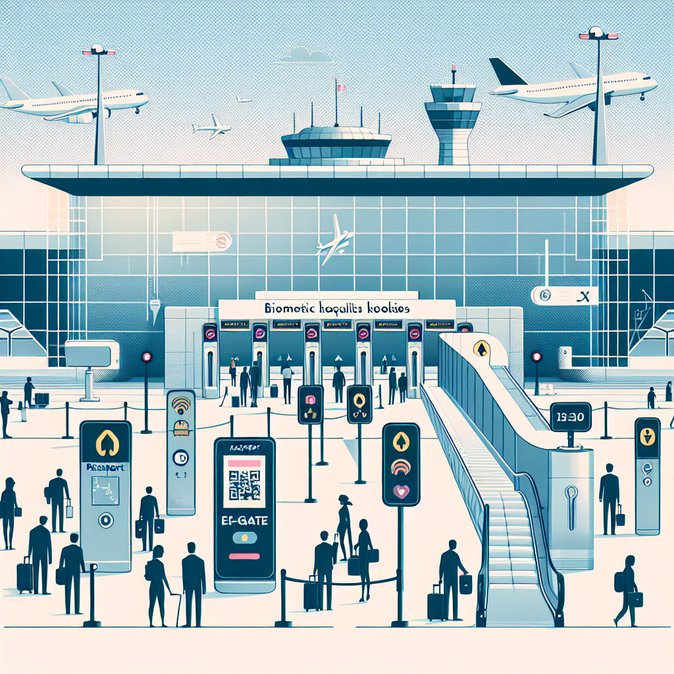
With the EU’s biometric Entry/Exit System (EES) scheduled to go live on 10 April 2026, Brussels Airport confirmed on 15 January that it has completed major border-control upgrades: 61 self-service enrolment kiosks for non-EU nationals, 36 new e-gates fitted with facial-recognition cameras, and 12 additional staffed booths in arrivals. All 33 fixed counters now feature upgraded camera hardware. (visahq.com)
The EES will replace manual passport stamping for short-stay visitors and record biometric and travel-document data on first entry, storing it for three years. Belgian Federal Police will shortly authorise e-gate use for selected “trusted” third-country nationals, while Schengen citizens continue in the current fast lanes.
Corporate travel planners looking for additional support can lean on VisaHQ, whose Belgium information hub (https://www.visahq.com/belgium/) tracks Schengen allowances in real time, highlights forthcoming EES obligations, and streamlines the collection of biometric-consent forms and visa documentation for non-EU visitors.
![Brussels Airport installs 61 biometric kiosks and 36 e-gates ahead of EU Entry/Exit System]()
For mobility teams the change is more than a technology refresh. Companies must brief business travellers that overstay calculations will become automatic, making it harder to “reset” Schengen days via weekend getaways. Frequent flyers may need to allow extra time—airport modelling suggests first-time enrolment should take under two minutes but queues may spike during the bedding-in phase.
Data-protection officers have welcomed assurances that storage will comply with GDPR, yet warn that companies holding traveller data in third-party systems must check contractual safeguards. Airlines have been invited to join off-peak trials in February, and the airport is hiring 75 customer-care agents to shepherd passengers through the new process.
Practically, travel managers should extend connection buffers at BRU from March, update trip-approval workflows to capture biometric-consent declarations and remind mobile employees to have clean fingerprints (no plasters or henna) to speed passage.
The EES will replace manual passport stamping for short-stay visitors and record biometric and travel-document data on first entry, storing it for three years. Belgian Federal Police will shortly authorise e-gate use for selected “trusted” third-country nationals, while Schengen citizens continue in the current fast lanes.
Corporate travel planners looking for additional support can lean on VisaHQ, whose Belgium information hub (https://www.visahq.com/belgium/) tracks Schengen allowances in real time, highlights forthcoming EES obligations, and streamlines the collection of biometric-consent forms and visa documentation for non-EU visitors.

For mobility teams the change is more than a technology refresh. Companies must brief business travellers that overstay calculations will become automatic, making it harder to “reset” Schengen days via weekend getaways. Frequent flyers may need to allow extra time—airport modelling suggests first-time enrolment should take under two minutes but queues may spike during the bedding-in phase.
Data-protection officers have welcomed assurances that storage will comply with GDPR, yet warn that companies holding traveller data in third-party systems must check contractual safeguards. Airlines have been invited to join off-peak trials in February, and the airport is hiring 75 customer-care agents to shepherd passengers through the new process.
Practically, travel managers should extend connection buffers at BRU from March, update trip-approval workflows to capture biometric-consent declarations and remind mobile employees to have clean fingerprints (no plasters or henna) to speed passage.