Less than 24 hours after Interior Minister Gerhard Karner unveiled what he called “the biggest overhaul of Austrian asylum law in 20 years,” the nine Länder declared they were not on board. Meeting informally on 16 January, provincial representatives refused to sign the 15a constitutional agreement that would implement the EU’s new Common European Asylum System (GEAS) in Austria. Key sticking points include cost-sharing for special-needs cases and a federal proposal to open or expand reception centres without provincial consent. (visahq.com)
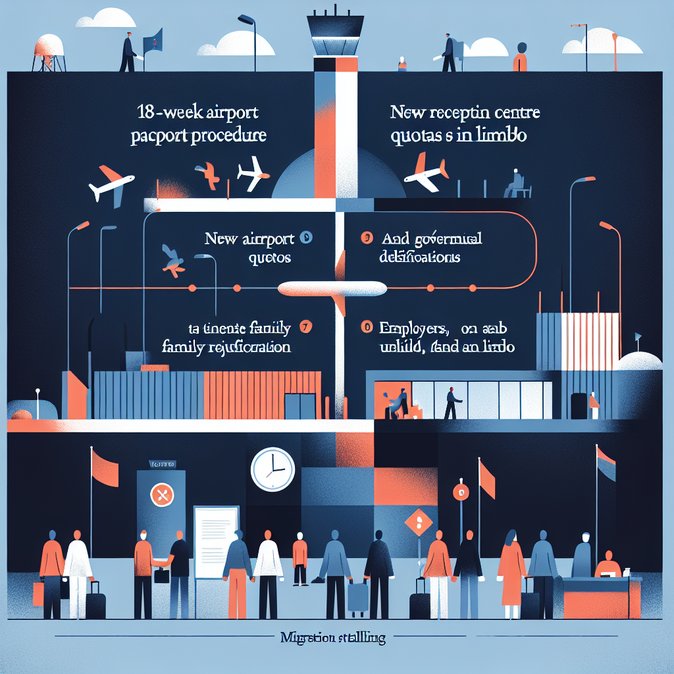
For global-mobility teams, the stalemate injects immediate uncertainty. Vienna wants all airport asylum claims processed at Schwechat under an accelerated border procedure that can now last up to 18 weeks. Until the provinces release funds and staff, the infrastructure needed to detain, screen and house applicants remains in limbo. That raises the risk of sudden policy swings that could snarl family-reunification pipelines or delay corporate relocations dependent on dependent-visa approvals. (visahq.com)
If your organization suddenly needs clarity on how these shifts affect work or family-reunification visas, VisaHQ’s Austria hub (https://www.visahq.com/austria/) provides real-time updates, document checklists and concierge submission services that can keep applications moving even when federal and provincial guidance diverge.
![Austria’s Provinces Block Flagship Asylum Reform, Leaving Businesses in Limbo]()
Business chambers are lobbying both levels of government to ring-fence skilled-worker channels such as the Red-White-Red Card and intra-company-transfer permits. They warn that foreign talent may look elsewhere if Austria cannot offer predictable processing times. HR departments are already advising assignees to file renewals early and to keep travel flexible in case biometric appointments or interviews are rescheduled at short notice.
Politically, the confrontation highlights Austria’s complex federal structure: asylum is a federal competence, but accommodation and many integration services fall to the Länder. Analysts expect the Interior Ministry to circulate a revised pact before mid-February; if consensus still eludes, Vienna could negotiate bilateral deals with each province—a piecemeal approach that would extend legal complexity well into Q2.
Practical takeaway: companies should monitor provincial press releases, budget for possible lawyer fees to navigate divergent local rules, and build extra lead-time into start dates for new hires who need family members to join them.
For global-mobility teams, the stalemate injects immediate uncertainty. Vienna wants all airport asylum claims processed at Schwechat under an accelerated border procedure that can now last up to 18 weeks. Until the provinces release funds and staff, the infrastructure needed to detain, screen and house applicants remains in limbo. That raises the risk of sudden policy swings that could snarl family-reunification pipelines or delay corporate relocations dependent on dependent-visa approvals. (visahq.com)
If your organization suddenly needs clarity on how these shifts affect work or family-reunification visas, VisaHQ’s Austria hub (https://www.visahq.com/austria/) provides real-time updates, document checklists and concierge submission services that can keep applications moving even when federal and provincial guidance diverge.

Business chambers are lobbying both levels of government to ring-fence skilled-worker channels such as the Red-White-Red Card and intra-company-transfer permits. They warn that foreign talent may look elsewhere if Austria cannot offer predictable processing times. HR departments are already advising assignees to file renewals early and to keep travel flexible in case biometric appointments or interviews are rescheduled at short notice.
Politically, the confrontation highlights Austria’s complex federal structure: asylum is a federal competence, but accommodation and many integration services fall to the Länder. Analysts expect the Interior Ministry to circulate a revised pact before mid-February; if consensus still eludes, Vienna could negotiate bilateral deals with each province—a piecemeal approach that would extend legal complexity well into Q2.
Practical takeaway: companies should monitor provincial press releases, budget for possible lawyer fees to navigate divergent local rules, and build extra lead-time into start dates for new hires who need family members to join them.