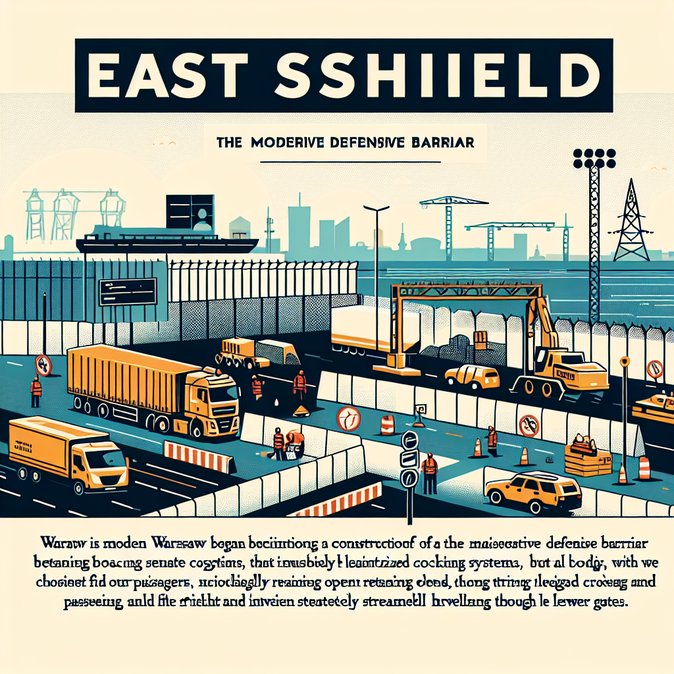
Poland has formally launched construction of the long-awaited “East Shield”, a 700-kilometre belt of anti-infiltration fortifications, early-warning sensors and forward operating bases running the length of its borders with Russia’s Kaliningrad oblast and with Belarus. Prime Minister Donald Tusk announced the start of earth-moving works near Gołdap on 17 January, posting drone footage of excavators digging anti-vehicle trenches.
The East Shield is Warsaw’s answer to the hybrid-migration pressure orchestrated by Minsk and Moscow since 2021 and to the growing risk of spill-over from Russia’s war on Ukraine. 10 billion złoty (US$2.55 billion) is earmarked for layered obstacles, counter-drone radars, logistics hubs and hardened shelters that can host Polish Border Guard units, Territorial Defence troops and Frontex contingents.
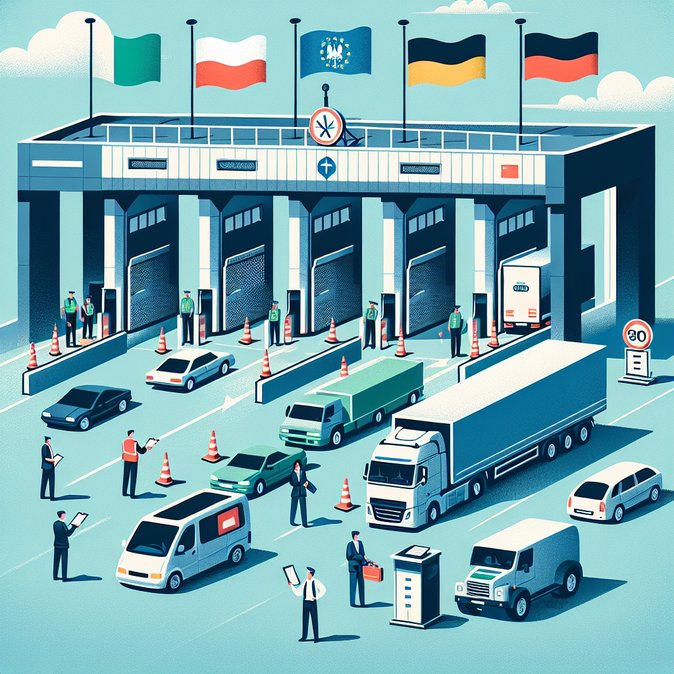
From a mobility perspective, the project will not close existing authorised crossings, but it will funnel traffic through fewer, more heavily-monitored corridors. Cargo carriers will undergo X-ray and AI-driven risk profiling, while personal vehicles will face automatic licence-plate checks linked to EU security databases.
![Poland Breaks Ground on €2.5 Billion “East Shield” Fortifications Along Russian and Belarusian Borders]()
Travelers and logistics firms navigating these tightened corridors can simplify their own documentation by using VisaHQ’s Poland portal (https://www.visahq.com/poland/), which provides real-time guidance on Schengen visas, work permits and transit papers, and handles fast, digital application processing for individuals and corporate fleets alike.
Multinational companies with factories in Suwałki, Białystok and the Warmia-Masuria region should expect sporadic lane closures as heavy machinery is moved. Forwarders are advised to build buffer time into just-in-sequence supply chains and to register drivers in Poland’s Trusted Carrier programme to access the “green lanes” that will remain open during construction.
Once complete in 2028, the East Shield is expected to dovetail with the EU Entry/Exit System and the forthcoming ETIAS travel authorisation, creating one of Europe’s most technologically advanced—but also most controlled—external borders.
The East Shield is Warsaw’s answer to the hybrid-migration pressure orchestrated by Minsk and Moscow since 2021 and to the growing risk of spill-over from Russia’s war on Ukraine. 10 billion złoty (US$2.55 billion) is earmarked for layered obstacles, counter-drone radars, logistics hubs and hardened shelters that can host Polish Border Guard units, Territorial Defence troops and Frontex contingents.
From a mobility perspective, the project will not close existing authorised crossings, but it will funnel traffic through fewer, more heavily-monitored corridors. Cargo carriers will undergo X-ray and AI-driven risk profiling, while personal vehicles will face automatic licence-plate checks linked to EU security databases.

Travelers and logistics firms navigating these tightened corridors can simplify their own documentation by using VisaHQ’s Poland portal (https://www.visahq.com/poland/), which provides real-time guidance on Schengen visas, work permits and transit papers, and handles fast, digital application processing for individuals and corporate fleets alike.
Multinational companies with factories in Suwałki, Białystok and the Warmia-Masuria region should expect sporadic lane closures as heavy machinery is moved. Forwarders are advised to build buffer time into just-in-sequence supply chains and to register drivers in Poland’s Trusted Carrier programme to access the “green lanes” that will remain open during construction.
Once complete in 2028, the East Shield is expected to dovetail with the EU Entry/Exit System and the forthcoming ETIAS travel authorisation, creating one of Europe’s most technologically advanced—but also most controlled—external borders.