The two Special Administrative Regions have announced the first major enhancement to their reciprocal immigration facilitation scheme since full border reopening in 2023. In a joint statement issued on 16 January and confirmed by both the Hong Kong Immigration Department and Macao’s Public Security Police Force, the minimum age for permanent residents to use each other’s automated immigration channels will drop from 11 to 7 years on 19 January 2026.
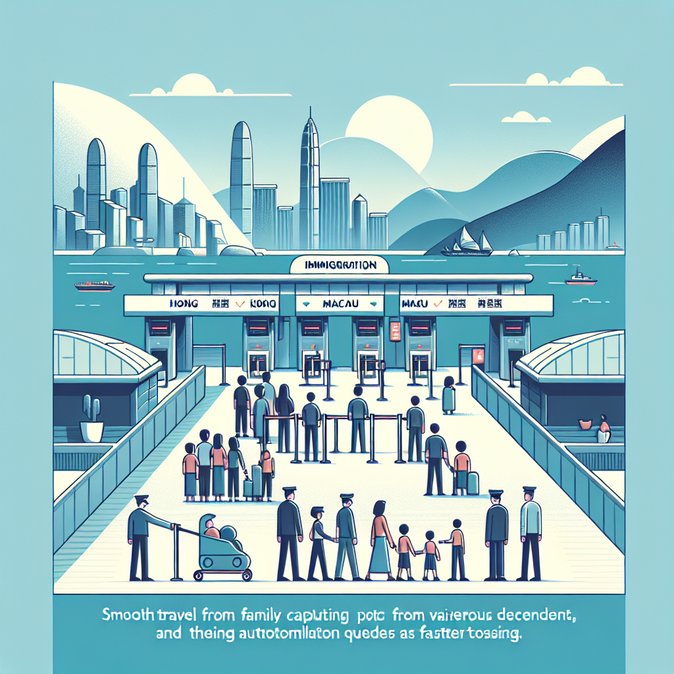
The change means Hong Kong permanent residents as young as seven can breeze through Macao’s two-gate automated lanes, while Macao children of the same age can tap Hong Kong’s familiar e-Channel gates. Parents will no longer need to queue at manned counters simply because one child in the family is under 11, a common pain-point for weekend travellers and holidaymakers. Eligible non-permanent residents aged 18 and above will also be able to enrol at self-service kiosks on arrival and gain automated-channel privileges within three hours, removing the previous 24-hour wait.
If you’re planning a family or business trip and need help sorting out travel documents, VisaHQ can save you time. The company’s Hong Kong platform (https://www.visahq.com/hong-kong/) offers up-to-date visa requirements, online applications and courier pick-up, streamlining everything from passport renewals to multi-destination visa filings so you can focus on enjoying the faster e-Channel experience.
![Hong Kong and Macao slash e-Channel age threshold to 7, promise faster cross-border clearance from 19 January]()
The move is part of a wider “Smart Boundary” roadmap aimed at handling an expected 20 per cent rise in two-way traffic once Hong Kong’s Northern Metropolis projects come online later in the decade. According to Immigration Department statistics, 36 million trips were recorded between the two SARs in 2025, already surpassing 80 per cent of the pre-pandemic level. Officials say lowering the age threshold could add processing capacity for an extra 4,000 travellers per peak hour across all checkpoints without building new booths.
For corporates, the upgrade removes a minor but recurring friction point for staff who relocate with families or arrange cross-border off-sites. Human-resources managers should update travel policies to inform employees that dependants aged 7–10 now qualify for e-Channel and may no longer require special assistance. Event planners running conferences in Cotai or Hong Kong’s West Kowloon district will similarly benefit from faster group movements.
Looking ahead, both governments are trialling iris-recognition lanes and a shared digital identity wallet that could eventually allow business-card-style QR-code clearance for accredited frequent travellers. While no launch date has been set, the successful implementation of the age-relaxation initiative is viewed as a crucial proof-of-concept for deeper integration of the two SARs’ smart-border systems.
The change means Hong Kong permanent residents as young as seven can breeze through Macao’s two-gate automated lanes, while Macao children of the same age can tap Hong Kong’s familiar e-Channel gates. Parents will no longer need to queue at manned counters simply because one child in the family is under 11, a common pain-point for weekend travellers and holidaymakers. Eligible non-permanent residents aged 18 and above will also be able to enrol at self-service kiosks on arrival and gain automated-channel privileges within three hours, removing the previous 24-hour wait.
If you’re planning a family or business trip and need help sorting out travel documents, VisaHQ can save you time. The company’s Hong Kong platform (https://www.visahq.com/hong-kong/) offers up-to-date visa requirements, online applications and courier pick-up, streamlining everything from passport renewals to multi-destination visa filings so you can focus on enjoying the faster e-Channel experience.

The move is part of a wider “Smart Boundary” roadmap aimed at handling an expected 20 per cent rise in two-way traffic once Hong Kong’s Northern Metropolis projects come online later in the decade. According to Immigration Department statistics, 36 million trips were recorded between the two SARs in 2025, already surpassing 80 per cent of the pre-pandemic level. Officials say lowering the age threshold could add processing capacity for an extra 4,000 travellers per peak hour across all checkpoints without building new booths.
For corporates, the upgrade removes a minor but recurring friction point for staff who relocate with families or arrange cross-border off-sites. Human-resources managers should update travel policies to inform employees that dependants aged 7–10 now qualify for e-Channel and may no longer require special assistance. Event planners running conferences in Cotai or Hong Kong’s West Kowloon district will similarly benefit from faster group movements.
Looking ahead, both governments are trialling iris-recognition lanes and a shared digital identity wallet that could eventually allow business-card-style QR-code clearance for accredited frequent travellers. While no launch date has been set, the successful implementation of the age-relaxation initiative is viewed as a crucial proof-of-concept for deeper integration of the two SARs’ smart-border systems.