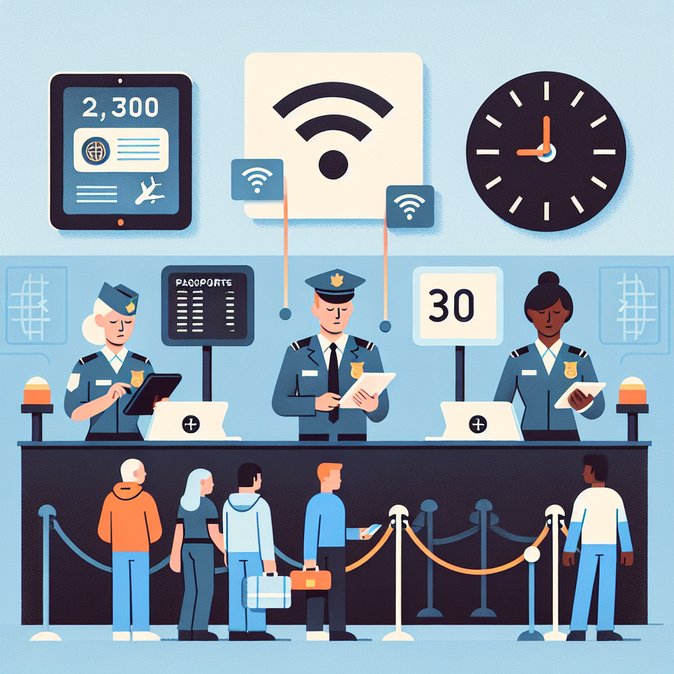
Cyprus has taken another visible step toward Schengen-grade border management. Speaking in Nicosia on 16 January, Police Chief Stelios Papatheodorou unveiled 2,300 rugged Android tablets that give frontline officers at Larnaca and Pafos airports, seaports, Green-Line checkpoints and coastal patrols live connectivity to the Schengen Information System (SIS), Interpol lists and EU vehicle databases. A passport or licence-plate scan that previously required a radio call and a five-minute wait now returns a hit/no-hit response in just 30 seconds, the chief said. (visahq.com)
The €4 million “CY Patrol Check” project was co-financed by the EU Internal Security Fund and went live on 14 January after three months of pilot trials. Phase Two, scheduled for Q3 2026, will add biometric fingerprint readers and facial-recognition cameras so that Cyprus can comply with the forthcoming EU Entry/Exit System (EES). (visahq.com)
Travellers and mobility managers preparing for these swifter formalities may still need to navigate Cyprus’s visa categories and stay-permit rules. VisaHQ’s Cyprus portal (https://www.visahq.com/cyprus/) centralises the latest requirements, application forms and turnaround times, and its team can expedite electronic pre-clearance or arrange courier collection of original documents, ensuring that you arrive with compliant, machine-readable paperwork that the new scanners can process in seconds.
![Cyprus Police roll out 2,300 Schengen-linked tablets to slash border-control times]()
For travellers the benefits will be immediate at the primary-inspection booth, but airlines and mobility managers are already recalibrating minimum-connect times because faster police clearance could shift bottlenecks down the chain—to customs, baggage or secondary visa inspection. Some carriers operating multiple daily rotations through Larnaca have trimmed turnaround buffers by six minutes, betting on the tablets’ reliability.
Corporate logistics teams are equally upbeat. The devices can query EU vehicle and cargo databases, allowing port officers to clear delivery vans in under a minute and reduce demurrage charges. Companies have been advised to ensure that drivers carry machine-readable residence permits or digital tachograph cards that can be scanned on first attempt.
Practical tip: expatriate staff entering Cyprus with non-EU residence permits should check that their documents’ machine-readable zone (MRZ) is still legible after travel wear and tear; smudged MRZ codes cannot be read by the new scanners and will force a manual override.
The €4 million “CY Patrol Check” project was co-financed by the EU Internal Security Fund and went live on 14 January after three months of pilot trials. Phase Two, scheduled for Q3 2026, will add biometric fingerprint readers and facial-recognition cameras so that Cyprus can comply with the forthcoming EU Entry/Exit System (EES). (visahq.com)
Travellers and mobility managers preparing for these swifter formalities may still need to navigate Cyprus’s visa categories and stay-permit rules. VisaHQ’s Cyprus portal (https://www.visahq.com/cyprus/) centralises the latest requirements, application forms and turnaround times, and its team can expedite electronic pre-clearance or arrange courier collection of original documents, ensuring that you arrive with compliant, machine-readable paperwork that the new scanners can process in seconds.

For travellers the benefits will be immediate at the primary-inspection booth, but airlines and mobility managers are already recalibrating minimum-connect times because faster police clearance could shift bottlenecks down the chain—to customs, baggage or secondary visa inspection. Some carriers operating multiple daily rotations through Larnaca have trimmed turnaround buffers by six minutes, betting on the tablets’ reliability.
Corporate logistics teams are equally upbeat. The devices can query EU vehicle and cargo databases, allowing port officers to clear delivery vans in under a minute and reduce demurrage charges. Companies have been advised to ensure that drivers carry machine-readable residence permits or digital tachograph cards that can be scanned on first attempt.
Practical tip: expatriate staff entering Cyprus with non-EU residence permits should check that their documents’ machine-readable zone (MRZ) is still legible after travel wear and tear; smudged MRZ codes cannot be read by the new scanners and will force a manual override.