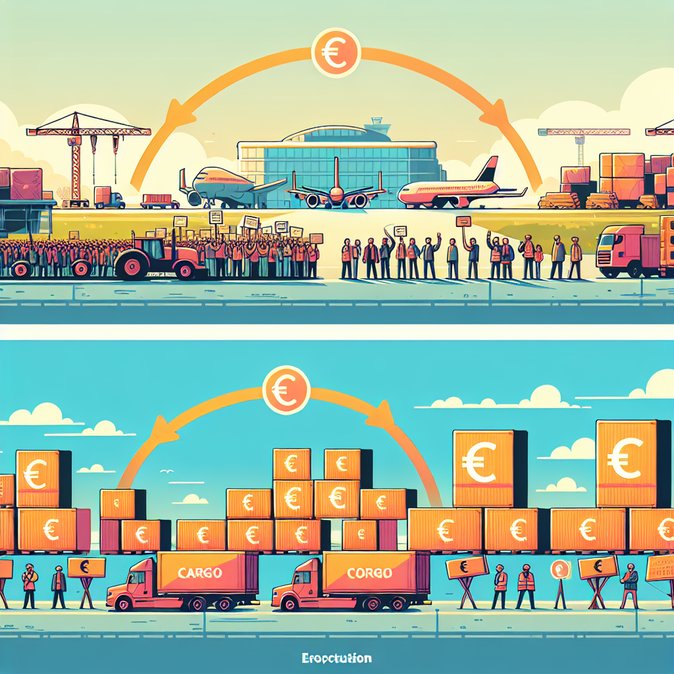
Low-cost giant Ryanair will remove 1.1 million passenger seats from its Brussels South Charleroi schedule for the 2026 summer season—and another 1.1 million in 2027—following two tax hikes unveiled by Belgian authorities.
• Federal level: the national flight tax will jump from €2 today to €10 per departing passenger on 1 January 2027.
• Municipal level: Charleroi city council plans to add a €3 local levy from April 2026.
CEO Michael O’Leary called the measures “stupid taxes on connectivity” and threatened to redeploy aircraft to lower-tax markets such as Sweden, Hungary and Italy. Charleroi relies on Ryanair for more than 70 % of its traffic; airport management warns up to 400 ground-handling and retail jobs are at risk.
![Ryanair cuts 1.1 million seats at Charleroi for summer 2026 as Belgium raises flight taxes]()
Corporate-travel impact
1. Route shrinkage: frequencies to Spain, Italy and Eastern Europe—popular with SME travellers—will fall, forcing more connections via Brussels or foreign hubs.
2. Air-fare inflation: less competition usually pushes prices up; analysts expect 8-12 % hikes on affected routes.
3. Travel-policy review: companies may need to adjust per-diems and advance-purchase windows; mobility advisers should flag possible visa implications when itineraries now require transits outside Schengen.
In that context, VisaHQ can smooth the transition: its Belgium platform (https://www.visahq.com/belgium/) lets corporate travellers and their TMCs check transit-visa rules in seconds and file applications online for any newly required documents, reducing the risk of missed flights as routings shift to non-Schengen hubs.
Environmental context: the Belgian government argues that higher levies align it with neighbouring states and support the green transition, but airlines counter that traffic will simply migrate across borders, undermining the policy goal.
• Federal level: the national flight tax will jump from €2 today to €10 per departing passenger on 1 January 2027.
• Municipal level: Charleroi city council plans to add a €3 local levy from April 2026.
CEO Michael O’Leary called the measures “stupid taxes on connectivity” and threatened to redeploy aircraft to lower-tax markets such as Sweden, Hungary and Italy. Charleroi relies on Ryanair for more than 70 % of its traffic; airport management warns up to 400 ground-handling and retail jobs are at risk.

Corporate-travel impact
1. Route shrinkage: frequencies to Spain, Italy and Eastern Europe—popular with SME travellers—will fall, forcing more connections via Brussels or foreign hubs.
2. Air-fare inflation: less competition usually pushes prices up; analysts expect 8-12 % hikes on affected routes.
3. Travel-policy review: companies may need to adjust per-diems and advance-purchase windows; mobility advisers should flag possible visa implications when itineraries now require transits outside Schengen.
In that context, VisaHQ can smooth the transition: its Belgium platform (https://www.visahq.com/belgium/) lets corporate travellers and their TMCs check transit-visa rules in seconds and file applications online for any newly required documents, reducing the risk of missed flights as routings shift to non-Schengen hubs.
Environmental context: the Belgian government argues that higher levies align it with neighbouring states and support the green transition, but airlines counter that traffic will simply migrate across borders, undermining the policy goal.