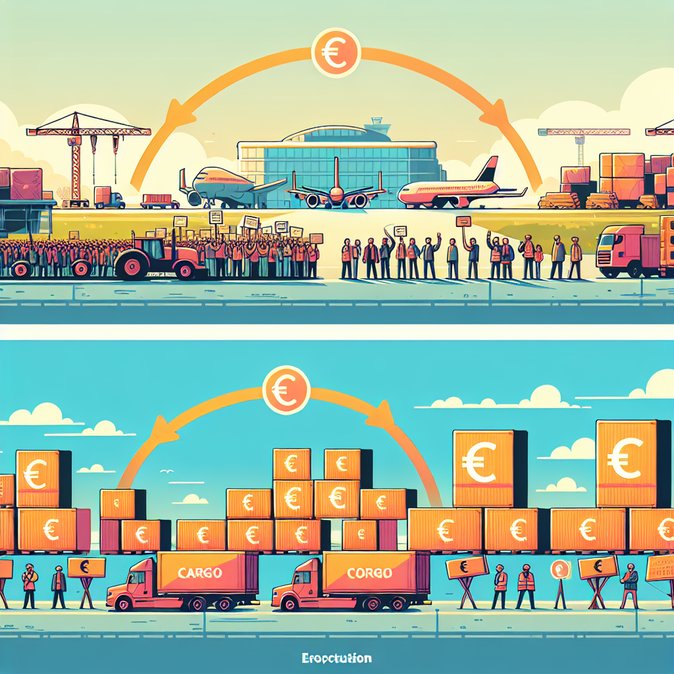
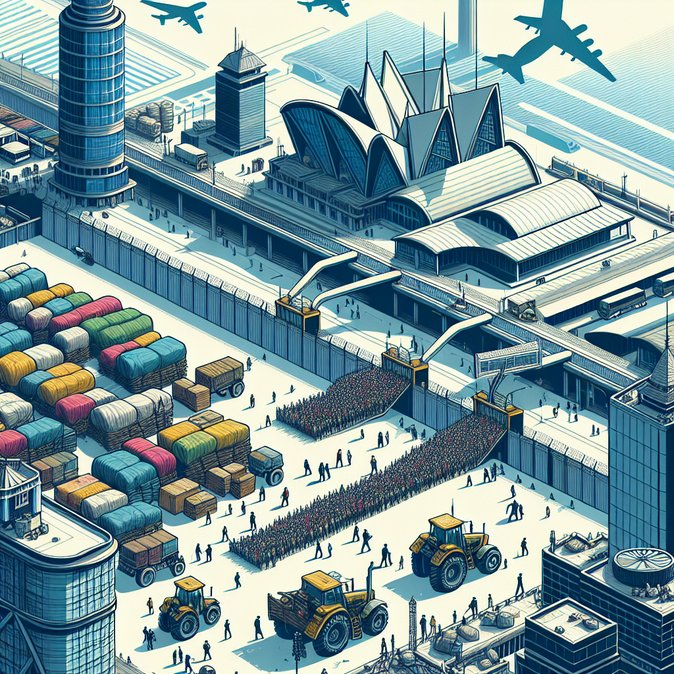
Road access to Brucargo—the freight heart of Brussels Airport—returned to normal on Saturday morning after Flemish farmers dismantled filter blockades that had throttled truck traffic since Thursday night.
The protest, organised by the General Farmers Syndicate (ABS), targeted the EU–Mercosur free-trade agreement, which farmers say will flood the market with South-American meat produced to lower environmental and animal-welfare standards. Using tractors, demonstrators operated a ‘10-minute corridor’ system, allowing lorries through only twice an hour. Brussels Airport Company estimates that the rolling blockade delayed or re-routed thousands of tonnes of pharmaceuticals, e-commerce parcels and automotive parts. Forwarders put the cost of every 12 hours of disruption at roughly €2 million.
If diverted flights or last-minute crew changes mean travellers suddenly need visas or work permits, VisaHQ can take the administrative load off mobility teams. Its digital platform (https://www.visahq.com/belgium/) provides up-to-date entry requirements for Belgium and neighbouring countries, lets you submit applications online, and tracks approvals in real time—keeping personnel compliant even when logistics plans shift without warning.
![Farmers lift Brussels-Airport blockade after three-day protest over Mercosur deal]()
Although passenger flights continued, mobility managers scrambled to find alternative routings for time-critical freight and employee relocations; many shipments were diverted to Liège, Schiphol or Frankfurt. DHL and Singapore Airlines Cargo confirmed extra truck runs, while several life-science multinationals activated contingency plans to protect temperature-sensitive products.
ABS ended the action after receiving assurances that federal ministers would grant a meeting next week, but warned that future blockades are possible if ratification of the trade pact proceeds.
Take-aways for global-mobility teams
• Expect residual delays in cargo clearance and ground transport around Zaventem over the weekend.
• Re-route household goods or exhibition freight via alternative airports until backlogs clear.
• Brief assignees arriving in Brussels on possible traffic congestion on the ring road.
• Monitor political developments: further agriculture-linked protests could hit Belgian border crossings with little notice.
The protest, organised by the General Farmers Syndicate (ABS), targeted the EU–Mercosur free-trade agreement, which farmers say will flood the market with South-American meat produced to lower environmental and animal-welfare standards. Using tractors, demonstrators operated a ‘10-minute corridor’ system, allowing lorries through only twice an hour. Brussels Airport Company estimates that the rolling blockade delayed or re-routed thousands of tonnes of pharmaceuticals, e-commerce parcels and automotive parts. Forwarders put the cost of every 12 hours of disruption at roughly €2 million.
If diverted flights or last-minute crew changes mean travellers suddenly need visas or work permits, VisaHQ can take the administrative load off mobility teams. Its digital platform (https://www.visahq.com/belgium/) provides up-to-date entry requirements for Belgium and neighbouring countries, lets you submit applications online, and tracks approvals in real time—keeping personnel compliant even when logistics plans shift without warning.
Although passenger flights continued, mobility managers scrambled to find alternative routings for time-critical freight and employee relocations; many shipments were diverted to Liège, Schiphol or Frankfurt. DHL and Singapore Airlines Cargo confirmed extra truck runs, while several life-science multinationals activated contingency plans to protect temperature-sensitive products.
ABS ended the action after receiving assurances that federal ministers would grant a meeting next week, but warned that future blockades are possible if ratification of the trade pact proceeds.
Take-aways for global-mobility teams
• Expect residual delays in cargo clearance and ground transport around Zaventem over the weekend.
• Re-route household goods or exhibition freight via alternative airports until backlogs clear.
• Brief assignees arriving in Brussels on possible traffic congestion on the ring road.
• Monitor political developments: further agriculture-linked protests could hit Belgian border crossings with little notice.