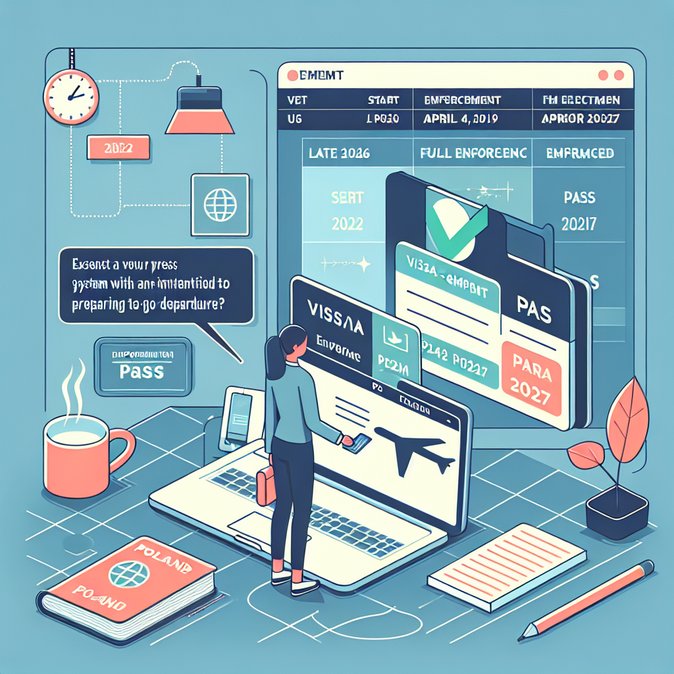
The European Commission has reiterated that the European Travel Information and Authorisation System (ETIAS) will go live in late 2026, followed by full enforcement in April 2027. Once operational, travellers from over 60 visa-exempt countries—including the UK, US, Canada and Australia—will need to secure online authorisation before visiting any of the 30 participating nations, Poland included.(travelandtourworld.com)
ETIAS will complement the biometric Entry/Exit System (EES) that Poland began rolling out at its airports and major land crossings in late 2025. Together, the two platforms will replace passport stamping for third-country nationals, allowing Polish border guards to rely on automated risk profiling and real-time overstay alerts.(travelandtourworld.com)
![EU confirms 2026 launch of ETIAS pre-travel authorisation—what it means for trips to Poland]()
For travellers who prefer professional guidance, VisaHQ can streamline the ETIAS application process end-to-end—submitting forms, tracking approvals and safely storing the authorisation alongside passport data. Their Poland portal (https://www.visahq.com/poland/) already supports a range of Polish visas, so both leisure visitors and corporate travel managers can handle multiple travel documents in one place.
For business travellers, the new process should be quick—applications cost €20 and most decisions will be issued within minutes—but companies will need to adjust pre-trip workflows. Travel-management systems must capture ETIAS numbers alongside passport details, and HR teams should remind frequent flyers that authorisation is valid for three years or until the associated passport expires.(travelandtourworld.com)
Polish airports expect to open dedicated ETIAS lanes once enforcement begins. However, travellers who arrive without valid approval will be denied boarding at their point of departure, making early compliance essential. Firms running assignment programmes into Poland should add ETIAS checks to their mobility policies and update invitation-letter templates so that assignees can complete the online form without errors.(travelandtourworld.com)
ETIAS will complement the biometric Entry/Exit System (EES) that Poland began rolling out at its airports and major land crossings in late 2025. Together, the two platforms will replace passport stamping for third-country nationals, allowing Polish border guards to rely on automated risk profiling and real-time overstay alerts.(travelandtourworld.com)

For travellers who prefer professional guidance, VisaHQ can streamline the ETIAS application process end-to-end—submitting forms, tracking approvals and safely storing the authorisation alongside passport data. Their Poland portal (https://www.visahq.com/poland/) already supports a range of Polish visas, so both leisure visitors and corporate travel managers can handle multiple travel documents in one place.
For business travellers, the new process should be quick—applications cost €20 and most decisions will be issued within minutes—but companies will need to adjust pre-trip workflows. Travel-management systems must capture ETIAS numbers alongside passport details, and HR teams should remind frequent flyers that authorisation is valid for three years or until the associated passport expires.(travelandtourworld.com)
Polish airports expect to open dedicated ETIAS lanes once enforcement begins. However, travellers who arrive without valid approval will be denied boarding at their point of departure, making early compliance essential. Firms running assignment programmes into Poland should add ETIAS checks to their mobility policies and update invitation-letter templates so that assignees can complete the online form without errors.(travelandtourworld.com)