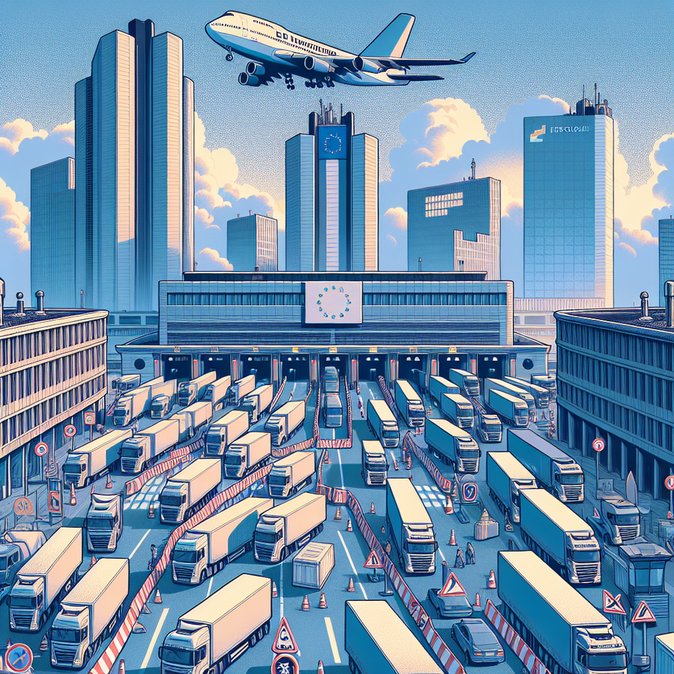
Brussels Airport’s Brucargo zone—one of Europe’s key air-freight hubs—has been partially paralysed since Thursday evening after dozens of Flemish farmers parked tractors across the access roads. Protest leaders from the General Farmers Syndicate (ABS) say the action will run until at least Saturday morning, 17 January, unless the Belgian and EU authorities pledge to halt ratification of the stalled Mercosur free-trade agreement.
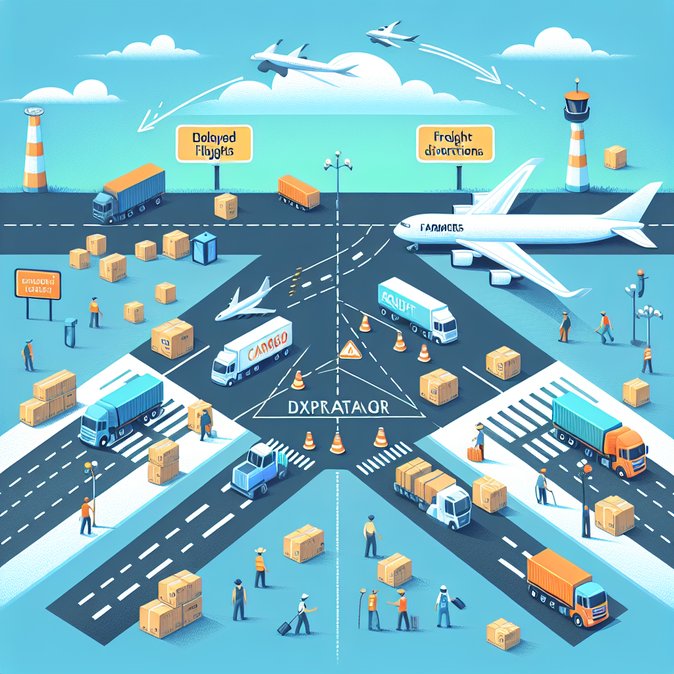
The blockade operates on a ‘10-minute corridor’ system: every half-hour the protesters allow trucks to pass for ten minutes before closing the road again. While passenger flights continue, the rolling roadblock is delaying the loading and unloading of temperature-sensitive pharmaceuticals, e-commerce consignments and automotive parts that normally transit through Brucargo’s 1.3 million-tonne cargo complex. Brussels Airport Company confirmed that medical shipments— including urgent organ transports—are being granted priority passage, but warned that export flight schedules are already slipping by several hours.
Amid such logistical turbulence, travellers suddenly rerouted or facing unexpected layovers may also confront last-minute paperwork hurdles. VisaHQ’s Belgium desk (https://www.visahq.com/belgium/) can fast-track visas, passport renewals and document legalisations on short notice, helping mobility managers and individual passengers stay compliant even as flights shift to Liège, Schiphol or Frankfurt.
![Farmers’ blockade at Brussels Airport snarls cargo operations and international supply chains]()
Logistics firms DHL, Singapore Airlines Cargo and Ethiopian Cargo report re-routing freight to Liège, Schiphol and Frankfurt, adding road-haulage costs and jeopardising just-in-time supply chains for manufacturers across the Benelux. Forwarders estimate that every 12 hours of disruption costs about €2 million in demurrage, missed connections and spoilage—expenses likely to be passed on to corporate shippers.
The farmers’ grievance is two-fold. First, they argue that South American meat could soon enter the EU tariff-free yet produced to lower environmental and animal-welfare standards, undercutting Belgian producers. Second, they say national nitrogen-emission caps and pesticide rules already squeeze margins, leaving agriculture to ‘pay twice’ for green policies while other sectors receive exemptions. Flemish Agriculture Minister Jo Brouns has offered dialogue but, at the time of writing, no compromise has emerged.
For global-mobility managers the immediate impact is on time-critical corporate relocations and business travel: household goods and exhibition equipment booked on freighter services may be delayed, and arriving assignees could face traffic jams on the Brussels Ring. Contingency plans—such as re-booking cargo through Liège or using express road services—are advisable until the blockade is lifted. Longer-term, the protest underscores how trade policy debates can rapidly translate into border-adjacent disruptions that ripple through international mobility programmes.
The blockade operates on a ‘10-minute corridor’ system: every half-hour the protesters allow trucks to pass for ten minutes before closing the road again. While passenger flights continue, the rolling roadblock is delaying the loading and unloading of temperature-sensitive pharmaceuticals, e-commerce consignments and automotive parts that normally transit through Brucargo’s 1.3 million-tonne cargo complex. Brussels Airport Company confirmed that medical shipments— including urgent organ transports—are being granted priority passage, but warned that export flight schedules are already slipping by several hours.
Amid such logistical turbulence, travellers suddenly rerouted or facing unexpected layovers may also confront last-minute paperwork hurdles. VisaHQ’s Belgium desk (https://www.visahq.com/belgium/) can fast-track visas, passport renewals and document legalisations on short notice, helping mobility managers and individual passengers stay compliant even as flights shift to Liège, Schiphol or Frankfurt.
Logistics firms DHL, Singapore Airlines Cargo and Ethiopian Cargo report re-routing freight to Liège, Schiphol and Frankfurt, adding road-haulage costs and jeopardising just-in-time supply chains for manufacturers across the Benelux. Forwarders estimate that every 12 hours of disruption costs about €2 million in demurrage, missed connections and spoilage—expenses likely to be passed on to corporate shippers.
The farmers’ grievance is two-fold. First, they argue that South American meat could soon enter the EU tariff-free yet produced to lower environmental and animal-welfare standards, undercutting Belgian producers. Second, they say national nitrogen-emission caps and pesticide rules already squeeze margins, leaving agriculture to ‘pay twice’ for green policies while other sectors receive exemptions. Flemish Agriculture Minister Jo Brouns has offered dialogue but, at the time of writing, no compromise has emerged.
For global-mobility managers the immediate impact is on time-critical corporate relocations and business travel: household goods and exhibition equipment booked on freighter services may be delayed, and arriving assignees could face traffic jams on the Brussels Ring. Contingency plans—such as re-booking cargo through Liège or using express road services—are advisable until the blockade is lifted. Longer-term, the protest underscores how trade policy debates can rapidly translate into border-adjacent disruptions that ripple through international mobility programmes.