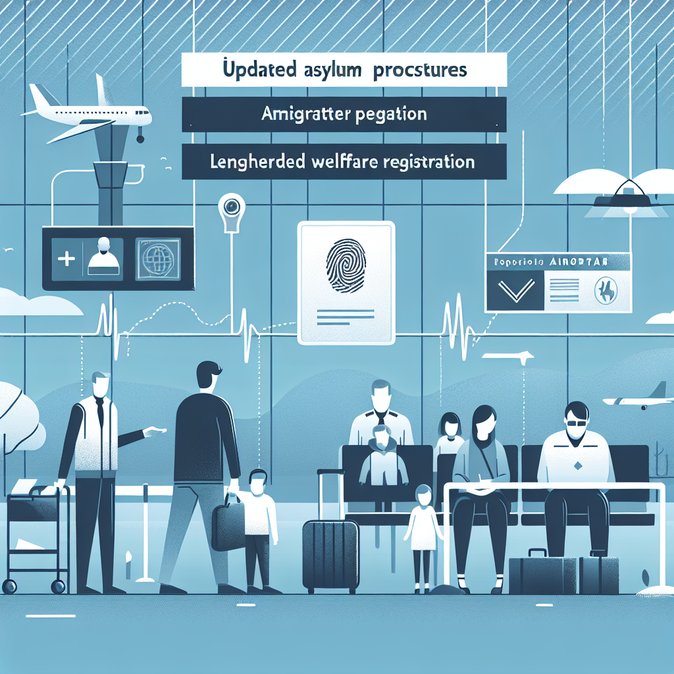
On 15 January, Austria’s coalition government presented the national blueprint for enacting the EU’s Common European Asylum System (GEAS), promising swifter airport decisions, longer detention options and sharper sanctions on non-compliant applicants. Under the draft bill, all asylum seekers arriving by air will have their claims processed exclusively at Vienna-Schwechat, where detention could last up to 18 weeks—tripling the previous six-week cap.(gmx.at)
Interior Minister Gerhard Karner stressed that the objective is to deter irregular arrivals and accelerate returns, stating that “asylum procedures must, whenever possible, take place outside the EU.” The plan also expands grounds for reducing welfare benefits in federal reception facilities and empowers immigration officers to impose penalties if asylum seekers leave assigned accommodation without permission.
The blueprint integrates the overhauled Eurodac system, introducing facial-recognition enrolment for applicants as young as six—down from the current age threshold of 14—and extending biometric capture to undocumented migrants and stateless persons.
![Government Announces Tougher Asylum Procedures Under New EU Framework]()
Businesses and individual travelers navigating Austria’s fast-evolving entry landscape can streamline their preparations through VisaHQ, which offers real-time visa and document guidance via its Austria portal (https://www.visahq.com/austria/). The platform consolidates application checklists, processing timelines and compliance advice in one place, helping users stay ahead of regulatory shifts triggered by the new asylum framework.
For employers, the main takeaway is that family-reunification quotas will shift to the Settlement Regulation later this year, potentially tightening availability for dependants of third-country assignees.
While business federations back stronger border management, they caution that lengthy airport detentions may strain capacity at Austria’s only long-haul hub. Airlines fear bottlenecks could discourage transit passengers and have asked the government to ring-fence transfer corridors if arrival numbers surge.
The legislation is expected to enter parliamentary committee review in February, with passage targeted for the end of the first quarter. Mobility teams should review crisis-management protocols for transferees whose status could change if arrival detention rules are activated.
Interior Minister Gerhard Karner stressed that the objective is to deter irregular arrivals and accelerate returns, stating that “asylum procedures must, whenever possible, take place outside the EU.” The plan also expands grounds for reducing welfare benefits in federal reception facilities and empowers immigration officers to impose penalties if asylum seekers leave assigned accommodation without permission.
The blueprint integrates the overhauled Eurodac system, introducing facial-recognition enrolment for applicants as young as six—down from the current age threshold of 14—and extending biometric capture to undocumented migrants and stateless persons.

Businesses and individual travelers navigating Austria’s fast-evolving entry landscape can streamline their preparations through VisaHQ, which offers real-time visa and document guidance via its Austria portal (https://www.visahq.com/austria/). The platform consolidates application checklists, processing timelines and compliance advice in one place, helping users stay ahead of regulatory shifts triggered by the new asylum framework.
For employers, the main takeaway is that family-reunification quotas will shift to the Settlement Regulation later this year, potentially tightening availability for dependants of third-country assignees.
While business federations back stronger border management, they caution that lengthy airport detentions may strain capacity at Austria’s only long-haul hub. Airlines fear bottlenecks could discourage transit passengers and have asked the government to ring-fence transfer corridors if arrival numbers surge.
The legislation is expected to enter parliamentary committee review in February, with passage targeted for the end of the first quarter. Mobility teams should review crisis-management protocols for transferees whose status could change if arrival detention rules are activated.