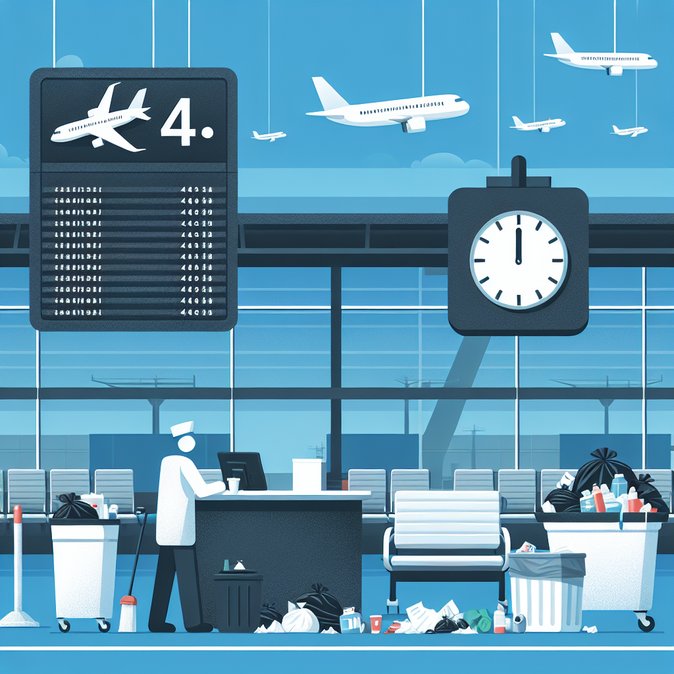
Cleaning crews at Bilbao Airport (BIO) walked off the job at midnight on 14 January after last-minute wage talks collapsed, triggering a 48-hour stoppage that will run through the evening of 15 January. Spain’s transport ministry has ordered minimum services—50 % staffing for critical air-side zones and 25 % for public concourses—so flight operations are continuing, but passengers are reporting unstocked rest-rooms, overflowing bins and reduced lounge sanitation.
BIO handled 6.7 million passengers last year and is bidding for its first trans-Atlantic route, making reputation-management critical for local authorities. Airlines have advised travellers to arrive early, carry hand sanitiser and expect gate changes if litter forces terminal re-sequencing. VIP-handling agents are scrambling for third-party janitorial contractors, while airport management warns unions that further Easter-week strikes could jeopardise route-development talks with US and Gulf carriers.
![Bilbao Airport hit by 48-hour cleaning strike, passenger discomfort but flights continue]()
Meanwhile, travellers juggling last-minute itinerary changes might also need to revisit visa or entry documentation. VisaHQ can simplify that process: its Spain portal (https://www.visahq.com/spain/) provides fast online applications, real-time status updates and courier services, taking one worry off your checklist while BIO’s facilities remain under strain.
For mobility teams moving staff to the Basque Country’s automotive and energy clusters, the impact is largely one of comfort and contingency planning. Employers should brief assignees on hygiene work-arounds, reconfirm meet-and-greet services and, where possible, build buffer time into connecting itineraries via Madrid or Barcelona. The strike does not affect immigration desks, but any terminal disruption can slow passenger flows, increasing the risk of missed ground transport connections.
Negotiations resume on 18 January. If no deal is reached, unions threaten a longer 72-hour stoppage during Holy Week, historically one of BIO’s busiest periods for both leisure and corporate travel.
BIO handled 6.7 million passengers last year and is bidding for its first trans-Atlantic route, making reputation-management critical for local authorities. Airlines have advised travellers to arrive early, carry hand sanitiser and expect gate changes if litter forces terminal re-sequencing. VIP-handling agents are scrambling for third-party janitorial contractors, while airport management warns unions that further Easter-week strikes could jeopardise route-development talks with US and Gulf carriers.

Meanwhile, travellers juggling last-minute itinerary changes might also need to revisit visa or entry documentation. VisaHQ can simplify that process: its Spain portal (https://www.visahq.com/spain/) provides fast online applications, real-time status updates and courier services, taking one worry off your checklist while BIO’s facilities remain under strain.
For mobility teams moving staff to the Basque Country’s automotive and energy clusters, the impact is largely one of comfort and contingency planning. Employers should brief assignees on hygiene work-arounds, reconfirm meet-and-greet services and, where possible, build buffer time into connecting itineraries via Madrid or Barcelona. The strike does not affect immigration desks, but any terminal disruption can slow passenger flows, increasing the risk of missed ground transport connections.
Negotiations resume on 18 January. If no deal is reached, unions threaten a longer 72-hour stoppage during Holy Week, historically one of BIO’s busiest periods for both leisure and corporate travel.