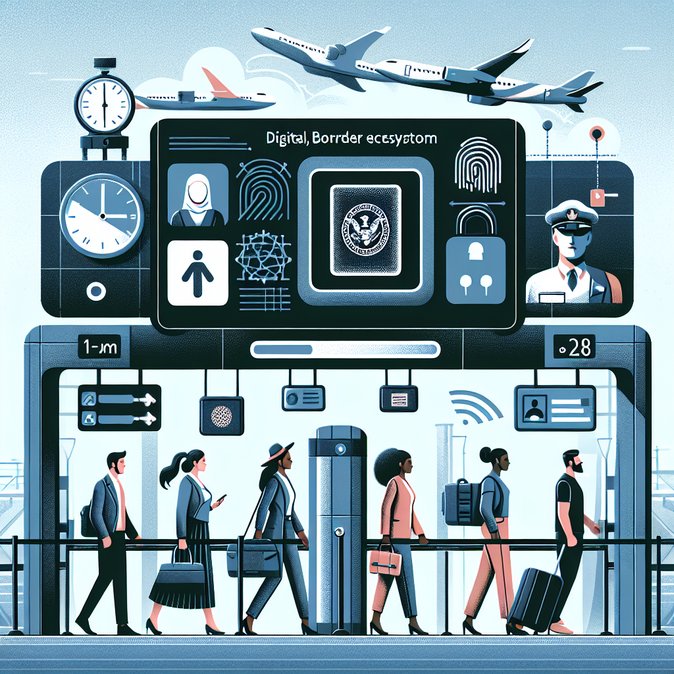
The Federal Authority for Identity, Citizenship, Customs and Port Security (ICP) quietly went live today with “UAE Fast Track”, a smartphone application that lets travellers complete most immigration formalities before they even board the aircraft or approach a land- or seaport. After downloading the app, users create a one-time profile, scan the information page of their passport, take a selfie and capture their fingerprints using the phone’s camera. They then pre-select their port of entry and expected arrival date.
On arrival, enrolled travellers bypass the manual registration counters and walk straight to the Smart Gates in Dubai, Abu Dhabi or Sharjah, where biometric verification takes only a few seconds. ICP officials say a typical arrival process for Fast Track users now averages under 90 seconds, down from 8-10 minutes previously—an efficiency gain the authority deems essential as UAE passenger volumes approach 140 million a year.
![UAE launches ‘Fast Track’ mobile app to speed up border clearance]()
Travellers who still need a UAE entry permit before enrolling in Fast Track can streamline that step as well: VisaHQ’s online platform (https://www.visahq.com/united-arab-emirates/) processes UAE visa applications entirely online, provides real-time status updates and offers live customer support, ensuring your paperwork is ready by the time you reach the Smart Gates.
The app is part of a broader digital-border roadmap that includes AI-enabled risk scoring, facial-recognition corridors and fully paperless residence visas. Airlines and ground-handlers have welcomed the move, noting that shorter queues reduce missed connections and improve on-time performance. Corporate mobility managers are already exploring whether project staff can be bulk-registered, allowing international assignees to enter with the same ease as residents.
For visitors, the practical benefits are immediate: less time in line, fewer documents to handle and lower risk of clerical errors that can derail a trip. For the government, Fast Track creates a new data layer—complete with advance passenger biometrics—that enhances security screening without adding headcount. ICP says the service is free and optional (for now) but hinted that pre-registration could become mandatory for high-volume travel seasons such as the Eid rush.
On arrival, enrolled travellers bypass the manual registration counters and walk straight to the Smart Gates in Dubai, Abu Dhabi or Sharjah, where biometric verification takes only a few seconds. ICP officials say a typical arrival process for Fast Track users now averages under 90 seconds, down from 8-10 minutes previously—an efficiency gain the authority deems essential as UAE passenger volumes approach 140 million a year.

Travellers who still need a UAE entry permit before enrolling in Fast Track can streamline that step as well: VisaHQ’s online platform (https://www.visahq.com/united-arab-emirates/) processes UAE visa applications entirely online, provides real-time status updates and offers live customer support, ensuring your paperwork is ready by the time you reach the Smart Gates.
The app is part of a broader digital-border roadmap that includes AI-enabled risk scoring, facial-recognition corridors and fully paperless residence visas. Airlines and ground-handlers have welcomed the move, noting that shorter queues reduce missed connections and improve on-time performance. Corporate mobility managers are already exploring whether project staff can be bulk-registered, allowing international assignees to enter with the same ease as residents.
For visitors, the practical benefits are immediate: less time in line, fewer documents to handle and lower risk of clerical errors that can derail a trip. For the government, Fast Track creates a new data layer—complete with advance passenger biometrics—that enhances security screening without adding headcount. ICP says the service is free and optional (for now) but hinted that pre-registration could become mandatory for high-volume travel seasons such as the Eid rush.