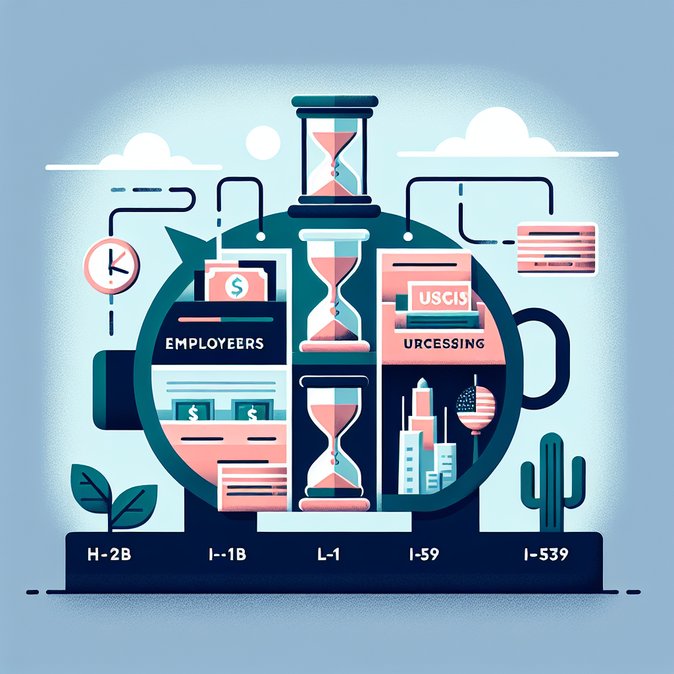
U.S. Citizenship and Immigration Services (USCIS) published a final rule on January 12 and formally announced it to stakeholders on January 14, 2026, increasing premium-processing fees across all eligible petitions and applications. Starting March 1, employers who want the 15-, 30- or 45-day expedited service must include higher government filing checks: $2,965 for Form I-129 and Form I-140 requests, $2,075 for Form I-539, and $1,780 for Form I-765. The rule implements the inflation-adjustment formula mandated by the 2020 USCIS Stabilization Act. (jdsupra.com)
For corporate mobility teams, the increase—roughly 5-6 percent—may appear modest, but aggregate costs will climb quickly during the FY 2027 H-1B filing season, large L-1 blanket projects, or year-end adjustment-of-status pushes. A company that files 200 premium H-1B petitions each spring will pay nearly $32,000 more than last year. Budget owners should update cost forecasts, purchase additional money orders ahead of March 1, and communicate the new fees to finance and billing departments.
Organizations juggling multiple U.S. visa filings may find value in outsourcing parts of the process. VisaHQ’s corporate platform offers bulk-order tools, real-time tracking and document validation for H-1B, L-1 and other employment categories, helping employers stay compliant as costs and rules evolve. Learn more at https://www.visahq.com/united-states/
![USCIS Final Rule Raises Premium Processing Fees Effective March 1, 2026]()
USCIS says the additional revenue will be funneled into hiring, IT modernization and backlog reduction—areas where processing times remain well above pre-pandemic norms. The agency committed to releasing quarterly reports on how premium-processing surcharges are allocated, a transparency measure welcomed by the American Immigration Lawyers Association. (ogletree.com)
In the short term, employers should decide whether to file time-sensitive cases before the effective date. Petitions post-marked February 29 or earlier may use the lower fee, but overnight delivery delays could trigger rejections, so counsel recommend courier pickups no later than February 26. After March 1, any filing with an outdated check will be rejected in its entirety, jeopardizing status and work-authorization continuity.
Foreign nationals awaiting Optional Practical Training (OPT) or STEM-OPT work cards face an extra $95 for premium upgrades. Universities should alert students and ensure that funding letters or employer reimbursements reflect the higher amount. Companies planning green-card filings under PERM substitution should evaluate whether the $2,965 fee still delivers sufficient ROI compared with standard processing, which currently averages 10–12 months for EB-2 approvals.
For corporate mobility teams, the increase—roughly 5-6 percent—may appear modest, but aggregate costs will climb quickly during the FY 2027 H-1B filing season, large L-1 blanket projects, or year-end adjustment-of-status pushes. A company that files 200 premium H-1B petitions each spring will pay nearly $32,000 more than last year. Budget owners should update cost forecasts, purchase additional money orders ahead of March 1, and communicate the new fees to finance and billing departments.
Organizations juggling multiple U.S. visa filings may find value in outsourcing parts of the process. VisaHQ’s corporate platform offers bulk-order tools, real-time tracking and document validation for H-1B, L-1 and other employment categories, helping employers stay compliant as costs and rules evolve. Learn more at https://www.visahq.com/united-states/

USCIS says the additional revenue will be funneled into hiring, IT modernization and backlog reduction—areas where processing times remain well above pre-pandemic norms. The agency committed to releasing quarterly reports on how premium-processing surcharges are allocated, a transparency measure welcomed by the American Immigration Lawyers Association. (ogletree.com)
In the short term, employers should decide whether to file time-sensitive cases before the effective date. Petitions post-marked February 29 or earlier may use the lower fee, but overnight delivery delays could trigger rejections, so counsel recommend courier pickups no later than February 26. After March 1, any filing with an outdated check will be rejected in its entirety, jeopardizing status and work-authorization continuity.
Foreign nationals awaiting Optional Practical Training (OPT) or STEM-OPT work cards face an extra $95 for premium upgrades. Universities should alert students and ensure that funding letters or employer reimbursements reflect the higher amount. Companies planning green-card filings under PERM substitution should evaluate whether the $2,965 fee still delivers sufficient ROI compared with standard processing, which currently averages 10–12 months for EB-2 approvals.