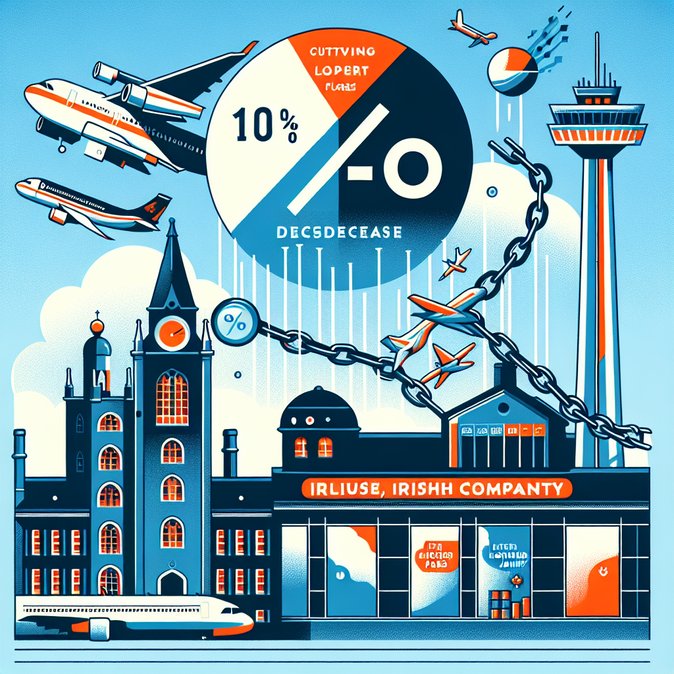
Ryanair chief executive Michael O’Leary has confirmed that the carrier will cut about 1.1 million seats—roughly 10 % of capacity—at Brussels South Charleroi Airport from April 2026 after Belgium introduced a €3 ‘eco-tax’ on departing passengers. Speaking to reporters on 14 January, O’Leary branded the levy “stupid” and warned that further cuts will follow unless it is scrapped.
Several aircraft will be redeployed to lower-cost bases in Sweden, Albania, Italy and Slovakia, illustrating how quickly route economics can shift when local charges rise. While the move primarily hits Belgian outbound traffic, there are knock-on effects for Irish corporates: Charleroi is a popular low-cost gateway for pharma and tech teams shuttling between Dublin and EU institutions in Brussels.
![Ryanair Slashes Brussels Charleroi Capacity over New Passenger Tax, Redirects Jets to Other Bases]()
For Irish businesses suddenly weighing alternative routings, VisaHQ can simplify the paperwork that comes with new itineraries. Through the Irish portal (https://www.visahq.com/ireland/), travel managers can check up-to-date entry rules for Belgium and any substitute hubs in the Schengen area, submit group visa requests online, and receive alerts if documentation changes. The service provides a handy buffer against compliance slip-ups when schedules are reshuffled at short notice.
Travel managers should expect reduced flight frequencies and possible time-table changes on Dublin–Charleroi services, potentially forcing travellers onto Dublin–Zaventem or indirect routings. Fare volatility is likely as capacity tightens, while carbon-conscious companies may welcome any modal shift towards rail for Brussels-bound trips.
O’Leary also used the announcement to lobby the EU on carbon pricing, arguing that Europe’s Emissions Trading Scheme should cover long-haul carriers from outside the bloc rather than “penalise intra-EU flights”. The spat highlights the broader fiscal headwinds facing airlines at a time when labour and fuel costs are already surging. For global mobility teams, the message is to monitor tax-driven route reshuffles that could affect costings and travel-policy compliance in 2026 budgeting cycles.
Several aircraft will be redeployed to lower-cost bases in Sweden, Albania, Italy and Slovakia, illustrating how quickly route economics can shift when local charges rise. While the move primarily hits Belgian outbound traffic, there are knock-on effects for Irish corporates: Charleroi is a popular low-cost gateway for pharma and tech teams shuttling between Dublin and EU institutions in Brussels.

For Irish businesses suddenly weighing alternative routings, VisaHQ can simplify the paperwork that comes with new itineraries. Through the Irish portal (https://www.visahq.com/ireland/), travel managers can check up-to-date entry rules for Belgium and any substitute hubs in the Schengen area, submit group visa requests online, and receive alerts if documentation changes. The service provides a handy buffer against compliance slip-ups when schedules are reshuffled at short notice.
Travel managers should expect reduced flight frequencies and possible time-table changes on Dublin–Charleroi services, potentially forcing travellers onto Dublin–Zaventem or indirect routings. Fare volatility is likely as capacity tightens, while carbon-conscious companies may welcome any modal shift towards rail for Brussels-bound trips.
O’Leary also used the announcement to lobby the EU on carbon pricing, arguing that Europe’s Emissions Trading Scheme should cover long-haul carriers from outside the bloc rather than “penalise intra-EU flights”. The spat highlights the broader fiscal headwinds facing airlines at a time when labour and fuel costs are already surging. For global mobility teams, the message is to monitor tax-driven route reshuffles that could affect costings and travel-policy compliance in 2026 budgeting cycles.