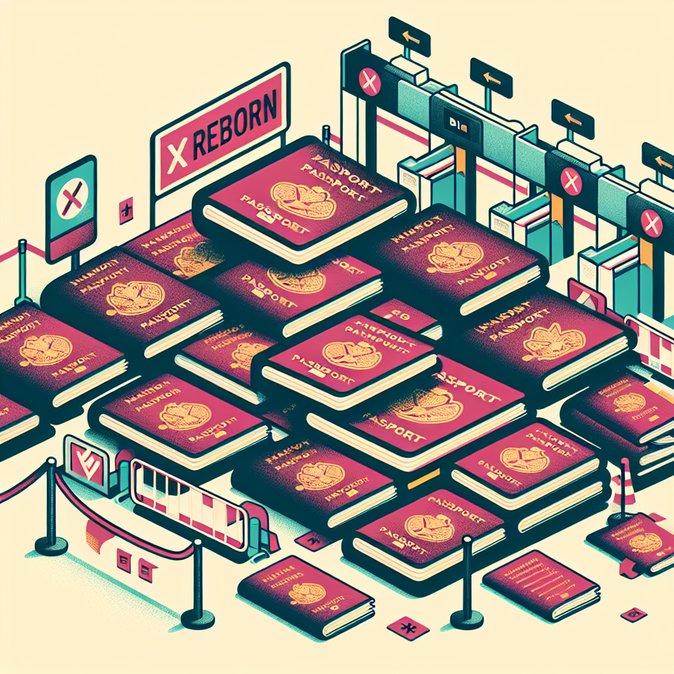
The Department of Foreign Affairs (DFA) has launched an urgent recall of 12,904 Irish passports printed between 23 December 2025 and 6 January 2026 after a botched software update caused the country identifier “IRL” to be omitted from the data page. Although the error sounds minor, missing International Civil Aviation Organisation (ICAO) fields mean the documents fail automatic checks at eGates worldwide and could trigger secondary screening or even denial of boarding for holders.
Irish citizens who received one of the faulty booklets have been contacted by e-mail and asked to return the passport to the Customer Care office on Dublin’s Lower Mount Street. The DFA says same-day re-issue is available for travellers who show proof of imminent departure, and replacement documents will carry new passport numbers so that airlines and border systems cannot confuse old and new credentials. Border agencies in the Schengen Area, the UK, the US and other key destinations were notified overnight to reduce the risk of passengers being stranded en-route.
For businesses running international assignments the advice is clear: check the issue date on employees’ passports, build in extra lead-time for visa appointments in the coming weeks, and remind travellers to carry printed itineraries in case they need priority re-issuance. Immigration advisers also warn that dependent visa and work-permit applications already filed may need to be updated with the new passport numbers once re-issued.
![Ireland Recalls 13,000 Misprinted Passports Over Software Glitch]()
VisaHQ can help mitigate that administrative burden. Through its Ireland platform (https://www.visahq.com/ireland/), the company offers same-day courier collection, real-time tracking of DFA submissions, and automated updates to any connected visa or work-permit applications, ensuring travellers and HR teams stay one step ahead.
The incident has reignited calls for a dedicated contingency fund for the Passport Service. While the total cost of re-printing remains unknown, industry estimates suggest it could exceed €2 million once courier fees and staff overtime are included. The glitch also underscores broader vulnerabilities as the DFA prepares to introduce next-generation e-passports in 2027, incorporating biometric facial and fingerprint data to meet new EU Entry/Exit System (EES) requirements.
In the short term, mobility managers should circulate the DFA recall notice, verify that travellers booked for January and early February are not carrying affected passports, and use this disruption as an opportunity to audit document-validity procedures across their assignee populations.
Irish citizens who received one of the faulty booklets have been contacted by e-mail and asked to return the passport to the Customer Care office on Dublin’s Lower Mount Street. The DFA says same-day re-issue is available for travellers who show proof of imminent departure, and replacement documents will carry new passport numbers so that airlines and border systems cannot confuse old and new credentials. Border agencies in the Schengen Area, the UK, the US and other key destinations were notified overnight to reduce the risk of passengers being stranded en-route.
For businesses running international assignments the advice is clear: check the issue date on employees’ passports, build in extra lead-time for visa appointments in the coming weeks, and remind travellers to carry printed itineraries in case they need priority re-issuance. Immigration advisers also warn that dependent visa and work-permit applications already filed may need to be updated with the new passport numbers once re-issued.
VisaHQ can help mitigate that administrative burden. Through its Ireland platform (https://www.visahq.com/ireland/), the company offers same-day courier collection, real-time tracking of DFA submissions, and automated updates to any connected visa or work-permit applications, ensuring travellers and HR teams stay one step ahead.
The incident has reignited calls for a dedicated contingency fund for the Passport Service. While the total cost of re-printing remains unknown, industry estimates suggest it could exceed €2 million once courier fees and staff overtime are included. The glitch also underscores broader vulnerabilities as the DFA prepares to introduce next-generation e-passports in 2027, incorporating biometric facial and fingerprint data to meet new EU Entry/Exit System (EES) requirements.
In the short term, mobility managers should circulate the DFA recall notice, verify that travellers booked for January and early February are not carrying affected passports, and use this disruption as an opportunity to audit document-validity procedures across their assignee populations.