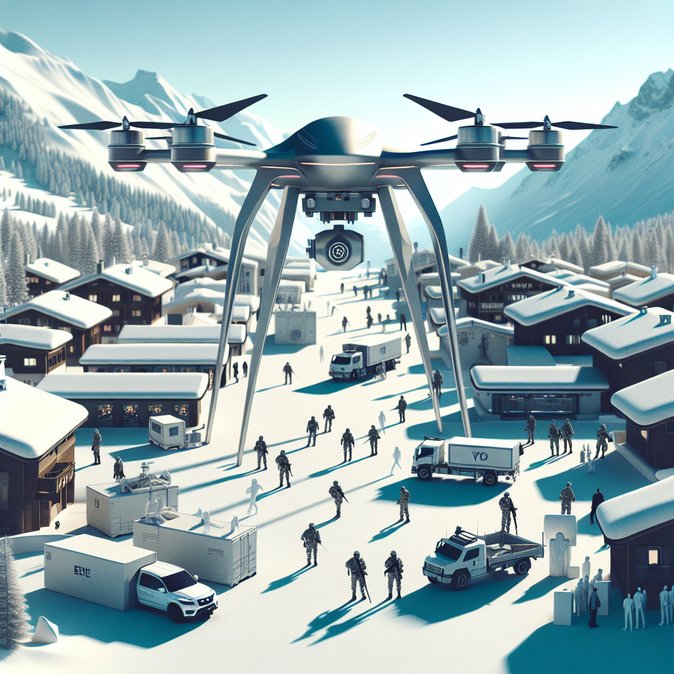
The Federal Department of Defence confirmed on 12 January that up to 5,000 Swiss soldiers have begun a two-week assistance mission to secure the World Economic Forum. Military police, logistics and air-defence units are augmenting the Graubünden cantonal police, whose overall mandate covers VIP protection and infrastructure security.
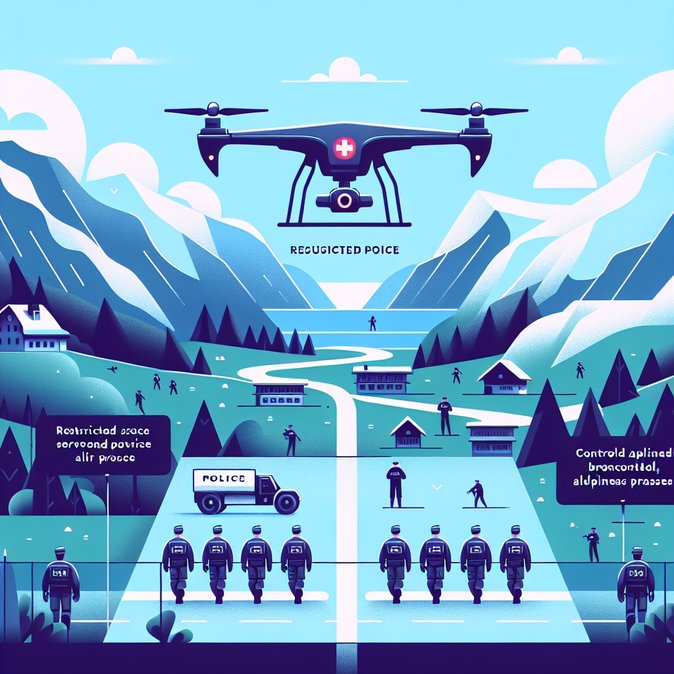
A temporary restricted air-space zone with a 25-nautical-mile radius around Davos will be activated from 16 January, remaining continuously in force between 19 and 24 January. Civilian aircraft—including drones, paragliders and even medical helicopters—must obtain special clearance or risk interception by F-35A fighter patrols and mobile ground-based defence systems.
International delegates and service providers who still need to finalise their travel paperwork can turn to VisaHQ, which simplifies Swiss visa applications and other consular services through an intuitive online platform; full details and electronic forms are available at https://www.visahq.com/switzerland/
![Swiss Army deploys 5,000 troops and imposes WEF air-space restrictions]()
Checkpoints on key alpine passes, as well as surveillance of rail tunnels and power substations, aim to deter both protest disruption and potential terrorist threats. The army’s logistics corps has pre-positioned snow-removal gear and mobile accommodation to keep supply lines open despite forecast heavy snowfall.
For foreign workers and resident expatriates in the Davos area, authorities advise carrying passports or Swiss residence permits at all times; random identity checks will be enforced. Event suppliers face additional paperwork, including vehicle manifests and security-vetting forms, which must be filed 48 hours prior to arrival.
The operation, authorised under Article 66 of the Armed Forces Act, underscores Switzerland’s reliance on military support for large-scale civil events and serves as a stress-test for the country’s newly acquired F-35A fleet in real-world air-policing scenarios.
A temporary restricted air-space zone with a 25-nautical-mile radius around Davos will be activated from 16 January, remaining continuously in force between 19 and 24 January. Civilian aircraft—including drones, paragliders and even medical helicopters—must obtain special clearance or risk interception by F-35A fighter patrols and mobile ground-based defence systems.
International delegates and service providers who still need to finalise their travel paperwork can turn to VisaHQ, which simplifies Swiss visa applications and other consular services through an intuitive online platform; full details and electronic forms are available at https://www.visahq.com/switzerland/
Checkpoints on key alpine passes, as well as surveillance of rail tunnels and power substations, aim to deter both protest disruption and potential terrorist threats. The army’s logistics corps has pre-positioned snow-removal gear and mobile accommodation to keep supply lines open despite forecast heavy snowfall.
For foreign workers and resident expatriates in the Davos area, authorities advise carrying passports or Swiss residence permits at all times; random identity checks will be enforced. Event suppliers face additional paperwork, including vehicle manifests and security-vetting forms, which must be filed 48 hours prior to arrival.
The operation, authorised under Article 66 of the Armed Forces Act, underscores Switzerland’s reliance on military support for large-scale civil events and serves as a stress-test for the country’s newly acquired F-35A fleet in real-world air-policing scenarios.