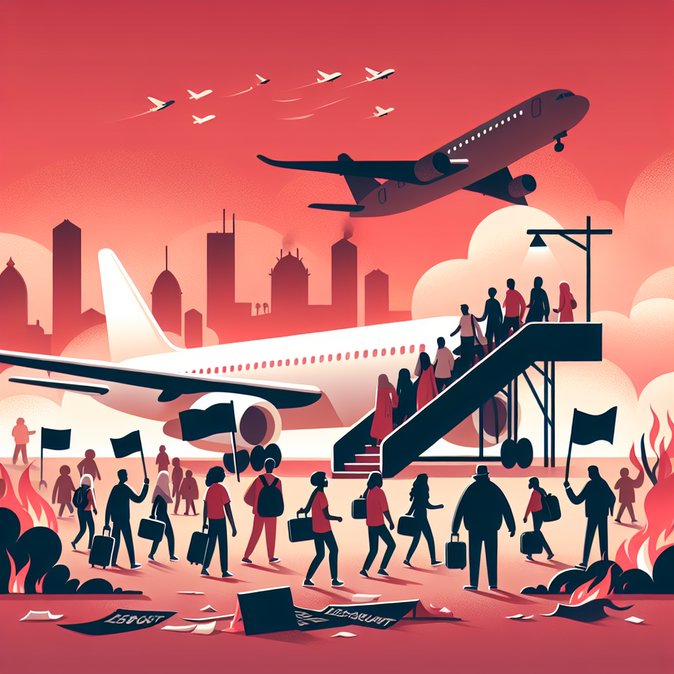
In its first year back in office, the Trump administration has leaned heavily on visa revocation as a cornerstone of its “extreme vetting” agenda. A State Department spokesperson confirmed this week that 100,000-plus non-immigrant visas were cancelled between January 20, 2025 and January 10, 2026—easily surpassing any 12-month total on record. The tally includes roughly 8,000 student visas and 2,500 work-related visas that were stripped after holders were picked up for crimes ranging from driving under the influence to assault.
Officials say the numbers reflect a broader strategy that treats visa benefits as “continuously reviewable privileges.” Under new guidance, consular posts share real-time arrest data with a freshly created Continuous Vetting Center in Virginia. When an alert is triggered, agents can annotate the visa record in the Consular Consolidated Database and electronically void the entry document—often before the traveller knows it has happened. Airlines are then notified through the Advance Passenger Information System (APIS) to deny boarding.
For travelers suddenly facing canceled documents—or simply trying to navigate the tightening U.S. entry rules—VisaHQ can be a lifeline. Through its dedicated United States portal (https://www.visahq.com/united-states/), the platform offers real-time visa status tracking, personalized document checklists, and hands-on support for re-application appointments, helping students, professionals, and their sponsors get back on the right side of the border faster.
![State Department Has Revoked More Than 100,000 U.S. Visas Since January 2025]()
For companies that rely on foreign talent, the policy introduces a new layer of uncertainty. An H-1B engineer who receives a misdemeanor citation, for example, may see both her visa and her approved petition invalidated mid-assignment, forcing an unplanned departure and project delays. Universities are likewise struggling to reassure international students whose F-1 status is in good standing but whose entry visas have been revoked for minor infractions. Several schools have begun advising students not to travel internationally over spring break until the policy stabilises.
Immigration lawyers note that large-scale revocations can also clog consular workloads: every cancelled visa holder must re-apply and sit through an in-person interview if they hope to return. That could deepen already lengthy appointment backlogs in high-volume posts such as Mumbai, São Paulo and Beijing. Critics, including the American Immigration Lawyers Association, accuse the administration of using public-safety rhetoric to advance ideological goals, pointing to anecdotal reports that some student visas were revoked primarily for pro-Palestinian social-media activity. The State Department insists all decisions are fact-based and legally defensible.
Practical takeaway: employers should add arrest- and citation-monitoring to their mobility compliance check-lists and remind visa holders that even minor infractions can trigger an automatic revocation; advance consultation before international travel is now essential.
Officials say the numbers reflect a broader strategy that treats visa benefits as “continuously reviewable privileges.” Under new guidance, consular posts share real-time arrest data with a freshly created Continuous Vetting Center in Virginia. When an alert is triggered, agents can annotate the visa record in the Consular Consolidated Database and electronically void the entry document—often before the traveller knows it has happened. Airlines are then notified through the Advance Passenger Information System (APIS) to deny boarding.
For travelers suddenly facing canceled documents—or simply trying to navigate the tightening U.S. entry rules—VisaHQ can be a lifeline. Through its dedicated United States portal (https://www.visahq.com/united-states/), the platform offers real-time visa status tracking, personalized document checklists, and hands-on support for re-application appointments, helping students, professionals, and their sponsors get back on the right side of the border faster.

For companies that rely on foreign talent, the policy introduces a new layer of uncertainty. An H-1B engineer who receives a misdemeanor citation, for example, may see both her visa and her approved petition invalidated mid-assignment, forcing an unplanned departure and project delays. Universities are likewise struggling to reassure international students whose F-1 status is in good standing but whose entry visas have been revoked for minor infractions. Several schools have begun advising students not to travel internationally over spring break until the policy stabilises.
Immigration lawyers note that large-scale revocations can also clog consular workloads: every cancelled visa holder must re-apply and sit through an in-person interview if they hope to return. That could deepen already lengthy appointment backlogs in high-volume posts such as Mumbai, São Paulo and Beijing. Critics, including the American Immigration Lawyers Association, accuse the administration of using public-safety rhetoric to advance ideological goals, pointing to anecdotal reports that some student visas were revoked primarily for pro-Palestinian social-media activity. The State Department insists all decisions are fact-based and legally defensible.
Practical takeaway: employers should add arrest- and citation-monitoring to their mobility compliance check-lists and remind visa holders that even minor infractions can trigger an automatic revocation; advance consultation before international travel is now essential.