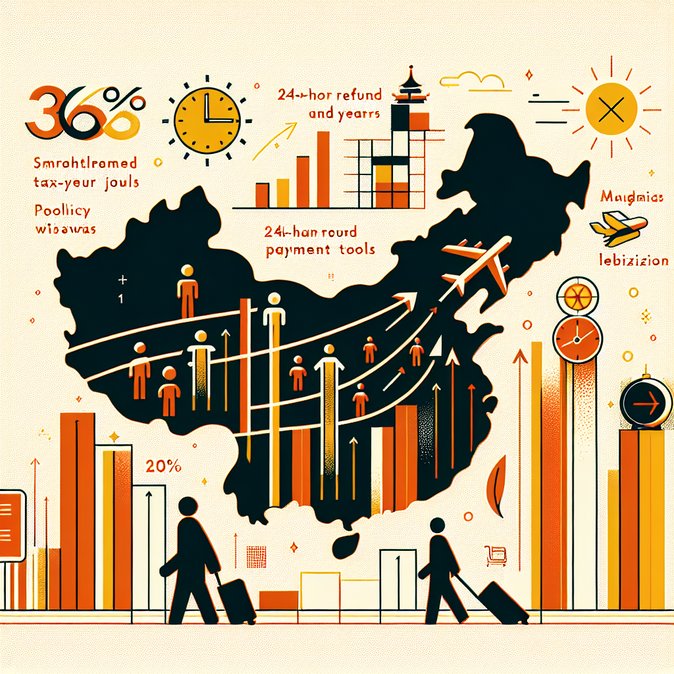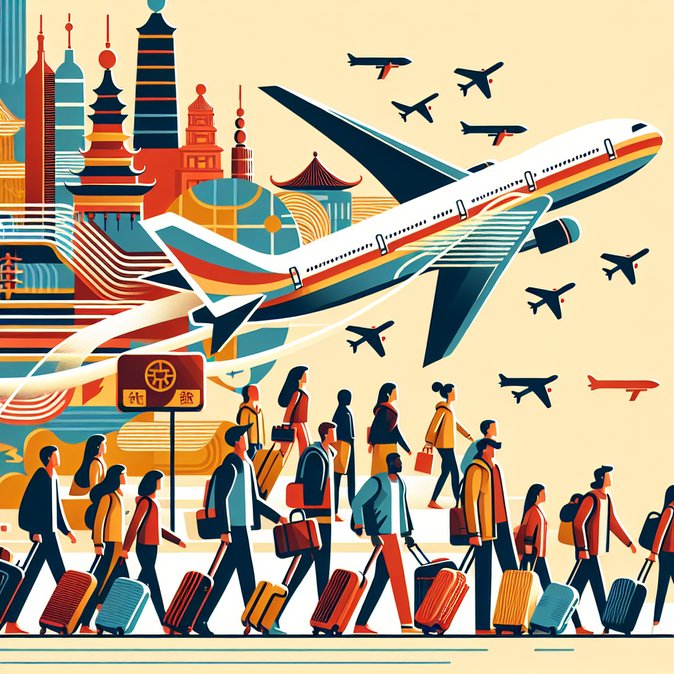
China’s 2026 Spring Festival public holiday, unusually long at nine consecutive days (15–23 February), is already rewriting booking records. Data released on 12 January by flight-tracker app Flight Master and carried by Beijing Youth Daily show more than three million air tickets reserved as of 9 January—20 percent ahead of the same lead-time last year. Outbound demand is leading the charge, up 63 percent year-on-year.
Seoul, Hong Kong and Bangkok top the destination chart, but longer-haul favourites such as Singapore, Kuala Lumpur and Sydney have climbed into the top ten, indicating travellers’ confidence in post-pandemic visa processing and flight reliability. The surge follows a year of rapid visa-free liberalisation: ASEAN neighbours now waive visas for Chinese tourists, while South Korea has extended its visa-fee waiver for groups until 30 June 2026.
Travellers and corporate mobility teams looking for streamlined visa solutions during this busy period can also turn to VisaHQ. The platform’s China-focused portal (https://www.visahq.com/china/) offers up-to-date entry requirements, digital application tools and concierge support that can expedite everything from single tourist visas to complex multi-country itineraries, reducing the administrative burden as flight bookings surge.
![Nine-day Spring Festival break sparks 63 % jump in outbound air-ticket bookings]()
From a mobility standpoint, the figures offer clues to potential bottlenecks. Mainland airports will process unprecedented outbound volumes on 14–15 February and 24–25 February; immigration channels, baggage belts and ground transport could face strain. Companies that need to move staff internationally during the window should secure seats immediately and budget for premium classes or indirect routings.
Travel-risk teams should also plan for consular workload spikes. Several embassies have hinted at overtime caps, meaning lost-passport replacement or emergency exit visas could take longer. Employers may wish to remind expatriates who plan leisure trips during the break to verify re-entry visa validity and register itineraries with HR.
Over the longer term, the extended holiday—part of a pilot to boost domestic consumption—could evolve into a permanent fixture, further complicating February scheduling for China-linked projects. Mobility managers may need to shift annual planning cycles to lock in flights and accommodation six months out rather than the current three-month norm.
Seoul, Hong Kong and Bangkok top the destination chart, but longer-haul favourites such as Singapore, Kuala Lumpur and Sydney have climbed into the top ten, indicating travellers’ confidence in post-pandemic visa processing and flight reliability. The surge follows a year of rapid visa-free liberalisation: ASEAN neighbours now waive visas for Chinese tourists, while South Korea has extended its visa-fee waiver for groups until 30 June 2026.
Travellers and corporate mobility teams looking for streamlined visa solutions during this busy period can also turn to VisaHQ. The platform’s China-focused portal (https://www.visahq.com/china/) offers up-to-date entry requirements, digital application tools and concierge support that can expedite everything from single tourist visas to complex multi-country itineraries, reducing the administrative burden as flight bookings surge.

From a mobility standpoint, the figures offer clues to potential bottlenecks. Mainland airports will process unprecedented outbound volumes on 14–15 February and 24–25 February; immigration channels, baggage belts and ground transport could face strain. Companies that need to move staff internationally during the window should secure seats immediately and budget for premium classes or indirect routings.
Travel-risk teams should also plan for consular workload spikes. Several embassies have hinted at overtime caps, meaning lost-passport replacement or emergency exit visas could take longer. Employers may wish to remind expatriates who plan leisure trips during the break to verify re-entry visa validity and register itineraries with HR.
Over the longer term, the extended holiday—part of a pilot to boost domestic consumption—could evolve into a permanent fixture, further complicating February scheduling for China-linked projects. Mobility managers may need to shift annual planning cycles to lock in flights and accommodation six months out rather than the current three-month norm.