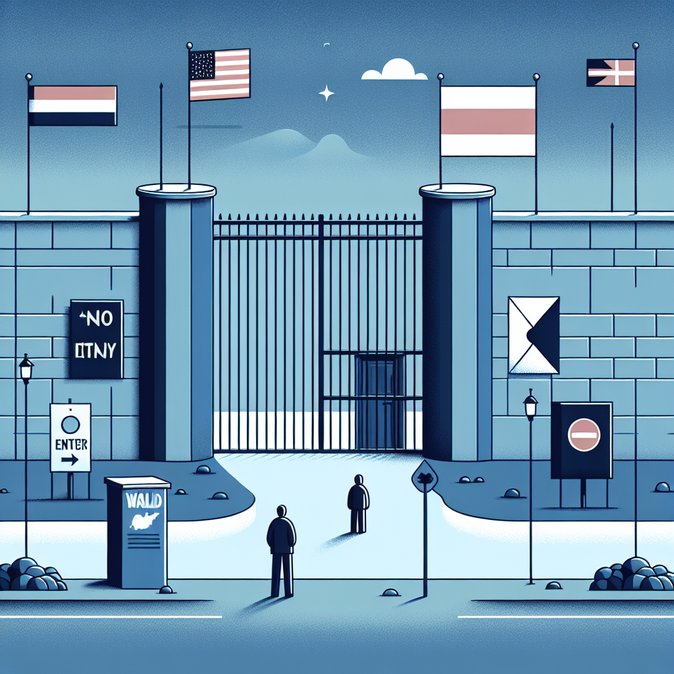
China has stepped up a little-noticed but highly co-ordinated campaign to restrict the overseas mobility of Taiwan’s political leadership. According to more than half a dozen European diplomats quoted by The Guardian, Chinese embassies in late-2025 and early-2026 delivered formal “demarches” in person and in writing to at least a dozen EU governments. The notes verbales argued that Schengen border law obliges member states to refuse entry to travellers who might “threaten international relations”, and that welcoming Taiwanese cabinet-level visitors therefore crosses Beijing’s “red lines”.
European officials say the legal reasoning is thin, pointing out that the Schengen Borders Code gives national authorities wide discretion and that EU institutions – not Beijing – interpret its scope. Several governments, including the United Kingdom, Finland and Norway, have already pushed back, telling Chinese counterparts that visa issuance remains a sovereign matter. Behind the scenes, however, diplomats acknowledge that smaller capitals fear economic retaliation if they ignore the warnings.
Analysts view the pressure campaign as an extension of Beijing’s long-running effort to shrink Taiwan’s international space without triggering direct confrontation. By leveraging visa control, China can raise the cost of minister-level travel, reduce Taiwan’s public diplomacy footprint and deter third-country meetings that lend political legitimacy to Taipei.
![Beijing quietly warns European capitals to deny visas for Taiwanese officials]()
At this juncture, travel planners can reduce uncertainty by tapping specialist services such as VisaHQ. The platform offers up-to-date guidance on Chinese, Schengen and third-country entry rules, highlights political-sensitivity clauses that might affect Taiwanese visitors, and can secure alternative documentation on short notice. Mobility teams can explore options at https://www.visahq.com/china/ before itineraries are finalized.
For corporate mobility managers, the episode is a reminder that cross-strait tensions can spill into seemingly routine business travel. Executives planning events that involve Taiwanese officials—or even senior technocrats—should now double-check host-country visa policies and be ready with alternative venues. Companies counting on EU-level immunity for travel should note that member states issue national visas, and pressure is being applied bilaterally.
In the medium term, compliance teams may need to monitor whether China broadens its interpretation of “threatening international relations” to cover trade delegations, academic exchanges or multilateral conferences that feature Taiwanese participation. A creeping chill on entry permissions could complicate everything from semiconductor-supply audits to investor roadshows that require Taiwanese leaders on stage.
European officials say the legal reasoning is thin, pointing out that the Schengen Borders Code gives national authorities wide discretion and that EU institutions – not Beijing – interpret its scope. Several governments, including the United Kingdom, Finland and Norway, have already pushed back, telling Chinese counterparts that visa issuance remains a sovereign matter. Behind the scenes, however, diplomats acknowledge that smaller capitals fear economic retaliation if they ignore the warnings.
Analysts view the pressure campaign as an extension of Beijing’s long-running effort to shrink Taiwan’s international space without triggering direct confrontation. By leveraging visa control, China can raise the cost of minister-level travel, reduce Taiwan’s public diplomacy footprint and deter third-country meetings that lend political legitimacy to Taipei.

At this juncture, travel planners can reduce uncertainty by tapping specialist services such as VisaHQ. The platform offers up-to-date guidance on Chinese, Schengen and third-country entry rules, highlights political-sensitivity clauses that might affect Taiwanese visitors, and can secure alternative documentation on short notice. Mobility teams can explore options at https://www.visahq.com/china/ before itineraries are finalized.
For corporate mobility managers, the episode is a reminder that cross-strait tensions can spill into seemingly routine business travel. Executives planning events that involve Taiwanese officials—or even senior technocrats—should now double-check host-country visa policies and be ready with alternative venues. Companies counting on EU-level immunity for travel should note that member states issue national visas, and pressure is being applied bilaterally.
In the medium term, compliance teams may need to monitor whether China broadens its interpretation of “threatening international relations” to cover trade delegations, academic exchanges or multilateral conferences that feature Taiwanese participation. A creeping chill on entry permissions could complicate everything from semiconductor-supply audits to investor roadshows that require Taiwanese leaders on stage.