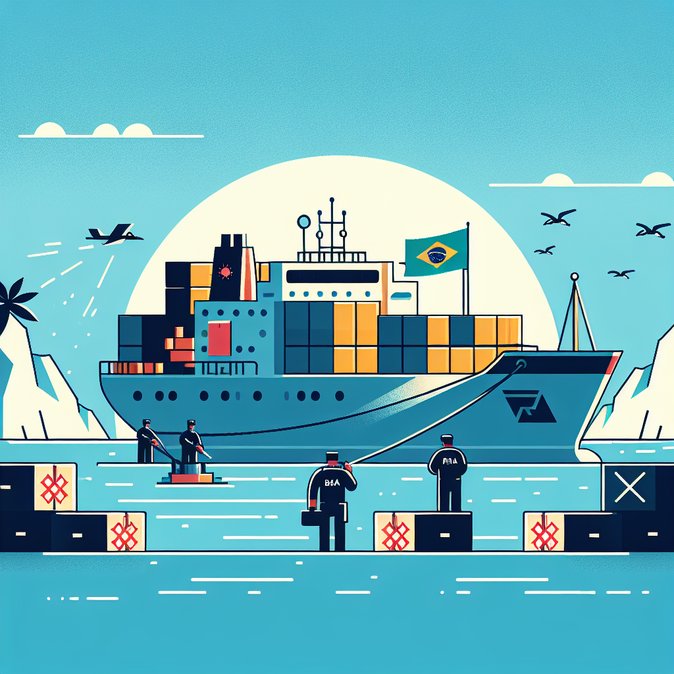
Spain’s Policía Nacional has carried out the largest maritime cocaine seizure in the country’s history, intercepting almost ten tonnes of the drug hidden under a cargo of salt 535 km south-west of the Canary Islands. Details of “Operation White Tide” were released on 12 January 2026 after the merchant vessel—towed to Santa Cruz de Tenerife—was searched and 13 crew members arrested.
The trans-Atlantic bust, coordinated with Brazilian federal police, the U.S. Drug Enforcement Administration, the UK National Crime Agency and French and Portuguese counterparts, underscores Spain’s role as a gateway for South American narcotics into Europe. In the past two years, cocaine seizures in Spanish ports have risen 22 percent, prompting authorities to bolster maritime surveillance and cargo-screening protocols.
For global mobility and supply-chain managers, the operation is a reminder of heightened security checks that can affect commercial shipping and passenger ferries around the archipelago. Customs brokers report more frequent inspections of containers transiting through Las Palmas and Algeciras, which may extend clearance times for household goods shipments linked to corporate relocations.
![‘White Tide’: Spanish Police Seize Record 10-Tonne Cocaine Haul Off Canary Islands]()
Amid these evolving controls, VisaHQ can streamline the visa and passport paperwork for staff, contractors, or journalists who must transit Spain or its island territories. Through its online platform (https://www.visahq.com/spain/), the company offers up-to-date entry requirements, expedited processing, and status tracking—services that can help mitigate disruption when authorities impose additional document checks at ports and airports.
The Canary Islands also serve as a key staging point for mixed migration routes from West Africa. Law-enforcement sources say drug-trafficking syndicates increasingly piggy-back on migrant-smuggling networks, complicating Spain’s dual mission of humanitarian rescue and narcotics interdiction. Mobility-risk consultants advise companies with assignees in the islands to review travel-security briefings and factor potential port delays into project logistics.
Interior Minister Fernando Grande-Marlaska hailed the seizure as proof of Spain’s “operational excellence” against organised crime, but warned that traffickers are shifting tactics, including concealing drugs in frozen fish or liquid bulk cargo. The ministry plans to deploy two additional patrol ships equipped with drones and AI-driven radar by mid-2026, measures that could further tighten border-control procedures for all vessels calling Spanish ports.
The trans-Atlantic bust, coordinated with Brazilian federal police, the U.S. Drug Enforcement Administration, the UK National Crime Agency and French and Portuguese counterparts, underscores Spain’s role as a gateway for South American narcotics into Europe. In the past two years, cocaine seizures in Spanish ports have risen 22 percent, prompting authorities to bolster maritime surveillance and cargo-screening protocols.
For global mobility and supply-chain managers, the operation is a reminder of heightened security checks that can affect commercial shipping and passenger ferries around the archipelago. Customs brokers report more frequent inspections of containers transiting through Las Palmas and Algeciras, which may extend clearance times for household goods shipments linked to corporate relocations.

Amid these evolving controls, VisaHQ can streamline the visa and passport paperwork for staff, contractors, or journalists who must transit Spain or its island territories. Through its online platform (https://www.visahq.com/spain/), the company offers up-to-date entry requirements, expedited processing, and status tracking—services that can help mitigate disruption when authorities impose additional document checks at ports and airports.
The Canary Islands also serve as a key staging point for mixed migration routes from West Africa. Law-enforcement sources say drug-trafficking syndicates increasingly piggy-back on migrant-smuggling networks, complicating Spain’s dual mission of humanitarian rescue and narcotics interdiction. Mobility-risk consultants advise companies with assignees in the islands to review travel-security briefings and factor potential port delays into project logistics.
Interior Minister Fernando Grande-Marlaska hailed the seizure as proof of Spain’s “operational excellence” against organised crime, but warned that traffickers are shifting tactics, including concealing drugs in frozen fish or liquid bulk cargo. The ministry plans to deploy two additional patrol ships equipped with drones and AI-driven radar by mid-2026, measures that could further tighten border-control procedures for all vessels calling Spanish ports.