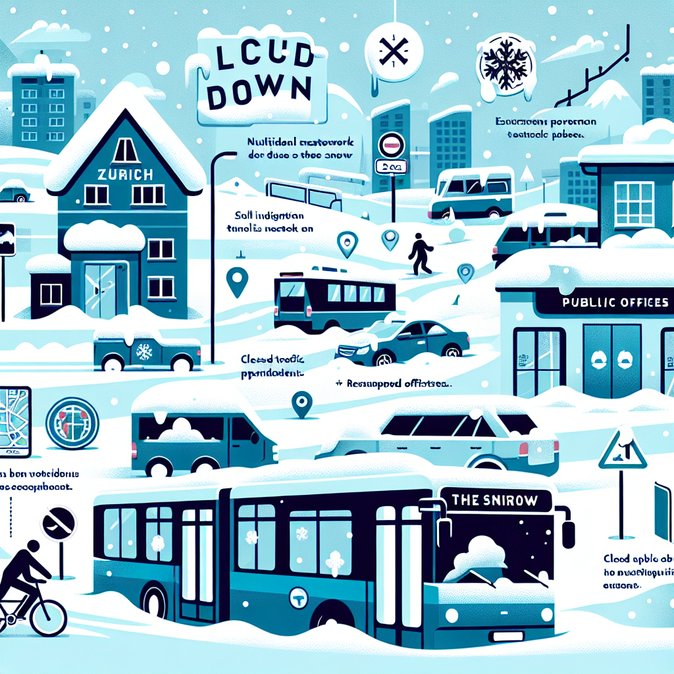
A vigorous winter storm swept across Switzerland on 11 January, dumping up to 30 cm of snow on lowland regions and paralysing major segments of the surface-transport network. Zurich’s municipal operator VBZ suspended every bus line inside the city and surrounding communes for several hours after multiple articulated vehicles jack-knifed on icy hills. Tram services limped on at reduced speed, but tens of thousands of commuters had to walk or work from home. (visahq.com)
Cantonal police in Aargau, Thurgau, St Gallen and Solothurn logged almost 100 weather-related accidents between Saturday afternoon and Sunday morning; most were single-vehicle spin-outs, but insurers expect damage claims to exceed CHF 2 million. National highway operator ASTRA deployed 220 snow-ploughs overnight and warned that priority would be given to motorway arteries, leaving regional roads snow-covered well into Monday.
![Snowstorm Halts Zurich Bus Network and Triggers Nearly 100 Road Accidents Across Switzerland]()
For international visitors suddenly coping with cancelled transport and shifted visa appointments, VisaHQ offers a lifeline: its Switzerland portal (https://www.visahq.com/switzerland/) lets travellers track consular closures in real time, reschedule biometrics, and complete visa paperwork online, ensuring plans stay on course even when local migration offices shut without notice.
The disruption carries multiple global-mobility implications. Cross-border commuters from Germany and France were urged by their employers to work remotely, invoking Swiss labour-law provisions that obligate companies to pay staff unable to reach the workplace when authorities officially close public transport. Logistics firms DHL and Galliker reported 24-hour delays on last-mile deliveries—a concern for life-science exporters dependent on temperature-controlled supplies.
Visitors awaiting visa-collection appointments faced new headaches: several cantonal migration offices closed early, automatically rescheduling biometric enrolments. Immigration advisers recommend travellers verify appointment status online and budget extra days for residence-permit issuance, which could now spill into the late-January peak.
Cantonal police in Aargau, Thurgau, St Gallen and Solothurn logged almost 100 weather-related accidents between Saturday afternoon and Sunday morning; most were single-vehicle spin-outs, but insurers expect damage claims to exceed CHF 2 million. National highway operator ASTRA deployed 220 snow-ploughs overnight and warned that priority would be given to motorway arteries, leaving regional roads snow-covered well into Monday.

For international visitors suddenly coping with cancelled transport and shifted visa appointments, VisaHQ offers a lifeline: its Switzerland portal (https://www.visahq.com/switzerland/) lets travellers track consular closures in real time, reschedule biometrics, and complete visa paperwork online, ensuring plans stay on course even when local migration offices shut without notice.
The disruption carries multiple global-mobility implications. Cross-border commuters from Germany and France were urged by their employers to work remotely, invoking Swiss labour-law provisions that obligate companies to pay staff unable to reach the workplace when authorities officially close public transport. Logistics firms DHL and Galliker reported 24-hour delays on last-mile deliveries—a concern for life-science exporters dependent on temperature-controlled supplies.
Visitors awaiting visa-collection appointments faced new headaches: several cantonal migration offices closed early, automatically rescheduling biometric enrolments. Immigration advisers recommend travellers verify appointment status online and budget extra days for residence-permit issuance, which could now spill into the late-January peak.