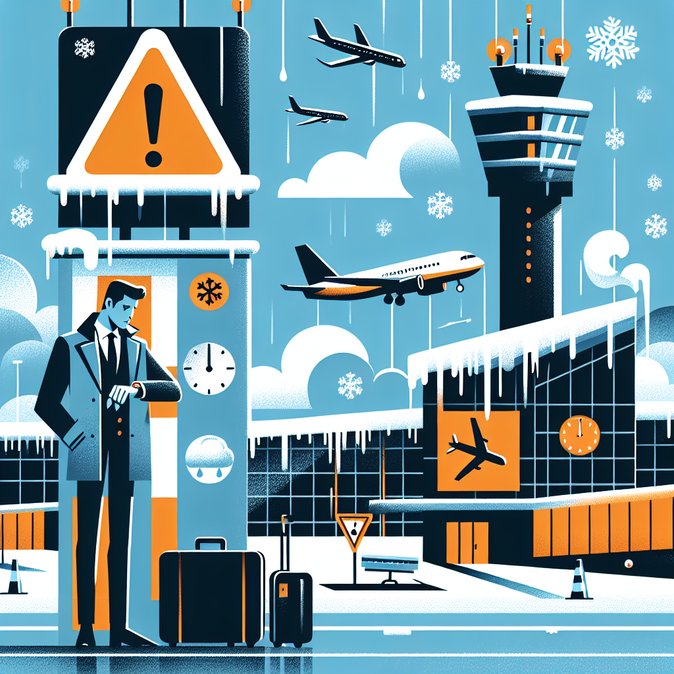
Swiss International Air Lines (SWISS) scrapped a further 12 return flights on Sunday, 11 January, after night-time temperatures on the Swiss Plateau plunged to –10 °C and thick ice coated parked aircraft. The newest cancellations—affecting Zurich rotations to Nice, Frankfurt, Düsseldorf, London, Milan and Luxembourg—push total weather-related cancellations since New Year’s Day beyond 80 and have inconvenienced an estimated 10,000 passengers, many of them business travellers returning from holidays. (visahq.com)
Ground crews at Zurich’s Kloten hub have been operating almost around the clock to keep de-icing trucks moving, but arriving flights averaged 90-minute delays on Sunday morning. To prevent long-haul knock-on delays, the Federal Office of Civil Aviation granted SWISS limited night-curfew exemptions—an unusual step that underscores the operational stress. Geneva Airport was less affected and has become the preferred diversion point for time-sensitive travellers.
![Deep-Freeze Forces SWISS to Cancel More Flights, Disrupting Corporate Travel Itineraries]()
For passengers suddenly facing reroutes or extended stays, VisaHQ’s Switzerland portal (https://www.visahq.com/switzerland/) can quickly confirm whether existing Schengen permissions still suffice and, if not, streamline the application of any required extensions or new visas. The platform’s real-time alerts and digital tools also help corporate travel teams stay ahead of entry-rule shifts during disruptive weather events.
For corporate mobility teams the episode is a reminder that winter contingencies extend beyond insurance clauses. Employers with EU Emissions Trading Scheme (EU-ETS) reporting obligations should instruct travellers to keep original boarding passes if itineraries change; missing documentation can trigger costly carbon-reporting gaps. Travel managers are also advised to lengthen connection buffers and pre-clear alternative rail routes, especially on the Zurich–Frankfurt and Geneva–Paris corridors where high-speed services can substitute for short-haul flights.
Looking ahead, MeteoSwiss forecasts sub-zero highs through mid-week, meaning fresh cancellations cannot be ruled out. Airlines typically re-seat passengers automatically, but those on tight client schedules may prefer voluntary re-routing via rail or via airports in Milan or Munich. Immigration practitioners note that same-day itinerary changes sometimes invalidate Schengen “90/180” calculations for non-EU nationals; a prudent step is to run an automated day-count before deciding whether to extend a stay in Switzerland.
Ground crews at Zurich’s Kloten hub have been operating almost around the clock to keep de-icing trucks moving, but arriving flights averaged 90-minute delays on Sunday morning. To prevent long-haul knock-on delays, the Federal Office of Civil Aviation granted SWISS limited night-curfew exemptions—an unusual step that underscores the operational stress. Geneva Airport was less affected and has become the preferred diversion point for time-sensitive travellers.
For passengers suddenly facing reroutes or extended stays, VisaHQ’s Switzerland portal (https://www.visahq.com/switzerland/) can quickly confirm whether existing Schengen permissions still suffice and, if not, streamline the application of any required extensions or new visas. The platform’s real-time alerts and digital tools also help corporate travel teams stay ahead of entry-rule shifts during disruptive weather events.
For corporate mobility teams the episode is a reminder that winter contingencies extend beyond insurance clauses. Employers with EU Emissions Trading Scheme (EU-ETS) reporting obligations should instruct travellers to keep original boarding passes if itineraries change; missing documentation can trigger costly carbon-reporting gaps. Travel managers are also advised to lengthen connection buffers and pre-clear alternative rail routes, especially on the Zurich–Frankfurt and Geneva–Paris corridors where high-speed services can substitute for short-haul flights.
Looking ahead, MeteoSwiss forecasts sub-zero highs through mid-week, meaning fresh cancellations cannot be ruled out. Airlines typically re-seat passengers automatically, but those on tight client schedules may prefer voluntary re-routing via rail or via airports in Milan or Munich. Immigration practitioners note that same-day itinerary changes sometimes invalidate Schengen “90/180” calculations for non-EU nationals; a prudent step is to run an automated day-count before deciding whether to extend a stay in Switzerland.