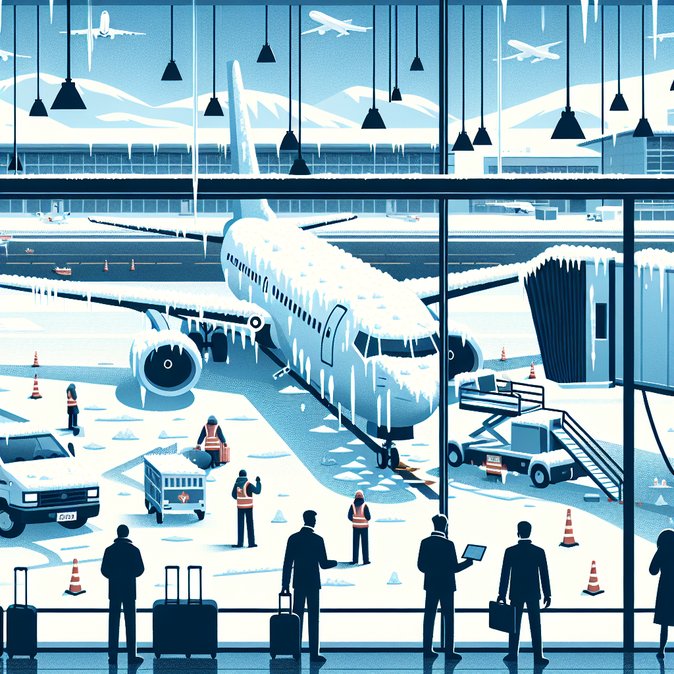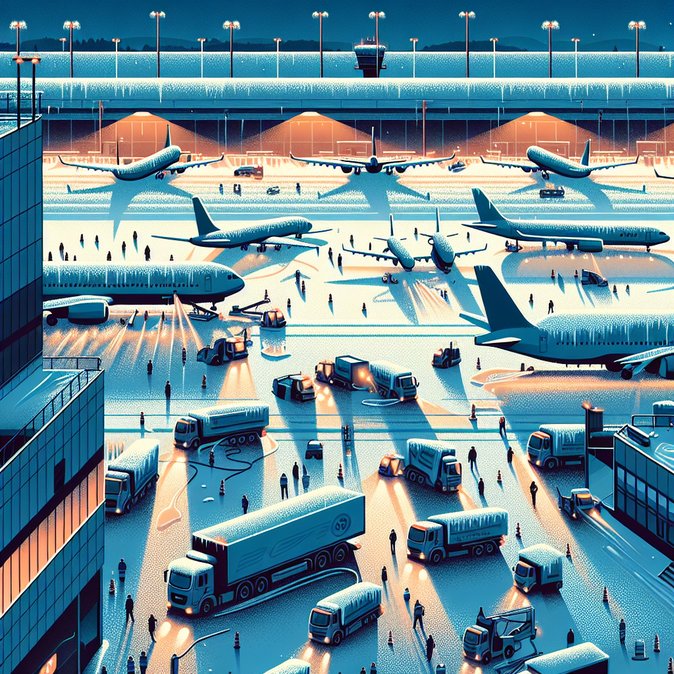
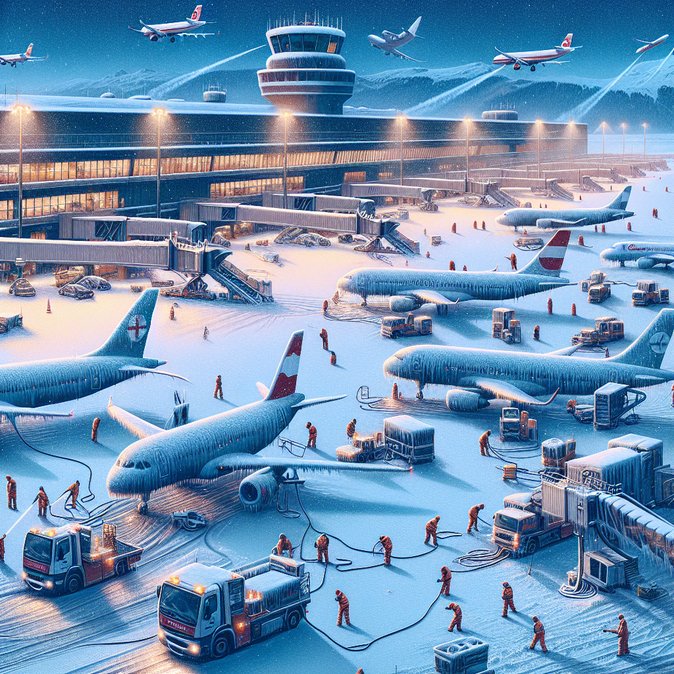
Zürich Airport’s ground-handling crews performed more than 100 aircraft de-icings before dawn on Friday, 10 January 2026 – roughly three times the seasonal norm – after an Arctic front dumped fresh snow on the Swiss Plateau. Each basic glycol spray takes around four minutes, but snow-laden wings can require half-hour treatments, quickly pushing outbound banks toward the legally mandated 23:00 night curfew. Flughafen Zürich AG said operations remain stable but confirmed it may authorise exceptional late departures for intercontinental flights if backlogs threaten to strand aircraft and crews.
The airport’s snow-desk has mobilised its full fleet of broom trucks and blowers, while Swissport has brought in reserve staff from Basel and Geneva to keep stands turning. Airlines have been asked to upload extra contingency fuel and file more conservative slot times with Eurocontrol to reduce last-minute push-back requests. Business-jet operators, traditionally exempt from schedule constraints, are being warned that curfew extensions will prioritise long-haul commercial services.
![Deep freeze triples de-icing workload at Zürich Airport, squeezing night-curfew window]()
For multinational companies, the ripple effect can extend beyond aviation: perishable freight destined for high-value pharma facilities in the “Bio-Valley” tri-national cluster risks missing same-day release windows, while crew rest infringements translate into aircraft starting the next morning out of position. Travel-risk managers should monitor Zürich Airport NOTAMs and advise travellers to check in at least 30 minutes earlier than usual: security lanes are slower because passengers are wearing heavier winter clothing and boots.
For international passengers caught up in weather-related rescheduling, making sure travel paperwork is airtight can save more than a little stress. VisaHQ’s Switzerland page (https://www.visahq.com/switzerland/) lets travellers secure visas, passports and other documents online, providing rapid updates and courier options so that sudden itinerary changes don’t become bureaucratic headaches.
Looking ahead, Flughafen Zürich plans to commission two additional Alpha 500 de-icing rigs by winter 2026/27. In the interim, carriers may ask for staggered push-back sequences or voluntary flight consolidations to avoid a repeat of this week’s congestion.
The airport’s snow-desk has mobilised its full fleet of broom trucks and blowers, while Swissport has brought in reserve staff from Basel and Geneva to keep stands turning. Airlines have been asked to upload extra contingency fuel and file more conservative slot times with Eurocontrol to reduce last-minute push-back requests. Business-jet operators, traditionally exempt from schedule constraints, are being warned that curfew extensions will prioritise long-haul commercial services.
For multinational companies, the ripple effect can extend beyond aviation: perishable freight destined for high-value pharma facilities in the “Bio-Valley” tri-national cluster risks missing same-day release windows, while crew rest infringements translate into aircraft starting the next morning out of position. Travel-risk managers should monitor Zürich Airport NOTAMs and advise travellers to check in at least 30 minutes earlier than usual: security lanes are slower because passengers are wearing heavier winter clothing and boots.
For international passengers caught up in weather-related rescheduling, making sure travel paperwork is airtight can save more than a little stress. VisaHQ’s Switzerland page (https://www.visahq.com/switzerland/) lets travellers secure visas, passports and other documents online, providing rapid updates and courier options so that sudden itinerary changes don’t become bureaucratic headaches.
Looking ahead, Flughafen Zürich plans to commission two additional Alpha 500 de-icing rigs by winter 2026/27. In the interim, carriers may ask for staggered push-back sequences or voluntary flight consolidations to avoid a repeat of this week’s congestion.