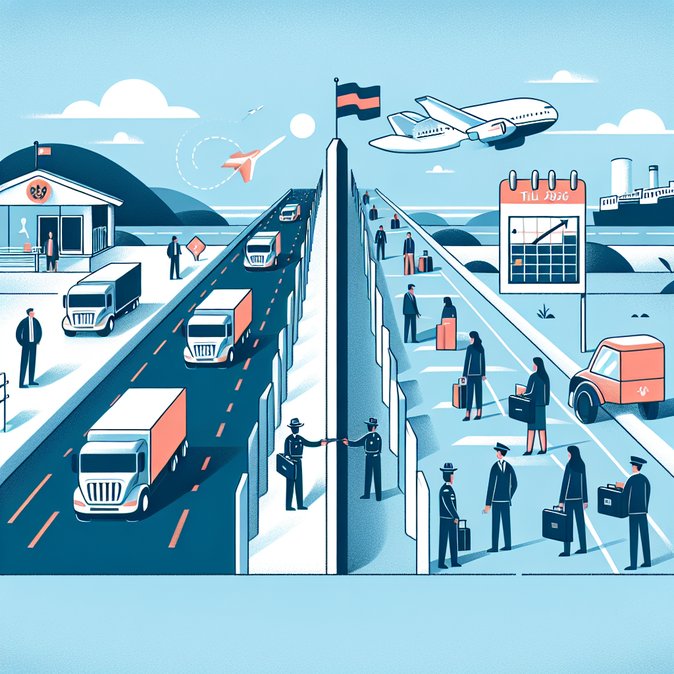
Six months after Poland re-introduced temporary controls along its western frontier, the Border Guard has published its first performance report. Between July 2025 and December 2025 officers screened 558 000 travellers and 261 000 vehicles, refusing entry to 352 foreign nationals and arresting 165 individuals attempting irregular crossings into Germany.
The checks—carried out with police and military support—were imposed after Berlin tightened its own side of the border amid concerns about secondary asylum flows. While EU partners initially criticised Warsaw for undermining Schengen free movement, Polish officials argue the numbers vindicate targeted inspections.
Freight traffic has been largely unaffected because inspections focus on passenger cars and minibuses, yet cross-border commuters and business travellers face random stop-and-check procedures. Mobility managers now advise employees to carry passports even on routine intra-Schengen trips and to keep Polish residence cards on hand.
![Six-month report: Poland’s border checks with Germany refused 352 entrants and made 165 arrests]()
To cut the administrative headache, VisaHQ’s Poland desk can streamline border documentation for both EU and third-country nationals. Through its online platform (https://www.visahq.com/poland/) companies and individual travellers can verify entry requirements, order expedited passport renewals or residency card replacements, and receive real-time alerts on policy extensions—reducing the risk of being turned away at a checkpoint.
The current mandate runs until early April 2026; Warsaw has not indicated whether it will seek another extension. Companies operating shuttle services between Lower Silesia or Lubuskie and Berlin should monitor announcements and adjust schedules if inspections intensify.
For corporate mobility compliance teams the key takeaway is documentation readiness: ensure employees hold valid passports or national ID cards, keep digital copies in secure apps, and factor potential 20-minute delays into travel time to client sites across the Oder River.
The checks—carried out with police and military support—were imposed after Berlin tightened its own side of the border amid concerns about secondary asylum flows. While EU partners initially criticised Warsaw for undermining Schengen free movement, Polish officials argue the numbers vindicate targeted inspections.
Freight traffic has been largely unaffected because inspections focus on passenger cars and minibuses, yet cross-border commuters and business travellers face random stop-and-check procedures. Mobility managers now advise employees to carry passports even on routine intra-Schengen trips and to keep Polish residence cards on hand.

To cut the administrative headache, VisaHQ’s Poland desk can streamline border documentation for both EU and third-country nationals. Through its online platform (https://www.visahq.com/poland/) companies and individual travellers can verify entry requirements, order expedited passport renewals or residency card replacements, and receive real-time alerts on policy extensions—reducing the risk of being turned away at a checkpoint.
The current mandate runs until early April 2026; Warsaw has not indicated whether it will seek another extension. Companies operating shuttle services between Lower Silesia or Lubuskie and Berlin should monitor announcements and adjust schedules if inspections intensify.
For corporate mobility compliance teams the key takeaway is documentation readiness: ensure employees hold valid passports or national ID cards, keep digital copies in secure apps, and factor potential 20-minute delays into travel time to client sites across the Oder River.