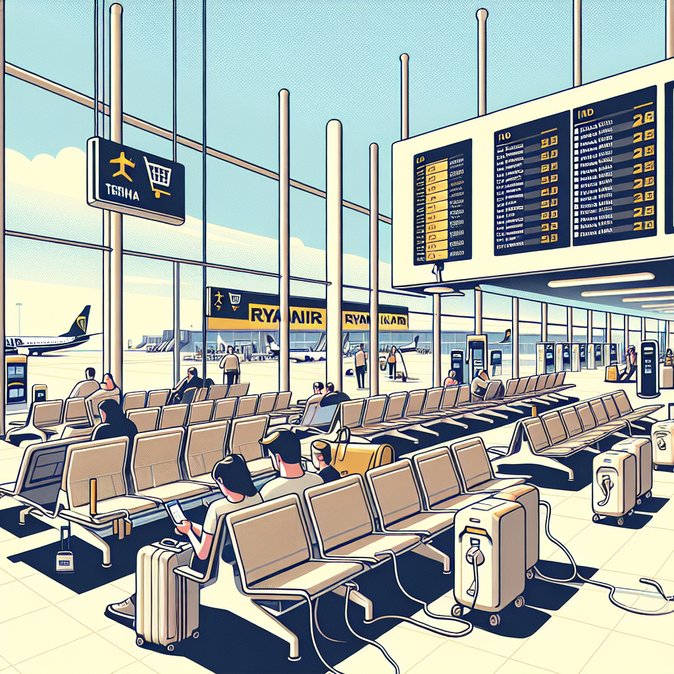
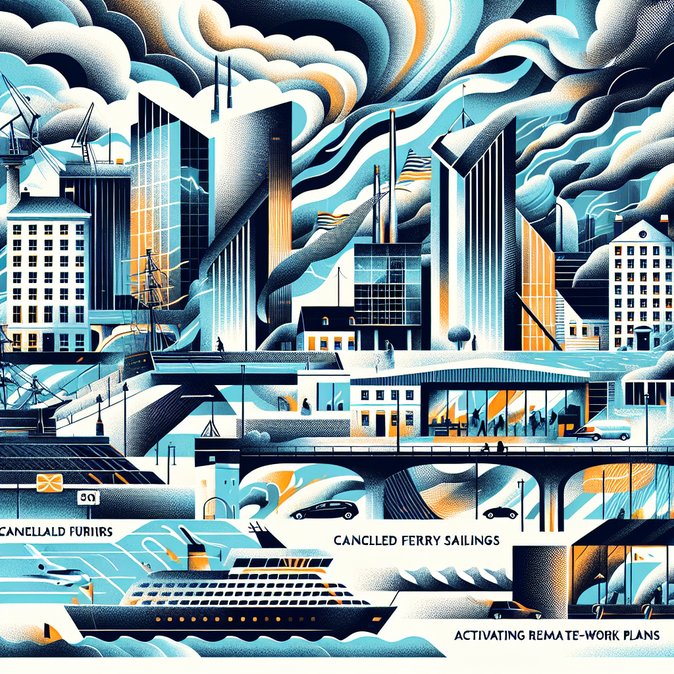
Severe Atlantic weather system “Storm Goretti” barrelled across the Irish Sea overnight, bringing gale-force winds that forced the cancellation of key sea and air connections to and from Ireland on 10 January 2026. Irish Ferries pulled its 02:15 Dublin–Holyhead sailing and the corresponding 19:30 return run, while Stena Line scrubbed its early-morning Fishguard–Rosslare crossing to avoid seven-metre swells. Aer Lingus joined British Airways, KLM and Air France in cancelling dozens of flights after London Heathrow imposed flow-rate restrictions to cope with cross-wind landings. Knock-on cancellations affected Dublin-bound services from Amsterdam, Paris and Manchester, stranding corporate travellers heading for Monday client meetings and weekend leisure visitors alike.(visahq.com)
Met Éireann issued an Orange marine gale warning for the east coast, forecasting gusts above 100 km/h from Wicklow Head to Carnsore Point. Although Dublin, Cork and Shannon airports remained technically open, airlines were obliged to cull schedules to keep turnaround times realistic and to free scarce de-icing equipment for essential departures. The National Emergency Coordination Group urged motorists to avoid coastal routes where wave overtopping was reported.(visahq.com)
Business-travel managers scrambled to source alternative routings via Belfast and Eurotunnel while monitoring hotel availability around Dublin Airport, which quickly filled with disrupted passengers. Multinational employers with Monday start dates for new secondees were advised to activate remote-work contingency plans and to issue letters confirming unavoidable travel delay to protect employees’ immigration compliance timelines.
![Storm Goretti Grounds Ferries and Flights, Forcing Irish Travellers to Re-plan Weekend Itineraries]()
For travellers and employers caught up in disruptions like Storm Goretti, VisaHQ can simplify the paperwork side of contingency planning. Its Ireland portal (https://www.visahq.com/ireland/) offers up-to-date requirements for visas, work permits and passport renewals, helping stranded passengers verify eligibility for alternative routings through Belfast or continental hubs without wading through multiple government sites.
Context: January is traditionally a heavy rotation month for expatriate assignments as new fiscal years begin. Winter weather is a predictable risk, but the scale of this storm—named by Météo-France and carrying a red wind warning for Cornwall—caught schedulers off-guard because of its late cyclogenesis. The incident also highlights Ireland’s continued reliance on Heathrow as a hub; when Heathrow throttles capacity, Dublin inevitably suffers.
Practical advice: affected travellers should retain airline or ferry cancellation notices for EU-261 or maritime compensation claims. Employers should document any consequent breaches of employment-permit start-dates in case of future audits. Where feasible, rebook through carriers operating from Belfast International or consider virtual onboarding until flights normalise, expected late Sunday night once the low-pressure cell clears toward Scandinavia.
Met Éireann issued an Orange marine gale warning for the east coast, forecasting gusts above 100 km/h from Wicklow Head to Carnsore Point. Although Dublin, Cork and Shannon airports remained technically open, airlines were obliged to cull schedules to keep turnaround times realistic and to free scarce de-icing equipment for essential departures. The National Emergency Coordination Group urged motorists to avoid coastal routes where wave overtopping was reported.(visahq.com)
Business-travel managers scrambled to source alternative routings via Belfast and Eurotunnel while monitoring hotel availability around Dublin Airport, which quickly filled with disrupted passengers. Multinational employers with Monday start dates for new secondees were advised to activate remote-work contingency plans and to issue letters confirming unavoidable travel delay to protect employees’ immigration compliance timelines.
For travellers and employers caught up in disruptions like Storm Goretti, VisaHQ can simplify the paperwork side of contingency planning. Its Ireland portal (https://www.visahq.com/ireland/) offers up-to-date requirements for visas, work permits and passport renewals, helping stranded passengers verify eligibility for alternative routings through Belfast or continental hubs without wading through multiple government sites.
Context: January is traditionally a heavy rotation month for expatriate assignments as new fiscal years begin. Winter weather is a predictable risk, but the scale of this storm—named by Météo-France and carrying a red wind warning for Cornwall—caught schedulers off-guard because of its late cyclogenesis. The incident also highlights Ireland’s continued reliance on Heathrow as a hub; when Heathrow throttles capacity, Dublin inevitably suffers.
Practical advice: affected travellers should retain airline or ferry cancellation notices for EU-261 or maritime compensation claims. Employers should document any consequent breaches of employment-permit start-dates in case of future audits. Where feasible, rebook through carriers operating from Belfast International or consider virtual onboarding until flights normalise, expected late Sunday night once the low-pressure cell clears toward Scandinavia.