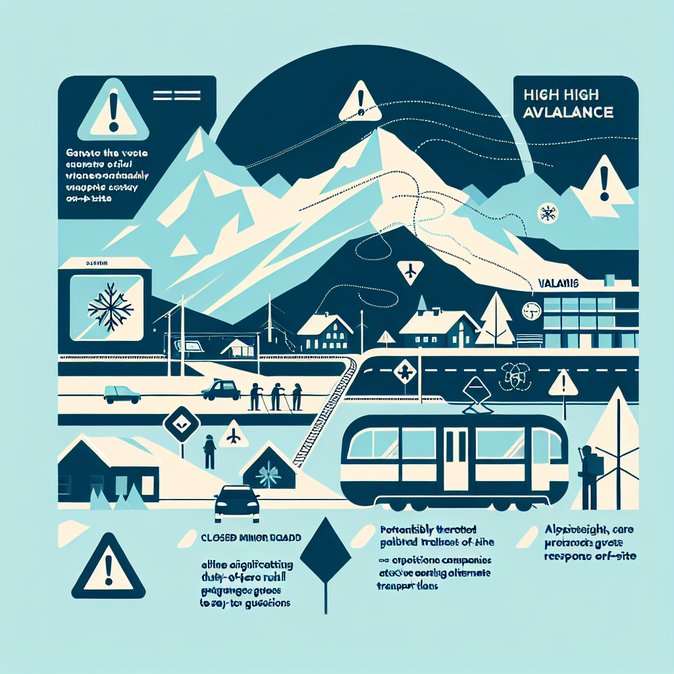
MeteoSwiss and the WSL Institute for Snow and Avalanche Research (SLF) upgraded avalanche danger to Level 4 ("high") across much of Valais and neighbouring alpine cantons from 8–10 January after two days of heavy snowfall and strong winds. Secondary roads in upper Valais have already closed, and Swiss Federal Railways (SBB) has prepared speed restrictions and possible line suspensions on mountain routes.(visahq.com)
Tourism boards in Crans-Montana—still coping with reputational fallout from the deadly New-Year’s-Day bar fire—have asked hotels to brief guests on safe routes and to discourage off-piste skiing. Mountain-rescue teams report a spike in call-outs as visitors underestimate wind-slab formation.(visahq.com)
![Avalanche Danger Raised to Level 4, Prompting Mobility Alerts in Valais and Adjacent Cantons]()
For corporates the risks go beyond leisure tourism. Cantonal police may halt heavy-goods convoys on the Simplon and Lötschberg corridors if snow depth exceeds 30 cm, delaying just-in-time deliveries to northern Italy. Charter brokers warn that any further closure of alpine passes will funnel VIP traffic onto the already congested business-aviation slots at Sion and Bern.(visahq.com)
Whether your staff need an urgent entry permit to oversee supply-chain contingencies or holidaymakers must extend their stay until the passes reopen, VisaHQ can expedite the paperwork. The dedicated Switzerland page (https://www.visahq.com/switzerland/) walks applicants through visa requirements, coordinates courier pick-ups in Bern or Lausanne, and issues real-time alerts on consulate hours affected by severe weather—keeping mobility plans on track even when the snow isn’t.
Mobility managers are urged to issue duty-of-care reminders: validate insurance for off-piste accidents, ensure travellers carry avalanche transceivers, and confirm that emergency visa pick-ups in Bern or Lausanne are completed before courier cut-offs. Synoptic charts show the storm moving east by early Sunday, but until then the region should be treated as a watch zone.
Tourism boards in Crans-Montana—still coping with reputational fallout from the deadly New-Year’s-Day bar fire—have asked hotels to brief guests on safe routes and to discourage off-piste skiing. Mountain-rescue teams report a spike in call-outs as visitors underestimate wind-slab formation.(visahq.com)
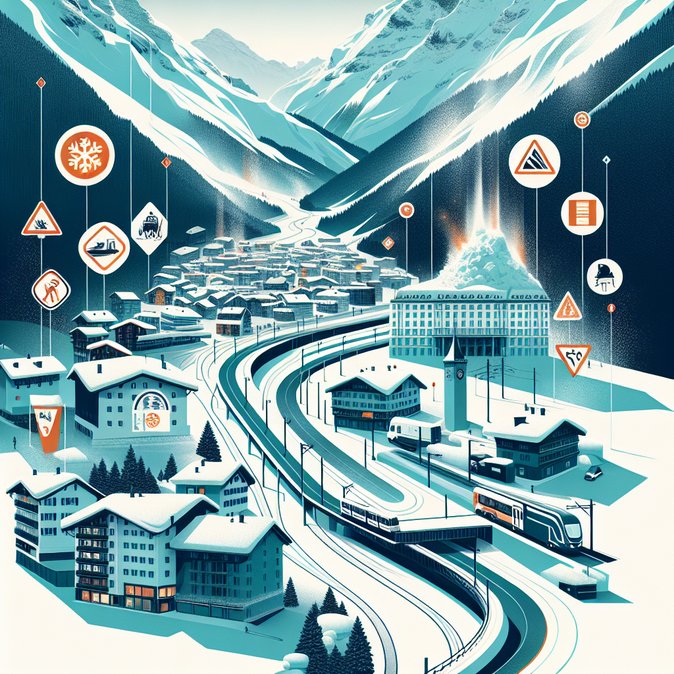
For corporates the risks go beyond leisure tourism. Cantonal police may halt heavy-goods convoys on the Simplon and Lötschberg corridors if snow depth exceeds 30 cm, delaying just-in-time deliveries to northern Italy. Charter brokers warn that any further closure of alpine passes will funnel VIP traffic onto the already congested business-aviation slots at Sion and Bern.(visahq.com)
Whether your staff need an urgent entry permit to oversee supply-chain contingencies or holidaymakers must extend their stay until the passes reopen, VisaHQ can expedite the paperwork. The dedicated Switzerland page (https://www.visahq.com/switzerland/) walks applicants through visa requirements, coordinates courier pick-ups in Bern or Lausanne, and issues real-time alerts on consulate hours affected by severe weather—keeping mobility plans on track even when the snow isn’t.
Mobility managers are urged to issue duty-of-care reminders: validate insurance for off-piste accidents, ensure travellers carry avalanche transceivers, and confirm that emergency visa pick-ups in Bern or Lausanne are completed before courier cut-offs. Synoptic charts show the storm moving east by early Sunday, but until then the region should be treated as a watch zone.