Switzerland will pause for a nationwide minute of silence at 14:00 CET on Friday, 9 January, to remember the 40 victims of the New-Year’s-Day fire at Crans-Montana’s Le Constellation bar. While the ceremony itself has been moved to the indoor CERM arena in Martigny, the logistics footprint stretches far beyond Valais. Swiss Federal Railways (SBB) has ordered a brief service-wide whistle salute and will hold trains at platforms for up to two minutes; operations managers warn that such ‘accordion’ delays can cascade for the rest of the peak afternoon period. International services—including ICE trains from Germany and TGV-Lyria runs from Paris—will wait in holding sidings if they reach the Swiss frontier ahead of the silence.(visahq.com)
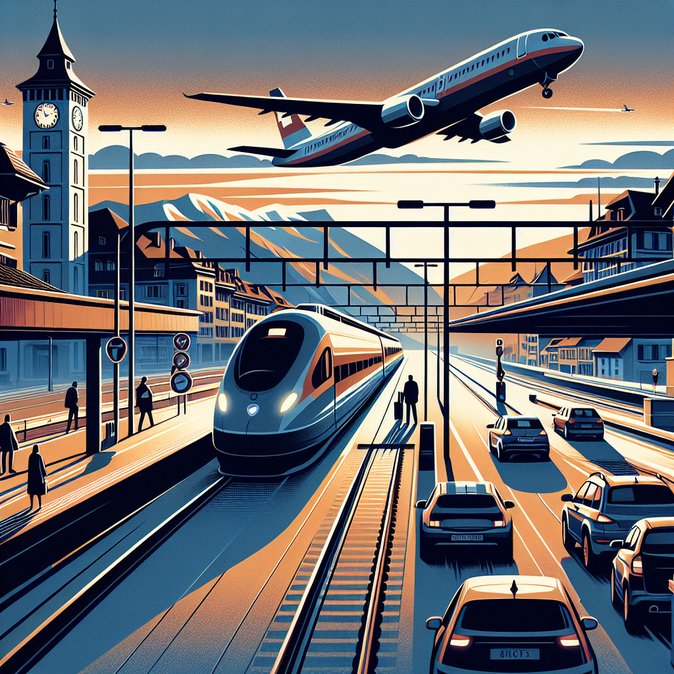
Road movements will also be affected. Valais cantonal police have reserved rolling closures on the A9 motorway to clear convoys carrying foreign dignitaries such as the French and Italian presidents. The civil-aviation authority has awarded short-notice priority slots at Sion, while Geneva and Zürich’s business-aviation terminals report slot compression and advise charter operators to file revised flight plans by 18:00 CET on 8 January.(visahq.com)
For corporate mobility managers the practical headaches are two-fold. First, travellers heading to client meetings in western Switzerland could miss connections if local trains are held. Second, cantonal migration offices have signalled that some afternoon appointments may be rescheduled as staff attend commemoration events, creating a 24-hour paperwork bottleneck for last-minute work-permit filings. HR teams with urgent starts on Monday may need to courier physical documents to Bern or Zürich instead.
![National Day of Mourning on 9 January Likely to Ripple Through Swiss Transport Network]()
In this context, travellers who suddenly need to amend passports, secure emergency Schengen visas, or reroute through neighbouring countries can save valuable time by using VisaHQ’s Switzerland platform, which offers expedited processing, courier pickup, and real-time application tracking. The service can help blunt the impact of any cantonal-office rescheduling or transport delays—see https://www.visahq.com/switzerland/ for details.
Employers should circulate contingency guidance now: encourage staff to build extra buffer time into itineraries, advise road travellers to monitor Viasuisse traffic alerts, and remind executives that security checkpoints around Martigny will be airtight from 06:00. Travellers whose plans change at the eleventh hour must verify that passports or Schengen visas remain valid for any alternative routing through neighbouring countries.
Although the commemorations are short, their impact on mobility is real. Multinationals with time-critical supply chains—pharmaceutical exporters in particular—have activated cold-chain risk protocols to guard against missed export flights. Forwarders are staging reefers at Zürich and Basel to catch late-running freighters, a move that may prove decisive in keeping temperature-sensitive goods within specification.
Road movements will also be affected. Valais cantonal police have reserved rolling closures on the A9 motorway to clear convoys carrying foreign dignitaries such as the French and Italian presidents. The civil-aviation authority has awarded short-notice priority slots at Sion, while Geneva and Zürich’s business-aviation terminals report slot compression and advise charter operators to file revised flight plans by 18:00 CET on 8 January.(visahq.com)
For corporate mobility managers the practical headaches are two-fold. First, travellers heading to client meetings in western Switzerland could miss connections if local trains are held. Second, cantonal migration offices have signalled that some afternoon appointments may be rescheduled as staff attend commemoration events, creating a 24-hour paperwork bottleneck for last-minute work-permit filings. HR teams with urgent starts on Monday may need to courier physical documents to Bern or Zürich instead.
In this context, travellers who suddenly need to amend passports, secure emergency Schengen visas, or reroute through neighbouring countries can save valuable time by using VisaHQ’s Switzerland platform, which offers expedited processing, courier pickup, and real-time application tracking. The service can help blunt the impact of any cantonal-office rescheduling or transport delays—see https://www.visahq.com/switzerland/ for details.
Employers should circulate contingency guidance now: encourage staff to build extra buffer time into itineraries, advise road travellers to monitor Viasuisse traffic alerts, and remind executives that security checkpoints around Martigny will be airtight from 06:00. Travellers whose plans change at the eleventh hour must verify that passports or Schengen visas remain valid for any alternative routing through neighbouring countries.
Although the commemorations are short, their impact on mobility is real. Multinationals with time-critical supply chains—pharmaceutical exporters in particular—have activated cold-chain risk protocols to guard against missed export flights. Forwarders are staging reefers at Zürich and Basel to catch late-running freighters, a move that may prove decisive in keeping temperature-sensitive goods within specification.