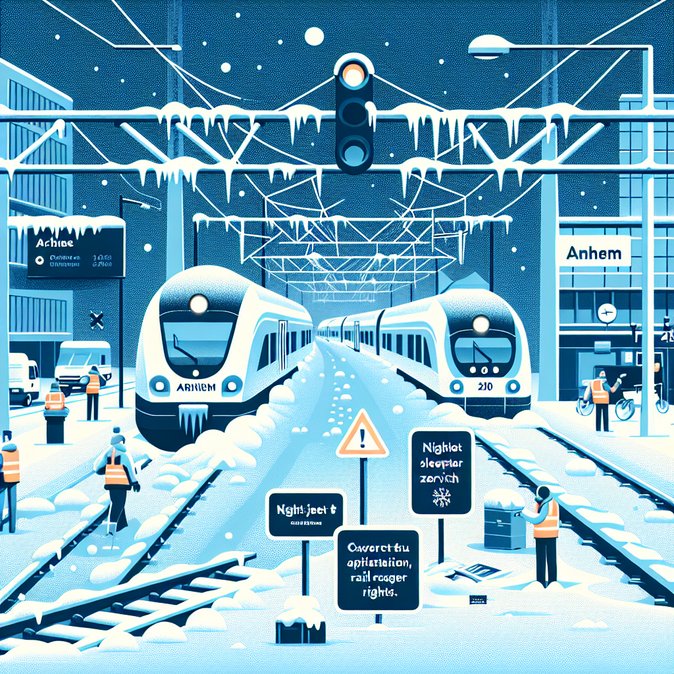
Ice-laden overhead lines at Arnhem Centraal forced Dutch infrastructure manager ProRail to issue a total ‘no-trains’ order from 05:09 to 10:55 CET on 6 January. Although services resumed later, the interruption severed critical corridors linking Switzerland with the Netherlands and Germany, including ÖBB Nightjet 403 (Amsterdam–Zürich) and the daily Amsterdam–Basel ICE. Travellers heading south were marooned on icy platforms or rerouted via Brussels and Paris, adding up to four hours to journeys.(visahq.com)
The knock-on effects persisted into 8 January. SBB and ÖBB could not rotate sleeper stock in time, forcing Zürich-bound Nightjet services to run with fewer carriages and eliminating some couchette classes. Automotive suppliers in Basel reported delays in just-in-time parts shipped along the Rhine corridor, shifting freight onto trucks and tightening capacity at German trans-shipment terminals.
For travellers and mobility teams scrambling to rebook or reroute, VisaHQ’s Switzerland platform (https://www.visahq.com/switzerland/) can quickly confirm Schengen visa validity, arrange expedited renewals, and flag any transit-country entry changes—providing a handy safeguard when disrupted rail services push passengers onto alternative flights or coach lines.
![Dutch Blizzard Paralyses Arnhem Hub, Stranding Nightjet Zürich Sleepers and Basel ICE Services]()
Passenger-rights under EU Regulation 1371/2007 guarantee hotel accommodation and rerouting, but availability near Arnhem was slim; many travellers opted for last-minute flights, triggering a spike in airfares. Mobility managers should brief staff on refund procedures and remind them to collect delay certificates for expense claims.
Looking ahead, Dutch meteorologists warn of another cold front by 12 January. Firms with regular cross-border rail commuters—particularly those using the Nightjet for Monday-morning meetings—should line up alternative routings via Brussels or add a buffer day.
The episode underscores the fragility of Europe’s winter rail network and the importance of multimodal contingency planning for Swiss corporates.
The knock-on effects persisted into 8 January. SBB and ÖBB could not rotate sleeper stock in time, forcing Zürich-bound Nightjet services to run with fewer carriages and eliminating some couchette classes. Automotive suppliers in Basel reported delays in just-in-time parts shipped along the Rhine corridor, shifting freight onto trucks and tightening capacity at German trans-shipment terminals.
For travellers and mobility teams scrambling to rebook or reroute, VisaHQ’s Switzerland platform (https://www.visahq.com/switzerland/) can quickly confirm Schengen visa validity, arrange expedited renewals, and flag any transit-country entry changes—providing a handy safeguard when disrupted rail services push passengers onto alternative flights or coach lines.

Passenger-rights under EU Regulation 1371/2007 guarantee hotel accommodation and rerouting, but availability near Arnhem was slim; many travellers opted for last-minute flights, triggering a spike in airfares. Mobility managers should brief staff on refund procedures and remind them to collect delay certificates for expense claims.
Looking ahead, Dutch meteorologists warn of another cold front by 12 January. Firms with regular cross-border rail commuters—particularly those using the Nightjet for Monday-morning meetings—should line up alternative routings via Brussels or add a buffer day.
The episode underscores the fragility of Europe’s winter rail network and the importance of multimodal contingency planning for Swiss corporates.