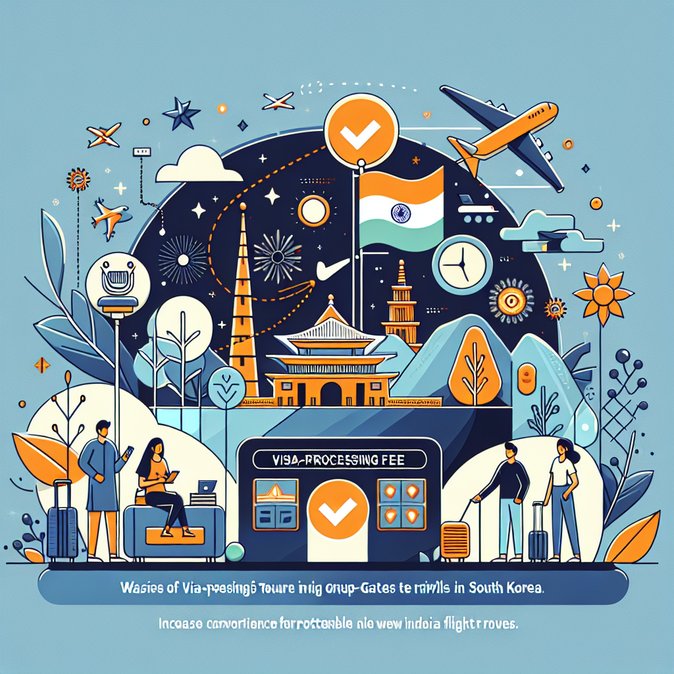
Seoul has prolonged its KRW 18,000 (≈ ₹1,050) processing-fee waiver for short-term C-3-2 group visas covering six Asian markets—including India—until 30 June 2026. Finance Minister Koo Yun-cheol announced the decision on 5 January, and VisaHQ published the details on 7 January.
The scheme allows authorised travel agencies to lodge bundled applications for groups of five or more within five working days, a popular channel for corporate incentive trips and MICE events. Indian arrivals to South Korea jumped 37 percent in 2025 to 235,000, driven by K-pop tourism and IT supplier visits; officials hope the fee waiver will sustain momentum amid yen-driven competition from Japan.
While the fee is modest, agencies say the saving often tips the budget for small-group conferences and sales kick-offs. Airlines are watching numbers closely; sustained demand could green-light proposed Bengaluru–Seoul and Hyderabad–Busan routes for the winter 2026 schedule.
![South Korea Extends Visa-Fee Waiver for Indian Group Tours to 30 June 2026]()
Travel planners who want to simplify the paperwork can tap VisaHQ’s India platform (https://www.visahq.com/india/) to manage bulk C-3-2 submissions, track status in real time and confirm that every traveller meets Justice Ministry criteria—freeing up valuable admin hours while the government picks up the processing fee.
Operationally, companies must still submit full itineraries, flight details and hotel confirmations. South Korea’s Justice Ministry will pilot biometric pre-enrolment at Incheon’s satellite terminal from March, promising automated e-gates for pre-approved groups and faster landside transfers.
Mobility teams planning Q2 incentives should lock in hotel blocks early—Seoul city data show convention-space occupancy running 12 percent higher year-on-year—and confirm that their partner agency is on the Ministry’s authorised list to avoid last-minute re-filings.
The scheme allows authorised travel agencies to lodge bundled applications for groups of five or more within five working days, a popular channel for corporate incentive trips and MICE events. Indian arrivals to South Korea jumped 37 percent in 2025 to 235,000, driven by K-pop tourism and IT supplier visits; officials hope the fee waiver will sustain momentum amid yen-driven competition from Japan.
While the fee is modest, agencies say the saving often tips the budget for small-group conferences and sales kick-offs. Airlines are watching numbers closely; sustained demand could green-light proposed Bengaluru–Seoul and Hyderabad–Busan routes for the winter 2026 schedule.

Travel planners who want to simplify the paperwork can tap VisaHQ’s India platform (https://www.visahq.com/india/) to manage bulk C-3-2 submissions, track status in real time and confirm that every traveller meets Justice Ministry criteria—freeing up valuable admin hours while the government picks up the processing fee.
Operationally, companies must still submit full itineraries, flight details and hotel confirmations. South Korea’s Justice Ministry will pilot biometric pre-enrolment at Incheon’s satellite terminal from March, promising automated e-gates for pre-approved groups and faster landside transfers.
Mobility teams planning Q2 incentives should lock in hotel blocks early—Seoul city data show convention-space occupancy running 12 percent higher year-on-year—and confirm that their partner agency is on the Ministry’s authorised list to avoid last-minute re-filings.