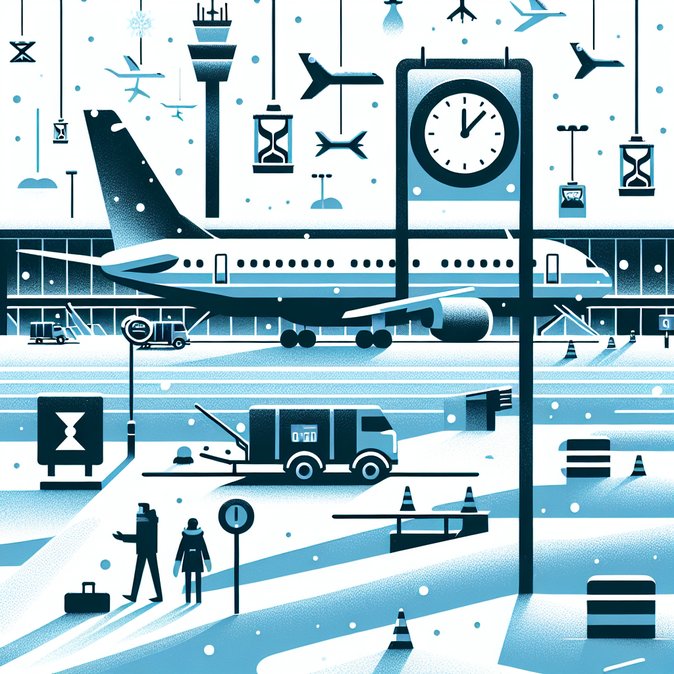
A deep Arctic front that paralysed Amsterdam-Schiphol and Brussels-Zaventem on 6 January triggered a knock-on effect at Dublin Airport the following morning. Aer Lingus, KLM and Brussels Airlines were forced to cancel three Dublin–Amsterdam return rotations and one Dublin–Brussels return rotation after their inbound aircraft became stranded on the continent. In total, eight flights and approximately 1,260 passengers were affected.
Although Dublin Airport remained fully operational, ground handlers grappled with low-visibility procedures and rescheduled de-icing slots. Passengers were rebooked on later departures where seats were available or offered refunds under EU261. Aer Lingus set up a dedicated help desk in Terminal 2 and urged customers to use the airline’s ‘manage my booking’ portal to select alternative options.
Business-travel managers faced the dual challenge of rerouting staff and navigating cross-border testing rules still in place at some EU hubs. Logistics teams reported minor delays in time-critical cargo transhipments, as evening flights to Frankfurt and Paris departed with residual slot restrictions.
![Continental Snowstorm Cascades into Eight Dublin Flight Cancellations, Affecting 1,260 Travellers]()
If last-minute diversions mean you suddenly need a transit or short-stay visa, VisaHQ’s Ireland platform (https://www.visahq.com/ireland/) can fast-track the application process, provide up-to-date entry requirements, and deliver digital documentation straight to your phone—helping you get back in the air with minimal disruption.
The incident highlights the vulnerability of Ireland’s air corridors to weather events occurring hundreds of kilometres away. Analysts note that Schiphol alone handles roughly 9 % of Dublin’s daily movements; disruption there can cascade rapidly through Irish schedules.
Travellers with near-term bookings to northern Europe are advised to opt in to airline SMS alerts, consider buffer days for tight project-start dates, and retain digital copies of boarding passes and receipts to streamline EU261 compensation claims.
Although Dublin Airport remained fully operational, ground handlers grappled with low-visibility procedures and rescheduled de-icing slots. Passengers were rebooked on later departures where seats were available or offered refunds under EU261. Aer Lingus set up a dedicated help desk in Terminal 2 and urged customers to use the airline’s ‘manage my booking’ portal to select alternative options.
Business-travel managers faced the dual challenge of rerouting staff and navigating cross-border testing rules still in place at some EU hubs. Logistics teams reported minor delays in time-critical cargo transhipments, as evening flights to Frankfurt and Paris departed with residual slot restrictions.

If last-minute diversions mean you suddenly need a transit or short-stay visa, VisaHQ’s Ireland platform (https://www.visahq.com/ireland/) can fast-track the application process, provide up-to-date entry requirements, and deliver digital documentation straight to your phone—helping you get back in the air with minimal disruption.
The incident highlights the vulnerability of Ireland’s air corridors to weather events occurring hundreds of kilometres away. Analysts note that Schiphol alone handles roughly 9 % of Dublin’s daily movements; disruption there can cascade rapidly through Irish schedules.
Travellers with near-term bookings to northern Europe are advised to opt in to airline SMS alerts, consider buffer days for tight project-start dates, and retain digital copies of boarding passes and receipts to streamline EU261 compensation claims.