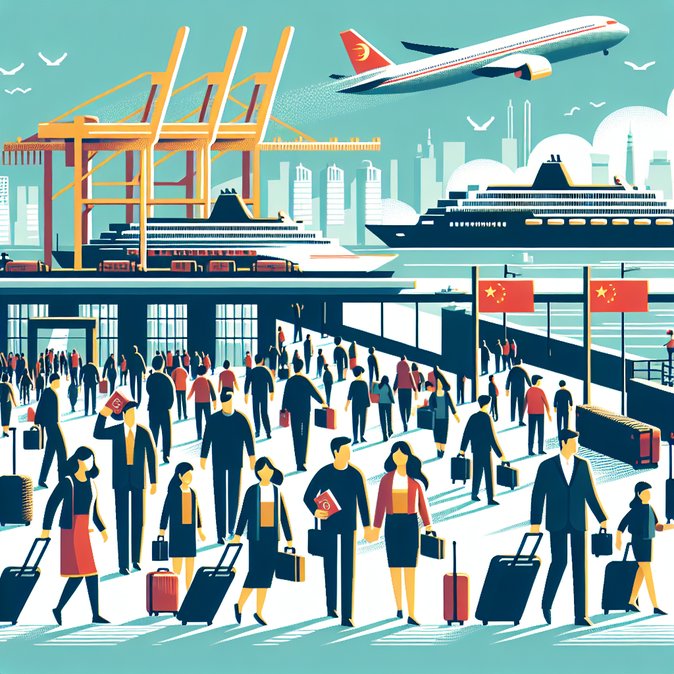
Hong Kong’s border infrastructure passed a major stress-test during the 31 December–4 January holiday, welcoming 950,000 inbound travellers—40 percent more than a year earlier. Mainland residents accounted for 740,000 entries, up 48 percent, buoyed by Beijing’s newly extended public-holiday schedule.(visahq.com)
To manage the surge, authorities extended operating hours at Lo Wu and Shenzhen Bay, deployed 300 additional e-Channel lanes and activated an Emergency Monitoring and Support Centre. Average queuing times reportedly stayed below 30 minutes, offering corporate mobility managers reassurance that Hong Kong can again handle near-pre-pandemic volumes.
For businesses, the smooth flow translates into faster access to Greater Bay Area manufacturing sites and regional head-office meetings. Hotel occupancy averaged 92 percent, but cautious spending patterns suggest travellers remain value-driven, signalling opportunities for mid-range accommodation providers.
![Hong Kong Logs 950 000 Arrivals over New-Year Weekend; Mainland Visits Jump 48 %]()
VisaHQ’s online platform can further ease cross-border travel by helping companies and individuals secure China visas or other travel documents entirely online, with real-time tracking and dedicated support staff—saving valuable time that would otherwise be spent at consulates. Find out more at https://www.visahq.com/china/
Airline OAG data show Hong Kong has restored 87 percent of its pre-Covid mainland seat capacity—up from 63 percent a year ago—indicating further upside for cross-border commerce. Companies should still remind travellers to complete the Health Declaration Code and note that PCR-test exemptions for frequent commuters expire at month-end unless renewed.
The Immigration Department plans to pilot facial-recognition e-gates that can process 60 passengers per minute before the Lunar New Year peak, potentially lifting throughput even further.
To manage the surge, authorities extended operating hours at Lo Wu and Shenzhen Bay, deployed 300 additional e-Channel lanes and activated an Emergency Monitoring and Support Centre. Average queuing times reportedly stayed below 30 minutes, offering corporate mobility managers reassurance that Hong Kong can again handle near-pre-pandemic volumes.
For businesses, the smooth flow translates into faster access to Greater Bay Area manufacturing sites and regional head-office meetings. Hotel occupancy averaged 92 percent, but cautious spending patterns suggest travellers remain value-driven, signalling opportunities for mid-range accommodation providers.

VisaHQ’s online platform can further ease cross-border travel by helping companies and individuals secure China visas or other travel documents entirely online, with real-time tracking and dedicated support staff—saving valuable time that would otherwise be spent at consulates. Find out more at https://www.visahq.com/china/
Airline OAG data show Hong Kong has restored 87 percent of its pre-Covid mainland seat capacity—up from 63 percent a year ago—indicating further upside for cross-border commerce. Companies should still remind travellers to complete the Health Declaration Code and note that PCR-test exemptions for frequent commuters expire at month-end unless renewed.
The Immigration Department plans to pilot facial-recognition e-gates that can process 60 passengers per minute before the Lunar New Year peak, potentially lifting throughput even further.