Switzerland’s Federal Office for Meteorology and Climatology (MeteoSwiss) and the WSL Institute for Snow and Avalanche Research (SLF) raised the avalanche risk in large parts of Valais and adjoining alpine cantons to Level 4 (“high”) on 8 January. The warning, valid through the morning of 10 January, follows two days of heavy snowfall and sub-zero temperatures that have already closed several secondary roads and forced rail operators to prepare for speed restrictions.
Tourism authorities in Crans-Montana – still reeling from the New-Year’s-Day nightclub fire – have asked hotels to brief guests on safe-route maps and to discourage off-piste skiing. Mountain rescue services report a surge in call-outs from visitors who underestimate wind-slab formation on popular back-country itineraries.
For travelers whose plans might change at short notice, ensuring that visas and other travel documents are in order can prevent additional headaches. VisaHQ offers quick, online assistance for new Schengen applications, renewals, and emergency extensions, along with real-time status updates and expert support—see https://www.visahq.com/switzerland/ for details on how they can help keep your trip on track despite weather disruptions.
![High avalanche danger in Valais prompts federal transport warnings for 8–10 January]()
Logistics companies moving goods across the Simplon and Lötschberg corridors are bracing for delays as cantonal police reserve the right to halt HGV convoys if snow accumulations exceed 30 cm. Swiss Federal Railways (SBB) has already stockpiled switch-heaters and diesel ploughs in Brig and Visp and warned that inter-city connections north of the Rhône valley could face cancellations at short notice.
Business-travel managers are being urged to build additional lay-over time into itineraries for Geneva and Bern, with regional carriers telling corporate clients that same-day returns may be “improbable” until the storm front passes. Risk-management consultants note that many multinationals still list Valais sites as “low-risk” in duty-of-care registers and advise updating profiles to reflect the new hazard level.
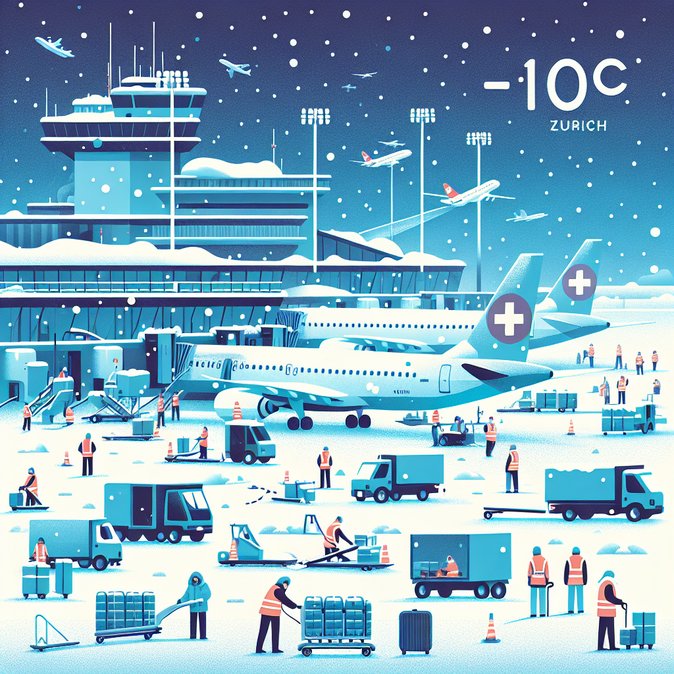
While most Swiss airports remain open, ground handlers caution that diversions to Zürich or Basel are possible if visibility in Sion drops below VFR minima. Travellers holding refundable fares or flexible rail passes are best placed to adapt; others should monitor airline apps and the Swiss Travel Centre website for re-routing options.
Tourism authorities in Crans-Montana – still reeling from the New-Year’s-Day nightclub fire – have asked hotels to brief guests on safe-route maps and to discourage off-piste skiing. Mountain rescue services report a surge in call-outs from visitors who underestimate wind-slab formation on popular back-country itineraries.
For travelers whose plans might change at short notice, ensuring that visas and other travel documents are in order can prevent additional headaches. VisaHQ offers quick, online assistance for new Schengen applications, renewals, and emergency extensions, along with real-time status updates and expert support—see https://www.visahq.com/switzerland/ for details on how they can help keep your trip on track despite weather disruptions.

Logistics companies moving goods across the Simplon and Lötschberg corridors are bracing for delays as cantonal police reserve the right to halt HGV convoys if snow accumulations exceed 30 cm. Swiss Federal Railways (SBB) has already stockpiled switch-heaters and diesel ploughs in Brig and Visp and warned that inter-city connections north of the Rhône valley could face cancellations at short notice.
Business-travel managers are being urged to build additional lay-over time into itineraries for Geneva and Bern, with regional carriers telling corporate clients that same-day returns may be “improbable” until the storm front passes. Risk-management consultants note that many multinationals still list Valais sites as “low-risk” in duty-of-care registers and advise updating profiles to reflect the new hazard level.
While most Swiss airports remain open, ground handlers caution that diversions to Zürich or Basel are possible if visibility in Sion drops below VFR minima. Travellers holding refundable fares or flexible rail passes are best placed to adapt; others should monitor airline apps and the Swiss Travel Centre website for re-routing options.