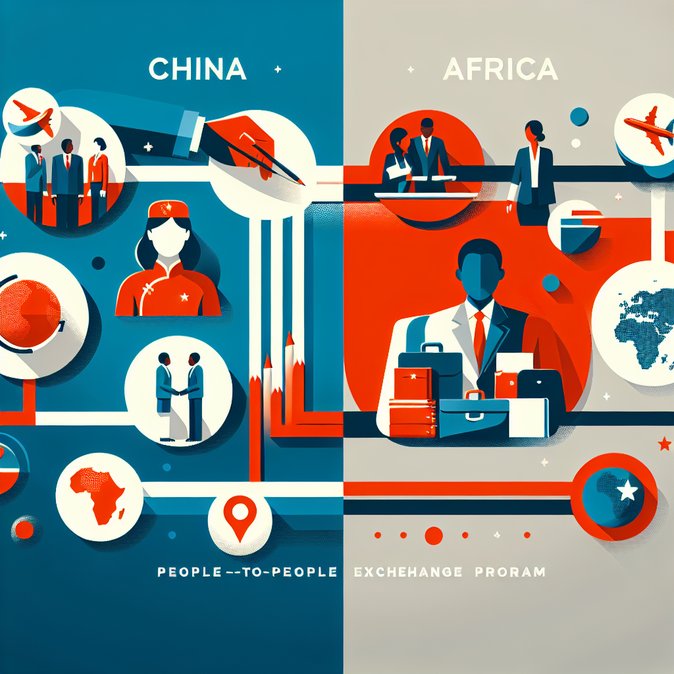
At the 7 January foreign-ministry press briefing, spokesperson Mao Ning announced that 2026 has been designated the "China–Africa Year of People-to-People Exchanges." Foreign Minister Wang Yi will visit Ethiopia, Somalia, Tanzania and Lesotho this week to launch the initiative at the African Union headquarters.(mfa.gov.cn)
The programme will expand scholarship quotas, streamline cultural-exchange visas and pilot a "fast-track" business-travel corridor for African entrepreneurs attending trade fairs in China. Although formal visa-policy details are pending, the ministry signalled that procedures would mirror the successful 15-day ASEAN fast-track scheme introduced in 2025.
Independent visa facilitator VisaHQ, for example, is already updating its China portal with alerts related to anticipated student, cultural and business categories, and can manage the end-to-end filing for travellers from across Africa once the corridors open (see https://www.visahq.com/china/).
![2026 Declared ‘China–Africa Year of People-to-People Exchanges’ as Wang Yi Embarks on Four-Nation Tour]()
For Chinese SOEs with Belt-and-Road projects on the continent, the exchanges promise smoother rotation of engineers and local staff for training in China. African airlines are negotiating additional cargo-plus-passenger charters to Guangzhou and Chengdu to coincide with the Canton Fair and the China–Africa Economic & Trade Expo in June.
Universities expect a 20 % increase in joint-degree applications once reciprocal visa facilitations are finalised. HR departments should prepare credential-evaluation workflows and cross-cultural orientation modules for inbound African secondees.
While the initiative is soft-power driven, it reflects Beijing’s broader strategy of using mobility tools – longer visas, simplified document legalisation and targeted health protocols – to fortify economic partnerships in emerging markets.
The programme will expand scholarship quotas, streamline cultural-exchange visas and pilot a "fast-track" business-travel corridor for African entrepreneurs attending trade fairs in China. Although formal visa-policy details are pending, the ministry signalled that procedures would mirror the successful 15-day ASEAN fast-track scheme introduced in 2025.
Independent visa facilitator VisaHQ, for example, is already updating its China portal with alerts related to anticipated student, cultural and business categories, and can manage the end-to-end filing for travellers from across Africa once the corridors open (see https://www.visahq.com/china/).

For Chinese SOEs with Belt-and-Road projects on the continent, the exchanges promise smoother rotation of engineers and local staff for training in China. African airlines are negotiating additional cargo-plus-passenger charters to Guangzhou and Chengdu to coincide with the Canton Fair and the China–Africa Economic & Trade Expo in June.
Universities expect a 20 % increase in joint-degree applications once reciprocal visa facilitations are finalised. HR departments should prepare credential-evaluation workflows and cross-cultural orientation modules for inbound African secondees.
While the initiative is soft-power driven, it reflects Beijing’s broader strategy of using mobility tools – longer visas, simplified document legalisation and targeted health protocols – to fortify economic partnerships in emerging markets.