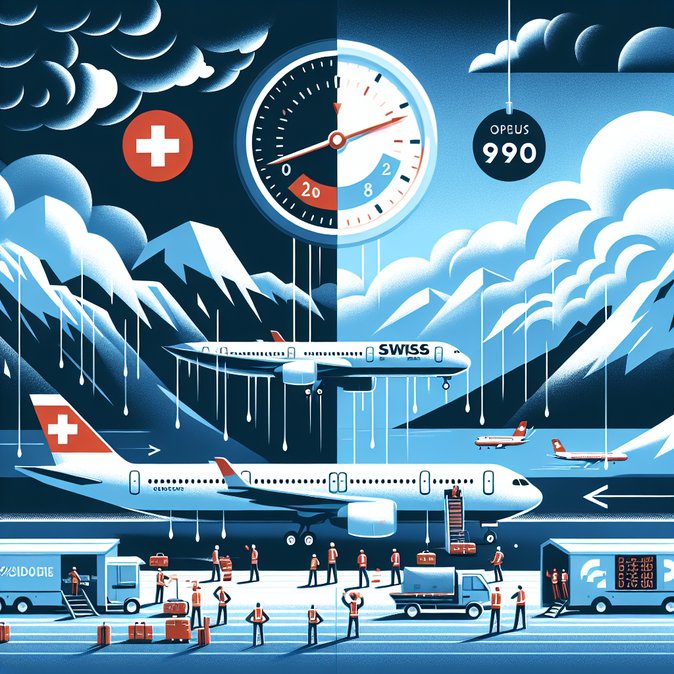
Swiss International Air Lines (SWISS) says it carried 629,632 passengers over the Christmas–New Year fortnight and still operated 99 percent of its planned schedule. On-time performance (arrivals within 15 minutes) improved by 8.5 percentage points compared with the same period a year earlier, even though blizzards on both sides of the Atlantic forced sporadic cancellations and delays.(newsroom.swiss.com)
The airline’s operations control centre in Zurich trial-led a new winter-irregularity playbook that pre-positions spare crews in Geneva and uses predictive de-icing buffers at outstations such as New York JFK. Managers say the protocol cut average reaction time for re-routing crews from 45 minutes to 18 minutes and avoided knock-on diversions that plagued competitors.(newsroom.swiss.com)
Meanwhile, travellers who still need to finalise visa paperwork can lean on VisaHQ, whose Switzerland portal (https://www.visahq.com/switzerland/) streamlines everything from standard Schengen applications to complex multi-country itineraries—an invaluable resource for mobility coordinators racing to match SWISS’s newly sharpened punctuality.
![SWISS posts 8.5-point on-time gain over holiday peak despite Europe-wide storms]()
For corporate mobility teams the numbers matter. Multinationals based in Switzerland typically schedule board meetings for the first week of January; last winter one in ten delegates arrived late. This season the figure fell to just 2 percent, according to internal surveys from two large relocation providers. That reliability reduces duty-of-care exposures and keeps per-diem costs under control.
SWISS still warns of weather-related pockets of disruption through mid-January as a cold snap continues across northern Europe. The carrier recommends that travel managers make fuller use of the “green-status” self-rebooking tool on the SWISS Partner Portal, introduced quietly in November, to secure scarce seats before they disappear from public inventory.
Looking ahead, the airline will decide in March whether to retain the beefed-up winter staffing model as a permanent feature. If adopted, it would lock in higher labour costs but could cement Zurich’s reputation for punctual hub transfers—an increasingly valuable differentiator in the post-pandemic premium-travel race.
The airline’s operations control centre in Zurich trial-led a new winter-irregularity playbook that pre-positions spare crews in Geneva and uses predictive de-icing buffers at outstations such as New York JFK. Managers say the protocol cut average reaction time for re-routing crews from 45 minutes to 18 minutes and avoided knock-on diversions that plagued competitors.(newsroom.swiss.com)
Meanwhile, travellers who still need to finalise visa paperwork can lean on VisaHQ, whose Switzerland portal (https://www.visahq.com/switzerland/) streamlines everything from standard Schengen applications to complex multi-country itineraries—an invaluable resource for mobility coordinators racing to match SWISS’s newly sharpened punctuality.

For corporate mobility teams the numbers matter. Multinationals based in Switzerland typically schedule board meetings for the first week of January; last winter one in ten delegates arrived late. This season the figure fell to just 2 percent, according to internal surveys from two large relocation providers. That reliability reduces duty-of-care exposures and keeps per-diem costs under control.
SWISS still warns of weather-related pockets of disruption through mid-January as a cold snap continues across northern Europe. The carrier recommends that travel managers make fuller use of the “green-status” self-rebooking tool on the SWISS Partner Portal, introduced quietly in November, to secure scarce seats before they disappear from public inventory.
Looking ahead, the airline will decide in March whether to retain the beefed-up winter staffing model as a permanent feature. If adopted, it would lock in higher labour costs but could cement Zurich’s reputation for punctual hub transfers—an increasingly valuable differentiator in the post-pandemic premium-travel race.